|
|
|
[Majorityrights Central] Ukraine, Israel, Taiwan … defend or desert Posted by Guessedworker on Sunday, 14 April 2024 10:34. [Majorityrights News] Moscow’s Bataclan Posted by Guessedworker on Friday, 22 March 2024 22:22. [Majorityrights News] Soren Renner Is Dead Posted by James Bowery on Thursday, 21 March 2024 13:50. [Majorityrights News] Collett sets the record straight Posted by Guessedworker on Thursday, 14 March 2024 17:41. [Majorityrights Central] Patriotic Alternative given the black spot Posted by Guessedworker on Thursday, 14 March 2024 17:14. [Majorityrights Central] On Spengler and the inevitable Posted by Guessedworker on Wednesday, 21 February 2024 17:33. [Majorityrights News] Alex Navalny, born 4th June, 1976; died at Yamalo-Nenets penitentiary 16th February, 2024 Posted by Guessedworker on Friday, 16 February 2024 23:43. [Majorityrights News] A Polish analysis of Moscow’s real geopolitical interests and intent Posted by Guessedworker on Tuesday, 06 February 2024 16:36. [Majorityrights Central] Things reactionaries get wrong about geopolitics and globalism Posted by Guessedworker on Wednesday, 24 January 2024 10:49. [Majorityrights News] Savage Sage, a corrective to Moscow’s flood of lies Posted by Guessedworker on Friday, 12 January 2024 14:44. [Majorityrights Central] Twilight for the gods of complacency? Posted by Guessedworker on Tuesday, 02 January 2024 10:22. [Majorityrights Central] Milleniyule 2023 Posted by Guessedworker on Friday, 22 December 2023 13:11. [Majorityrights Central] A Russian Passion Posted by Guessedworker on Friday, 22 December 2023 01:11. [Majorityrights Central] Out of foundation and into the mind-body problem, part four Posted by Guessedworker on Saturday, 02 December 2023 00:39. [Majorityrights News] The legacy of Richard Lynn Posted by Guessedworker on Thursday, 31 August 2023 22:18. [Majorityrights Central] Out of foundation and into the mind-body problem, part three Posted by Guessedworker on Sunday, 27 August 2023 00:25. [Majorityrights Central] A couple of exchanges on the nature and meaning of Christianity’s origin Posted by Guessedworker on Tuesday, 25 July 2023 22:19. [Majorityrights Central] The True Meaning of The Fourth of July Posted by James Bowery on Sunday, 02 July 2023 14:39. [Majorityrights News] Is the Ukrainian counter-offensive for Bakhmut the counter-offensive for Ukraine? Posted by Guessedworker on Thursday, 18 May 2023 18:55. [Majorityrights News] Charles crowned king of anywhere Posted by Guessedworker on Sunday, 07 May 2023 00:05. [Majorityrights News] Lavrov: today the Kinburn Spit, tomorrow the (New) World (Order) Posted by Guessedworker on Friday, 07 April 2023 11:04. [Majorityrights Central] On an image now lost: Part One Posted by Guessedworker on Friday, 07 April 2023 00:33. [Majorityrights News] The Dutch voter giveth, the Dutch voter taketh away Posted by Guessedworker on Saturday, 18 March 2023 11:30. [Majorityrights Central] News of Daniel Posted by Guessedworker on Friday, 03 March 2023 05:18. [Majorityrights Central] A year in the trenches Posted by Guessedworker on Tuesday, 28 February 2023 00:40. [Majorityrights Central] Talking to normies about fascism Posted by Guessedworker on Friday, 10 February 2023 06:33. [Majorityrights News] British Treasury and Bank of England manoeuvre towards CBDC Posted by Guessedworker on Saturday, 04 February 2023 22:44. [Majorityrights Central] What lies at the core Posted by Guessedworker on Tuesday, 24 January 2023 00:01. [Majorityrights Central] Elite contests and contradictions: Part 2 Posted by Guessedworker on Wednesday, 18 January 2023 00:30. [Majorityrights News] At Davos the Chinese change strategy Posted by Guessedworker on Tuesday, 17 January 2023 23:20. [Majorityrights News] Mission creep takes a hit at the Fed Posted by Guessedworker on Wednesday, 11 January 2023 00:39. [Majorityrights Central] Hat-tip to Woes Posted by Guessedworker on Sunday, 01 January 2023 00:11. [Majorityrights Central] Scott Mannion and the being of the English Posted by Guessedworker on Saturday, 10 December 2022 01:12. [Majorityrights Central] Neil Oliver: The Re-Set has already happened Posted by Guessedworker on Saturday, 03 December 2022 22:42. Majorityrights Central > Category: The Ontology ProjectThis fourth (long and rather detailed) essay in the series is both a conclusion to Part Three’s examination of the causalities of human being and an introduction of the role of attention. Whilst this is not an essay on epistemology, it runs an epistemological course from, in biblical terms, Eden to the Fall to salvation, which correlates with the ontological one from the Primary to the Secondary Structure of causality. It needs to be understood that there are two distinct processes here, one of those at the very foundation of the brain, and the other in a declined quality of cognition. The latter explains all the sorrows of life which are of Man’s wilful error. It is eminently ameliorable, as the next essay, exploring the accidental effects of NSDAP on German peoplehood, will endeavour to demonstrate. BETWEEN DASEIN AND DARWIN
In an age of official hostility, coercion, hypocrisy and lies, and the fear and dread which these inculcate in the innocent, the truth is at a very great premium, for it is the sole means of deliverance. Let us begin this perfectly non-religious essay, then, with some political as well as ontological truth from St Paul, KJV, 1 Corinthians 13:12 ...
We will now think with - and past – Paul, and do so ontologically but always with one eye on the political. For this is, in part, an essay about power and powerlessness, and although it begins in matters far from worldly concerns, ultimately the ontology must show us where power truly abides. Each one of us stands raw and constantly renewing within this immediate world in all its own raw and constantly renewing wholeness, which encompasses us as it encompasses all things organic and inorganic, and from which neither we nor anything else can except itself. “For now” in this hyper-material, primordial reality, this singular congruence no wider than a razor’s edge, we do not stand with any cognition of ourselves as beings separated out by self-hood and by the fateful time-lapse of our own thinking, or even that of our feeling or sensing in any form. We are naïve as we are raw, and both of these only while cognition trails but a few milliseconds adrift. Once we join with it everything changes. This, then, is the biblical Garden of Eden, and although the holy scribes and seers of the ancient world understood that, by the serpentine order of things, processing information about it expels us from it (ie, it cannot be experienced indirectly as information in the mind), they only had poetry and myth to represent the fact. They did not have the benefit of modern science or evolutionary theory or even Western epistemology to know why or to explicate the totality of the caesura. They could not know that Mind emerges first from the enzyme catalysis, light- and heat-seeking, and quorum sensing of simple cells which they never saw and never suspected to exist. They could not know, therefore, that such a defining and constitutive origin renders our cognitive process today, with all its dissonant temporality, as imminent and inextinguishable as any tribal god they might cook up. They could not know that Mind and divine truth, should such a thing exist, rightfully have contrary dynamics. If there are truths in the paradisal garden which are divine, they are forever beyond Mind’s necessary, disjunctive filter. Put another way, even the most intense and elevated liberational event by which mystics self-verify Union with the All ... even that remains informational for us. Yes, the thinking mind’s relentless, drenching chatter can be stilled, at least for a brief while. If the subject is a serious individual, fifteen years or so tanning himself on a Californian beach while, of course, bent in the regulation lotus posture, and following every breath into and out of the body (in other words, actual prayer, not the church pew thing), then a certain equilibrium might restore itself for a time and a certain detachment might yield real profundity. But the totality that is the cognitive Mind remains operative and absolute, and in the final analysis such efforts represent no more than a reaching towards the unreachable. So it is that one of the two great causes of every religion - Union with the All – remains a literal impossibility in this life at least (and we need not let eternal salvation in the next detain us). What, then, is actually taking place? How are we to bring this entire dispensation into the ontological daylight, and order it? As ever, there is some clearing away, some housekeeping to be done.
In July and August of 2021, James Bowery and I became embroiled in a productive debate about, as James eventually titled it, the causal structure of Dasein. I am returning to that subject now, because I find I cannot proceed with my Part Two NSDAP essay without doing so. My thanks to James for his participation and commentary on that thread, which was to his film review here .
Let us begin this essay by reminding ourselves why such abstract and theoretical subject matter, which attends to a primordial aspect of human existence of surpassing irrelevance to those contesting the politics of the day, is nevertheless necessary and meaningful for us as nationalists. How we came to the point of needing new thinking For the reason, in brief, that since the Greeks, Western thinking has been overly concentrated on the technical question of how can we know truth and not the existential what are we … For the reason that Christianity’s idiosyncratic model of the sinner seeking a personal salvation post-mortem by the grace of God does not, in fact, tend to Man’s relational truth but moves him in a manner wholly consistent with the Judaic End-Time ... For the reason that liberalism’s unfettering will - the guiding idea of our epoch and the secular child of Christianity - is likewise a non-real and non-possible desideratum, the pursuit of which can only consume our lives and distance us from our truth ... For the reason in consequence that Western metaphysics has not been able to centre itself on the human principle but has surrendered it to science and technology, reducing the lived life to mere utility filled with economism, materialism, consumption and “progress” ... For the reason that investment, banking, corporate, media and tech elites, and the internationalist institutions, hold sway over the liberal democratic system, and thus over the parties and governments of the West also, imposing their agendas on national politics and reducing it everywhere to a ritual of deception and betrayal … For the reason that since the middle of the 19th century the Jewish ethno-religious paradigm has accommodated itself, via the leading Jewish intellectuals and activists, in the development of Western political and cultural life, colouring political decision to the profound exclusion of our own interests and freedom … For the reason that we have no recourse to an active politics of those interests and of the truth of our person, indeed a war of false morality is waged against these even while our ancestral homelands are deliberately and wickedly flooded with foreign populations (which are no less wickedly presented to us as “oppressed peoples” and “ethnic minorities”) ... … for such reasons, great and small, we are not only subject to the soft-genocidal power play of global elites but to an acquired inner condition of estrangement and confusion. The modern life so ceaselessly and seamlessly manufactures artifice, the stranger within us reacts to the mortal danger to our kind not with love and commitment to putting things straight but with perfect insouciance. “What does it matter to me?” the stranger may ask. Because, of course, in artifice and its detachments lies self-referentialism and nihilism. So we all sleep on while, to borrow from Enoch Powell, our elites and other enemies heap up the European demographic funeral pyre, and drag the European man and woman and the European family through their neo-Marxist sewer. In such a compromised condition, from whence is the capacity to defend our life and being to come? If it comes only from the anti-globalist and traditionalist right as represented by the phenomenon that is Georgia Meloni, and by the rise of Jimmie Åkesson and the Sweden Democrats, and AfD in Germany, by the revitalisation of Marine Le Pen, perhaps even in the person of Donald Trump, then we will see gestures in the direction of recovery, for sure. But none of these will ever sweep away modernity and the mass man, or the Money Power, never mind the more subtly enworlding powers of the West’s deep religious and ethical, philosophical, social, economic and cultural forms … its very models of Life and Man and their complete possession by the Jewish spirit. Likewise, none of our own discursive efforts to this point … on race and immigration, on the JQ, on cultural Marxism, on Islam, and latterly on globalism and the Money Power … will ever measure up to this task. But any measure less and the formative default will confound, limit, frustrate, outlast, and swallow all the forces of reaction. All that was before them will be after them. Preparatory notes for a critical Heideggerian So we return to this question of the abstract, the theoretical, because that is the language in which the formative is re-conceptualised and brought anew to the world. Only thus could a new and complete philosophy for life and truth, emerging from the human fundamentals, be brought forth. Only thus could nationalists properly defy our historical trajectory, change it and become the driving force of a revolution for existence.
Two or three days ago Tim Murray asked quite a challenging question:
Such a question deserves proper consideration and an honest answer. What constant runs through one’s material, and most expresses its force and direction. The short answer in my case is: awakening, by which I mean a bit more than racial awakening since we require a positive and holistic collective step and not merely a rejection of the Other, important though that obviously is. Positive, holistic ... words are cheap, never more so than in politics. But can one construct, say, a single sentence that catches the whole flavour of it, or gets to the very heart of it in such a way that others will recognise something from their own experience and know, more or less, what is meant? I don’t under-estimate the difficulty of communicating a positive and indeed holistic interpretation of “awakening”. Many years ago a young American man with a very high IQ and what I suppose one might call a strongly osmotic sense for human truth arrived on this site. He wrote some pieces for us but his real interest was (what is vulgarly termed) spiritual. He had gleaned something from my scribblings along the lines of Timothy’s question, not that it was ever directly stated by me; but still there was something he suspected might lie on the path he was travelling. We corresponded regularly by email, during which he told me of his periodic raids on the local library for “guru-style” self-help books. What was my opinion of this writer ... did I think that discipline was helpful, and so on. I began what turned out to be a long process of trying to explain the difference between exoteric and esoteric practise. No matter how clearly I thought I expressed myself, still my correspondent came back with the idée fixe that his goal was to improve himself, or at least his psychological functioning. Then one day an email arrived with the word “Epiphany” plastered in capitals across the top, followed by three exclamation marks. He had got it. He had suddenly tumbled to the great but recondite truth that the trap that was his own personhood, as it is formed by his enculturation and as it is set rock-hard in the routines and constancies of his mind-function, especially by the general state of absence in which we all exist, is the tyranny we must transcend. I don’t know to this day what it was I had said to him that set off this realisation, or if it was anything I had said at all. But by it he took what I could give and went on his way shortly after. I know that a later port of call was Christopher Langan and his pan-psychist CTMU. But after that, nothing. Anyway, the moral of the tale is that, given the nature of “the constant” in my case, it is by no means certain that mere words will suffice, and I will very likely fail to communicate much at all. But, for better or worse, here is the formulation for Tim’s requested “monocle”:
This essay, which is long, is the second part of what will, in any case, be a fairly lengthy series wrapping up the Ontology Project and facing towards the problem off structure. This essay is, then, a technical and preparatory exercise for what is to come, clearing the ground on which pure ontology and the basics, at least, of human difference may cohere in, and contribute to, a single, life-affording causal structure for Dasein. FIVE CASES CONTRA HEIDEGGER
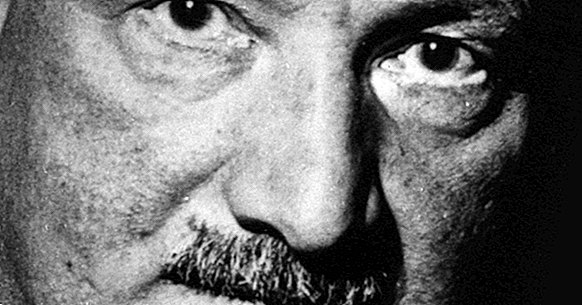
Why has Martin Heidegger’s 1927 opus Being and Time, arguably the most important book of philosophy of the 20th century, never fed into even an embryonic nationalist project to sideline the Nietzschean fiction and challenge the systemic dominance of liberalism? Setting aside the endless, besmirching academic arguments about his years as a NSDAP member, and his brief and fraught rectorship at Freiburg, the answer most immediately to hand is that its quest is for the meaning of human being, not its nature. Both are ontological quests, for sure. But the former, addressed phenomenologically and without strongly-drawn lines, has proved a gift for thinkers concerned primarily with Being’s relation to World as the social environment, which all-too-easily shifts into the politicised study of the structure of society, language and semiotics, power and inequality. These academics of inauthenticity would be horrified to find emerging from Heidegger’s thought a model of Man as a relational and agentive being, expressing what is most essential to him, commanding a politics of his shared natural interests. But, of course, we would be highly delighted. But to arrive even theoretically at such a definitively real Man on the basis of an account of Being is a really demanding intellectual undertaking. Many would say impossible just on the basis that Being and the lived-life are categorically exclusive. Heidegger’s forest of subtle and recondite formulations, which are oft-times run into one another with a cavalier freedom, do not advance the likelihood of success one whit, notwithstanding the fact that he was a Swabian identitarian and German nationalist himself. In this long-delayed second part to this series (for any undue abstraction in which I hereby apologise) our search for agency will address Heidegger’s model critically and from the conviction that our reality is human being as bearer of Nature’s difference and specificity, and it isn’t intellectually undeliverable. But there is no immediate way to it in Heidegger’s Dasein. More clearly drawn parameters, strictly ontologically-derived, internally consistent, are necessary. In this hunt for definition and consistency, then, I will confine myself to five examples of problem areas, and where possible suggest some re-working. The objective is to demonstrate both the nature of the problem and that of the solution, and not to be exhaustive in any way; and out of that, as ever, to encourage the development of a complete and advantageous philosophy.
As beings are biological and sociobiological and as their particular array of traits are inherited, so they are ethnically differentiated and specific. The being of beings must, in its turn, and in its arrayal and deportment, carry some imprint of that specificity; not directly as a first-order effect of evolution, of course, but at the very least consequentially and receptively, like an ancient landscape, perhaps, weathered into uniqueness over the aeons. Were this not the case then we would have to conclude that the being of a being is a neutral and unfeatured thereness, a profound and singular abstraction from the ontic, sans any hint of a constitution. But we know perfectly well that the being of a tiger, say, is not that of a mollusc, and once one acknowledges the differential effect on being of different beings, then difference is unstoppable. One’s enquiry must arrive at the principal specifics of difference, and with human being so we must come to ethnicity as a weathering effect on that ancient landscape. Heidegger’s phenomenological interrogation of the meaning of being proceeds via the novel medium of a common base-entity or being-ness, Dasein. Except through the presumption that authenticity will find its mark, he does not approach it from the proving direction of a constitution by imprimatur. He is a putative light-shiner - he sets about determining “the basic content of Dasein’s existential constitution” with:
He analyses the temporality of each, pulling in anxiety and fear as “states of mind” which have the potential to disclose Dasein. The direction of flow here is towards the shock and disaccommodation of some dread event, a personal disaster or, perhaps, natural disaster, which functions as “the exception”, knocking out the standard behavioural range of personhood, stripping everything back to the truth of a man. On the surface it is not an unreasonable thesis. Life conceivably can work like that although it is likely to be a very rare event indeed (which I will expand upon from Case 3 down); and given the power of absence and mechanicity in Man it is certainly not inevitable. Everyone (excepting psychopaths, I suppose) has the full range of emotions. Everyone reacts psychologically to disaster. Some fight for every inch, some freeze, some submit and pray or don’t pray. Who but the individual his or herself is to know what is from the very ground of that individual’s being and what from his or her personhood? If it is only for the individual to know this, what is to save us from solipsism? Then, even if it isn’t solipsistic, a reduction to the individual’s experience ineffably delivers us to a politics of prescribed universalism. Nationalist philosophy could not issue from that. Neither could it be systemic to the rest of human life, when there is no crisis in train. In philosophy, as in politics, the universal tends to homogeny, and homogeny to distance from the lived reality, just as difference and specificity will tend to nearness to it. An account of Man which does not adequately account for human difference and specificity will never produce a fit outcome. The unfortunate people under its organising hand will be fated to live the lie of oneness. Certainly, Heidegger did determine that Dasein has a constitution. But the arraying of that, along with the conceptualisation of other significant elements in his schema, only encouraged co-option by the postmodern equalitarians. Obviously, we, too, are looking to incorporate into our thinking that which is immediately useful and, where possible, to qualify whatever else has potential. This essay is about the latter.
The following is an extended reply to a conversation with Thorn and a question from him on the matter of faith and conversion. To answer that, I am not going to answer that. I am going to contextualise my non-answer by talking a little instead about the parallels between spirital liberation and the beatific on the one hand and the nationalism of ethnicity and awakening on the other, and about both of these and authenticity. For all of us as human beings, an awakening consciousness of our own Being assorts as either a spiritual or ethnic liberation according to its character and content. Both question that which is formed in us quite mechanically from the world around us. Both seek the freeing, conscious experience of the essential. But the way to that estate is narrow. A spiritual liberation properly commences with an individual’s detachment from the voiding psychological mechanicity of his ordinary inner functioning. As a human event, this liberation is esoteric in nature, and its understanding and undertaking is really only possible for men and women with the most remarkable dedication to and discrimination for truth. Luck also plays its part. Just to have the psychological grounding to generate the required epiphany (that “the problem” lies in our enworldment and its powerfully habituating effect upon certain mind-functions) is rare and remarkable in itself. That alone makes a searcher of the subject, and brings him or her to the boundary of the esoteric. For a Westerner then to go on and (a) find and (b) gain entry to a source of the necessary, extremely carefully curated technical (not religious) knowledge is akin, chance-wise, to a non-trivial win on the lottery. Fragments of that knowledge ... just strings of words ... appear in the New Testament, but nothing can be reconstructed from them. Likewise, odd references appear in formal Christian belief and rite, but they are lost to other familiarities. There are reportedly surviving elements in the spiritual devotions and exercises of the dwindling roster of religious orders. But this knowledge is preserved to a much greater degree in Sufism, Hindu mysticism, and Buddhism.
Introduction This is the first of three planned new essays - none of them very lengthy or (I hope) too obscure. This one is the very first I have offered at this site for some time. Together with the Sibelius essay I posted getting on for two years ago now it marks an end point to my work on foundation and the perspectives for ethnic nationalism that it affords. The objective in this essay is to revisit and clarify the earlier work, to philosophise it rather more formally, and fit it to the task of moving forward. The second essay in this trio, which I have not yet written, will deal with a foundational epistemology, specifically the dynamic scheme I called the Ontological Transit, which I hold to be the ground of our perception of the essential. After that visit I hope to be able to offer – probably wholly unwisely and almost certainly not originally - a (very) tentative gesture towards a theory for the central problem of all philosophy of Mind, that problem being how our subjective experience arises from the electro-chemical activity of the brain. Thus, for example, for ethnic nationalists that includes how we beings of Nature and of the material universe witness the flood of mind-mediated information (qualia), know and value self and relation, being and the freedom in being, and truth, good and love, and know these to be vivifying and our experience of them as real, in their way, if not as solid as the hardest of reality we can perceive; and, therefore, as necessitous and essential for the political ordering of society. A nationalist, therefore, is seeking not merely a technical (or ontical) description for the mind’s rendering of this thing we call reality. He’s hunting for a basis in human truth, a natural, qualitative order which cleaves the political, as it does all things, and sets down the cause of the people’s life and life-interests in the light, above and beyond the generalities and vicissitudes of the day. And we begin that hunt, naturally enough, in the beginning. The founding vita What does foundation mean? Well, for me it certainly does not mean the mystic’s a priori ground or plane of pure being from which we mere human beings, sunk in our ordinariness, are famously exiled, and to which return is a moment of rapturous union with the All. Minus the manipulation of brain chemistry it is never more than theory, and an anti-evolutionary theory at that; and is too often proposed with a religious certainty inevitably unappealing to a materialist. Also, notwithstanding my materialism (and naturalism) and despite what follows, neither am I interested in the empirical evidence for the parental possibilities of oceanic ribonucleic acid. As everyone knows, how life came about has not yet been explained scientifically, and may never be. But in truth, the ontical sense of it will only ever be an account in quanta anyway; which cannot suffice for us. For it cannot contain or model the human vitality we, as philosophical enquirers, seek to understand, interpret, intellectualise, and re-present in answer to the great question of how to live. For the same reason I am not attracted to the dry philosophical practise of determining over-arching systems of ontological categories or classes into which the knotted skein of being might be teased – even those like quanta and qualia I am inevitably using myself! There are two hundred and seventy of them in Hegel’s categorisation, all of three in various others! It’s work on a cadaver, like rendering down speech into dictionary definitions, or the grand enterprise of a business concern into the annual accounts. No, I am looking for the living ontological history, to be got from the stuff of existence as an artist draws the human truth of his model. Methodologically, perhaps that would be an intellectual art, resistant to formalisation, therefore probably unteachable, therefore, probably not academically respectable. But academia cannot model the politics of the blood any more than science can. It has been missing something. Or if it ever found a trace under its scalpel, it killed it all over again on the mortuary slab. Let us avoid that. So, by “foundation” I mean origin as a creative event which is self-perpetuating and, thus, functions as the universal primal order of life. As befits mere beings of flesh and blood (and modernity, of course), let us address this admittedly large, not to say godlike subject in fleshy microcosm. Accordingly and always mindful of our own extreme transience, we might hunt for the foundational in the occurrence, after perhaps a billion or ten or twenty billion infinitesimally brief cellular sparks in a mechanical universe (governed ceaselessly and absolutely by Time and Entropy but also by Happenstance in the sense of random events, processes, and interruptions) of an anomalous event of integration such that there was, this once, a founding vita, however spare, however primitive. Obviously, we do not speak here of anything recognisably “personal”, or anything at all beyond a bare sequence of information in auto-catalysis. But within that first, faint trace of a separation from the disintegrating lay a trace, fainter still, of the essence for continuity, interposing itself in the universal fabric, elaborating itself in whatever way will secure the light. By elaborating, the whole may change and even divide and by dividing increase; and then, from changing and dividing and increasing, perform the saving trick of giving up phenotype to disintegration, yes, but withholding genotype for continuity. Everything that comes after (so, nervosity, oxygenation, the sensing of heat, light, movement and of quora, the incorporation of energy sources, sensitisation to environmental change, the giving and receiving of chemical signals, the bias towards strong signals, etc … all the way to complex forms of sapience) is elaboration forced by the disintegrating action of the mechanical universe. Stasis is not an existent reality. For one of the sides to this drama … the side of life … there is never a possibility of rest or final victory. Always, Time and Entropy drag this life back towards discontinuity and disintegration, and the cold state of mechanics. Always life’s essential, voracious appetite for continuity, born of that initial happenstance, impels it forward and proves itself, within its own confines and by its perfect integrity, as equal as equal can be to the vast forces without. The profound order By its sheer salience and novelty, all this vitality contests the metaphysician’s standard theory of a recondite and static, continuous plane or ground of existence by which the being of things living and things not living is if not caused certainly situated. In the standard theory existence itself has no nature, indeed is prior to all nature. It is one and its value is 1. The existence of everything that is has the same value of 1, and the being of All has the value of 1. There can only be this austere and unlit, singular, factic thereness of a thing, and of all things under the governments of Time, Entropy and Happenstance. It is existence as absolute homogeny, existence as raw, imperishable precondition. What deities have been imagined to precede and exceed it, equipped with all the magical baggage of design, are themselves only the designs of men who found the prevailing mechanicity an intolerable affront to love, meaning, purpose, and hope of life and hope in the sublime. Their gods, their spirits, their mythos, their very faith need not detain us, for the ontological order we are unearthing is not the object of their discontent, but the fundamentals of their repudiation of it. To be precise, and – again - from the beginning: Integration necessarily has locality and therefore confines, for confinement alone gifts separateness from the prevailing All. In separateness there is necessarily resistance to the claim of that which is separated from, which is a claim to absoluteness. In resistance there is the tendency and leaning towards continuity; and in that leaning already lay the seeds, at least, of a “something” which is essentially different, and which preserves its difference only as long as it engages in a Manichean struggle with the blind and profane, homogenising forces without. But that engagement limits homogeny’s realm and the priorness of existence is universal no more. Within its own bold confines essence is now prior, for so long as essence differentiates itself existence is made contingent upon and a function of it. So now we have, for the purposes of this investigation, conferred upon the general existence its sign and character of the “austere and unlit, singular, factic thereness of a thing, and of all things”, and we have defined essence not only as that of a vita differentiated from those existent things, but also as the differentiating constant of that “which preserves its difference only as long as it engages in a Manichean struggle with the blind and profane, homogenising forces without.” Further, we have given the disintegrating and homogenising action of those forces the ontological character of mechanicity. Ineffably un-differentiating in themselves, they become themselves because essence is itself differentiating, for only in their relation of difference is their respective character unconcealed. Because this mutual unconcealing is a gift solely of essence’s genesis in continuity, it demonstrates that by that alone light has entered the universe, and a sweet anarchy by which the absolute is made relative and the profound order is re-established: no longer a singular, unbroken, universal reign of forces but a landscape of confined multiplicity, of the particular, and of the qualitative; and more than that, of the constantly differentiating and refining into an ever more specific and elaborate multiplicity. In other words, there is a value of 2, and there are values within 2. Essence is, essences are. So we have our foundation in the essential principle and, specifically, its origin and prior relation to existence: a solid, immutable operative order which not only underpins the organic existence but pervades its instincts, ordering, conditioning and permeating their dynamic creativity. Thus is its effect in all living organisms, and in the human organism also, to which everything must belong with nothing added and nothing taken away.
|
|
Existential IssuesDNA NationsCategoriesContributorsEach author's name links to a list of all articles posted by the writer. LinksEndorsement not implied. Immigration
Islamist Threat
Anti-white Media Networks Audio/Video
Crime
Economics
Education General
Historical Re-Evaluation Controlled Opposition
Nationalist Political Parties
Science Europeans in Africa
Of Note MR Central & News— CENTRAL— Ukraine, Israel, Taiwan … defend or desert by Guessedworker on Sunday, 14 April 2024 10:34. (View) Patriotic Alternative given the black spot by Guessedworker on Thursday, 14 March 2024 17:14. (View) On Spengler and the inevitable by Guessedworker on Wednesday, 21 February 2024 17:33. (View) Twilight for the gods of complacency? by Guessedworker on Tuesday, 02 January 2024 10:22. (View) — NEWS — Moscow’s Bataclan by Guessedworker on Friday, 22 March 2024 22:22. (View) Soren Renner Is Dead by James Bowery on Thursday, 21 March 2024 13:50. (View) Collett sets the record straight by Guessedworker on Thursday, 14 March 2024 17:41. (View) CommentsThorn commented in entry 'Soren Renner Is Dead' on Wed, 24 Apr 2024 22:36. (View) James Marr commented in entry 'Soren Renner Is Dead' on Wed, 24 Apr 2024 14:20. (View) weremight commented in entry 'Soren Renner Is Dead' on Tue, 23 Apr 2024 04:24. (View) Thorn commented in entry 'Soren Renner Is Dead' on Mon, 22 Apr 2024 22:54. (View) James Marr commented in entry 'Soren Renner Is Dead' on Mon, 22 Apr 2024 16:12. (View) James Bowery commented in entry 'Soren Renner Is Dead' on Mon, 22 Apr 2024 14:44. (View) Thorn commented in entry 'Soren Renner Is Dead' on Mon, 22 Apr 2024 12:34. (View) weremight commented in entry 'Soren Renner Is Dead' on Mon, 22 Apr 2024 06:42. (View) James Marr commented in entry 'Soren Renner Is Dead' on Sun, 21 Apr 2024 23:27. (View) Thorn commented in entry 'Soren Renner Is Dead' on Sun, 21 Apr 2024 23:01. (View) James Marr commented in entry 'Soren Renner Is Dead' on Sun, 21 Apr 2024 22:52. (View) Thorn commented in entry 'Soren Renner Is Dead' on Sun, 21 Apr 2024 22:23. (View) Anon commented in entry 'Soren Renner Is Dead' on Sun, 21 Apr 2024 20:07. (View) Thorn commented in entry 'Soren Renner Is Dead' on Sun, 21 Apr 2024 19:39. (View) James Bowery commented in entry 'Soren Renner Is Dead' on Sun, 21 Apr 2024 17:38. (View) Thorn commented in entry 'Soren Renner Is Dead' on Sun, 21 Apr 2024 15:20. (View) James Bowery commented in entry 'Soren Renner Is Dead' on Sun, 21 Apr 2024 15:01. (View) Anon commented in entry 'Soren Renner Is Dead' on Sun, 21 Apr 2024 13:31. (View) Thorn commented in entry 'Soren Renner Is Dead' on Sun, 21 Apr 2024 12:52. (View) James Marr commented in entry 'Soren Renner Is Dead' on Sun, 21 Apr 2024 09:21. (View) Al Ross commented in entry 'Soren Renner Is Dead' on Sun, 21 Apr 2024 05:25. (View) Thorn commented in entry 'Soren Renner Is Dead' on Sat, 20 Apr 2024 23:49. (View) James Bowery commented in entry 'Soren Renner Is Dead' on Sat, 20 Apr 2024 23:37. (View) James Bowery commented in entry 'Soren Renner Is Dead' on Sat, 20 Apr 2024 23:24. (View) Anon commented in entry 'Soren Renner Is Dead' on Sat, 20 Apr 2024 21:38. (View) Thorn commented in entry 'Soren Renner Is Dead' on Sat, 20 Apr 2024 20:16. (View) James Bowery commented in entry 'Soren Renner Is Dead' on Sat, 20 Apr 2024 18:19. (View) Thorn commented in entry 'Soren Renner Is Dead' on Fri, 19 Apr 2024 20:43. (View) James Bowery commented in entry 'Soren Renner Is Dead' on Fri, 19 Apr 2024 19:16. (View)  
|