Happy Jethro Tull Day!
Agronomist-inventor Jethro Tull increased carrying capacity by as much as a factor of 8 with, among others, his invention of the seed drill (seen here with his surname distribution during the cultivation of the US frontier):
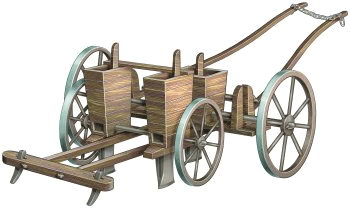
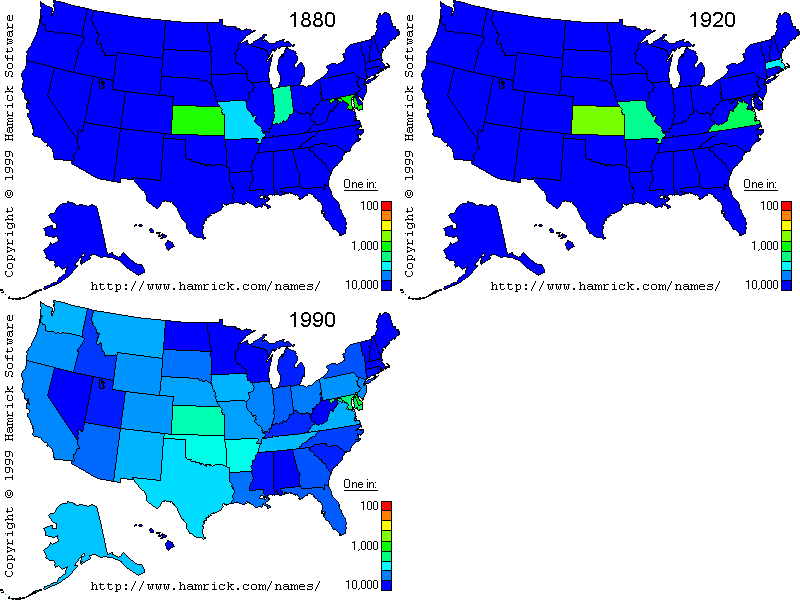
The seed drill is a simple device, simple enough that it can be built by a competent yeoman farmer, which Jethro Tull was.
If I were King, I would replace Saint Patrick’s Day with Jethro Tull Day, in honor of this man to whom so many owe their very biological existence—born to his own biological existence as he was during March 1674 in Basildon, Berkshire, UK. The Friday nearest Mid-March seems a good time for such a celebration since we don’t know his exact date of birth (he was christened March 30 according to Parish records), and Friday night is better for raising a glass of ale, (brewed from the fruit of the harvest made more bountiful by the seed drill) than some random day of the week.
Jethro Tull, rather than being properly honored, lost his land and was hounded by creditors.
If any of my cousins near Lower Basildon in Berkshire would be so kind as to drop some flowers on his grave at St Bartholomew’s church I would appreciate it.
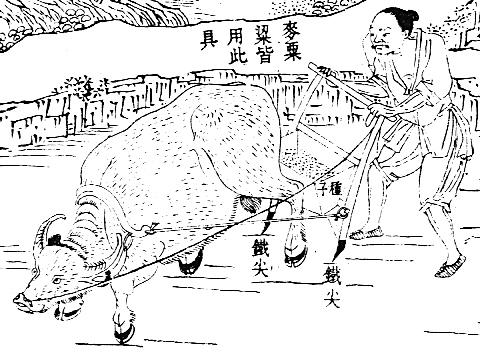
PS: Not to denigrate Chinese agricultural accomplishments—which are undoubtedly quite profound in their own right—to those who claim that Jethro Tull “adopted” the much earlier Chinese device which they call a “seed drill”, let them compare the drawing above with this drawing of the Chinese “seed drill” and keep in mind that Tull had to go through multiple generations of design before he arrived at a device which achieved the required multiple of crop yield with the above pictured device:
The trackback URL for this entry is: Trackbacks are disabled for this entry
Trackbacks:
Comments:
Page 1 of 1 pages
James,
I though you said you were a Fraser. But I detect a certain likeness with old Jethro.
Here is an article on the overgrown nature of St Bartholomews churchyard, with some thumbnails of gravestones. It was compiled in 2004. The introduction reads:-
This is a very nice place. The church is not particularly noteworthy, but its grounds are. Parts of the grounds have been left to grow unhindered, for the sake of a number of rare plants and its insect population. In particular, the secondary graveyard, behind the church, is very overgrown, but this makes for some nice scenery. The church is some distance from Lower Basildon, and is down a lane towards the Thames, on the opposite side of the main road from the village. Note: Jethro Tull was buried here - I didn’t find his grave.
Someone’ll refer to the band so it might as well be me ...
Jethro Tull [...] is a British rock band that formed in 1967-1968. Their music is marked by the distinctive vocal style and lead flute work of front man Ian Anderson. Initially playing blues rock with an experimental flavour, they have over the years incorporated elements of classical, folk and ‘ethnic’ musics, jazz and art rock. Eclectic influences, diverse instrumentation, and often elaborate song construction led them to be labelled as an archetypal “progressive rock” band. [...] At first, the new band had trouble getting repeat bookings and they took to changing their name frequently to continue playing the London club circuit. Band names were often supplied by the staff of their booking agents, one of whom, a history buff, eventually christened them Jethro Tull after the 18th-century agriculturist who invented the seed drill. This name stuck simply because they were using it the first time a club manager (John Gee of the Marquee Club, London) liked their show enough to invite them to return.
Posted by Fred Scrooby on Saturday, March 17, 2007 at 12:40 AM | #
That link isn’t working for some reason. Here’s the expanded URL:
http://en.wikipedia.org/wiki/Jethro_Tull_(band)
Posted by Fred Scrooby on Saturday, March 17, 2007 at 12:45 AM | #
Still doesn’t work. Go here,
http://en.wikipedia.org/wiki/Jethro_Tull ,
and click on “Jethro Tull (band)”
Posted by Fred Scrooby on Saturday, March 17, 2007 at 12:48 AM | #
Well, as long as we’re exploiting my dangling set ups left from my post:
One of the things neo-"pagans" seem never to get quite right, or rite, as the case may be, is this whole fertility thing. Sure there is metaphorical reference made to planting seed in the soil usually in conjunction with birth-controlled sexual activity—frequently gay. But the point of fertility seems to be lost on these people as their reproductive rates are lower than almost any other group of people’s.
So I find myself particularly bemused by the idea of a pagan rite of spring focusing on a genuinely rural tradition that helped create the population explosion on the American frontier, and its name which brings life to the phrase “form follows function”:
Seed Drill
Posted by James Bowery on Saturday, March 17, 2007 at 08:10 AM | #
Sorry, but the seed drill was used in China for 2000 years before Jethro Tull adopted it. Look it up.
Posted by Tomo on Saturday, March 17, 2007 at 08:16 PM | #
To employ the word “Adopted” is deceitful, surely, Tomo. Did Jethro tour China like a proto-Victorian plant-hunter?
Posted by Guessedworker on Saturday, March 17, 2007 at 08:22 PM | #
Here is the Chinese version of “the seed drill” which some claim, with no documentation nor apparent justification, Jethro Tull “adoped” from the Chinese:
Posted by James Bowery on Sunday, March 18, 2007 at 06:35 AM | #
Page 1 of 1 pages
Next entry: Study Challenges Theories On Species
Previous entry: If you can't break it, it isn't fixed.


Posted by Guessedworker on Saturday, March 17, 2007 at 12:22 AM | #