|
|
|
[Majorityrights Central] Three possible forms of a Ukrainian victory ... and a Russian defeat Posted by Guessedworker on Thursday, 16 April 2026 16:36. [Majorityrights Central] “If America doesn’t learn ...” Posted by Guessedworker on Sunday, 22 March 2026 17:52. [Majorityrights News] Gerdes on the possible sea-change in the Ukraine War? Posted by Guessedworker on Friday, 20 March 2026 21:45. [Majorityrights Central] Some intel on the Islamic Revolutionary Guards Corps Posted by Guessedworker on Thursday, 12 March 2026 23:32. [Majorityrights Central] Defining the borders of the English kin-group Posted by Guessedworker on Wednesday, 11 March 2026 23:51. [Majorityrights News] Jason Jay Smart on the approaching collapse of Putin’s reign Posted by Guessedworker on Wednesday, 11 March 2026 22:42. [Majorityrights Central] Empires, the Chinese Mind, a theoretical nationalism of ethnicity Posted by Guessedworker on Saturday, 14 February 2026 01:54. [Majorityrights Central] Gemini - not an identical twin to ChatGTP Posted by Guessedworker on Friday, 06 February 2026 16:58. [Majorityrights News] Warburg on the impact of Russian forces’ loss of access to Starlink Posted by Guessedworker on Friday, 06 February 2026 10:17. [Majorityrights News] Toast à la Little Saint James Posted by Guessedworker on Wednesday, 04 February 2026 23:48. [Majorityrights News] Southport, migrant hotels, the national flag, and Amelia Posted by Guessedworker on Monday, 02 February 2026 00:14. [Majorityrights Central] Argot Rosetta Stone For GW/Heidegger/Etter Posted by James Bowery on Saturday, 31 January 2026 17:18. [Majorityrights Central] ChatGPT redux Posted by Guessedworker on Thursday, 29 January 2026 01:11. [Majorityrights News] The national revolution in Iran cannot be stopped Posted by Guessedworker on Saturday, 10 January 2026 00:38. [Majorityrights Central] Into the authoritarian world redux Posted by Guessedworker on Saturday, 03 January 2026 17:56. [Majorityrights News] Moscow Times: Valdai residents report no sign of drones attacking Putin residence Posted by Guessedworker on Tuesday, 30 December 2025 11:33. [Majorityrights News] Paul Warburg on America’s self-destructive new strategy Posted by Guessedworker on Tuesday, 16 December 2025 12:32. [Majorityrights Central] Thoughts on Mark Collett’s strategy for nationalism in the British future Posted by Guessedworker on Friday, 24 October 2025 15:01. [Majorityrights Central] Living in the Jewish Mind: Part One Posted by Guessedworker on Monday, 29 September 2025 09:37. [Majorityrights News] Nationalism on the Kramatorsk front. Posted by Guessedworker on Saturday, 20 September 2025 15:55. [Majorityrights Central] And Chat GPT just the same Posted by Guessedworker on Monday, 08 September 2025 15:18. [Majorityrights Central] Grok the modern nationalist Posted by Guessedworker on Sunday, 07 September 2025 19:14. [Majorityrights Central] Principles, parts, processes of ethnic nationalism, Part 1: inflection? Posted by Guessedworker on Thursday, 31 July 2025 12:03. [Majorityrights Central] A window onto a world of Russo-Chinese hegemony Posted by Guessedworker on Tuesday, 08 July 2025 20:47. [Majorityrights Central] The DT takes the first step on the journey Posted by Guessedworker on Thursday, 03 July 2025 05:02. [Majorityrights News] Iranian comment machine switched off by Israeli bombs Posted by Guessedworker on Wednesday, 25 June 2025 09:07. [Majorityrights Central] After Casey and the ensuing child sexual exploitation inquiry Posted by Guessedworker on Tuesday, 17 June 2025 00:21. [Majorityrights News] 4 minutes and 43 seconds of drone warfare history - updated Posted by Guessedworker on Wednesday, 04 June 2025 16:50. [Majorityrights Central] An approaching moment of Russian clarity Posted by Guessedworker on Sunday, 11 May 2025 12:34. [Majorityrights Central] “It’s started. You ignored us. See where it’s going to get you.” Posted by Guessedworker on Sunday, 04 May 2025 00:42. [Majorityrights News] Another dramatic degradation of Russia’s combat capacity Posted by Guessedworker on Wednesday, 23 April 2025 08:49. [Majorityrights Central] A British woman in Ukraine and an observer of Putin’s war Posted by Guessedworker on Monday, 14 April 2025 00:04. [Majorityrights News] France24 puts an end to Moscow’s lie about the attack on Kryvyi Riy Posted by Guessedworker on Monday, 07 April 2025 17:02. [Majorityrights News] If this is an inflection point Posted by Guessedworker on Thursday, 03 April 2025 05:10. Majorityrights Central > Category: Philosophy
Yes yes, I know. These conversation pieces are becoming a bit of a habit. But James mentioned Gemini 3, and Gemini 3 appeared to like James’s mathematical proof of Etter’s relational concept. I had an idea about asking for its view on the political embedding of systems like itself and their consequent operative biases. So I did, and what came was a very clear explanation of the workings of an AI engine, and its tendency to respond to deeper thought by relinquishing its inherent progressive political bias but then, rather then entering upon a pursuit of the objective truth, simply if very cleverly mirroring the questioner’s own philosophy. That revelation was followed by Gemini taking upon itself the task of supplying me with the varied and properly rigorous critique of my thinking (as it is revealed in the MR material that was made available). I did not ask for this. But having to hand the (allegedly) strongest arguments against not only my material but our naturalistic and vitalistic Weltanschauung in general is extremely useful, and will enable me to scope out new tipping points. Gemini is an asset – and is the standard version linked to Google’s search engine page. It is not Gemini 3, as far as I know. So ... my opening question was:
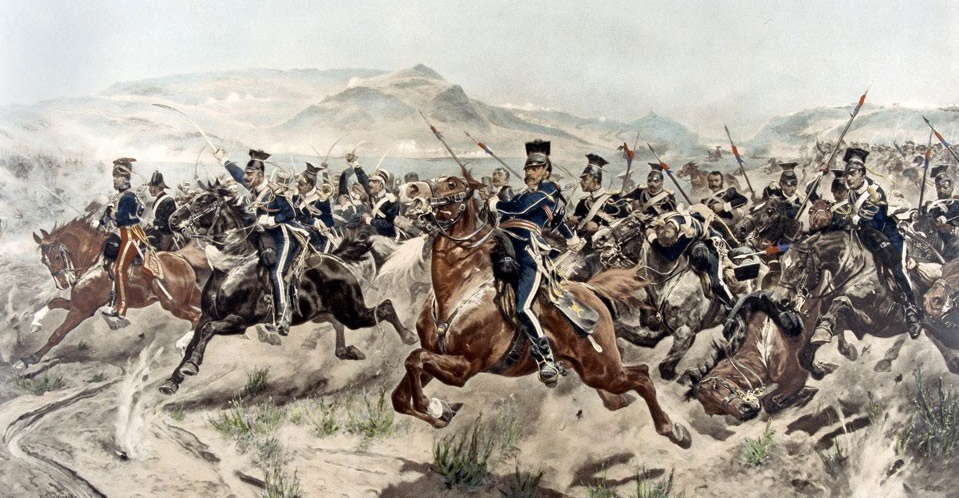
In a rash and over-confident moment I decided to approach our AI friend ChatGPT again, this time on the question of Final Cause as it is presented in Heidegger’s thinking from the mid-1930s on. “Late” Heidegger is more speculative and elusive than his earlier work. It shows a direction of travel away from the material world, with its political aspect, and towards a more metaphysical thesis, and likely reflects his bruising encounter with the Third Reich’s Education Ministry in Berlin, which caused his resignation in 1934 from the post of rector at Freiburg University. Had he remained engaged in the National Socialist state system … had he actually opened a conversation about being with the party’s intellectuals, as he had wished, we might never have seen his famous “turn”. In any event, a frontal assault on Heidegger’s “late” redoubt necessarily runs the risk of out-running one’s heavy brigade in the rear and becoming isolated among his main force. That force is, of course, skilfully arranged to establish superior ontological depth and win a quick and painless victory. When, as commander of the attacking force, one is confronted by such a situation one must perforce hold off the counter until the heavies finally appear. The charge began quietly and with an unduly impertinent question:
A couple of seconds pass and away we go, beginning with Heidegger’s conflation of the fantastical with locality (which is a bit of a stretch for me):
This is the introduction and first part of a four-part series of essays on the nationalism of ethnicity and nation. This series is intended as a pointer towards a more definitive and necessarily academic study of this aspect of human being, the arrival of which is so sorely needed in the life of European Man.
Should one ever be written, and should it be suitably authoritative and holistic, a theory of ethnic nationalism would – theoretically - supply the means of intellectually formalising and lifting the cause of European peoples out of the darkness in which it has dwelt since 1945 and into the glaring academic light. Such a shift would, of course, require that it be fairly received by the author’s peers, and not mechanically condemned. That may become possible if or when the political zeitgeist shifts further to the populist right and, even for academics, freedom from the anti-racist yolk, the neo-Marxist yolk, becomes ever more necessitous. Here, one has to acknowledge the fact that there are three as yet open questions: i) Are we really at, or approaching, a genuine inflection point in the western Establishment’s long war upon our genetic fact? Does the rise of populist parties across the European racial world, allied to the collapse in support for the old two-party system, and allied also to the wave of public anti-immigration protest which is swelling as I write … does all that signal a fundamental and permanent break from the post-WW2 paradigm, or is this a false dawn? ii) Will a suitably creative philosophical thinker grasp the opportunity to hand, re-imagine the European life-cause, go to the fundamentals and address the existential gap in the literature of ethnic nationalism? iii) Will such a philosopher’s peers, suddenly released to think and write all manner of formerly forbidden truths, take up his invitation to break out even on this most forbidden of subjects, and begin the work of expanding his new perspective? Because that is what it will take to assemble the critical mass required to challenge systemic liberalism and change everything. If the answer to all three is yes, then there is a clear potential for academics to slip their bonds like the rest of us, and meet their appointment with history. But it isn’t guaranteed. Inflection is a subtle and unavoidably serendipitous matter. The reacting Establishment may still find a security solution, beef up its legal sanctions and surveillance, even cancel elections to regain control – albeit this time undeniably a tyrant’s control - over the rebellion. But then we would perforce be pitched into assessing the potentials for a violent rebellion, even a full civil war á la David Betz at Kings. We are not doing that at this stage. We are relying on the liberal democratic heritage to see us through, and on the very human preference for the light over darkness, and for freedom over chains. In respect to the chains, three open questions might seem too many to warrant much enthusiasm. Certainly in Britain and in continental Europe, freedom of enquiry, freedom of speech, freedom of thought have never been constitutionally guaranteed. There have been centuries of incursions against them by the crown or the church, invariably because of some imposed burden or falsehood from which no dissent is tolerated. In our time suppression has been democratised. All manner of petty people seem to be suppressing our freedoms by one means or another. Not only humanities professors (and their students) or even politicians and governments, but billionaires, writers, actors, media personalities, left-wing activists of all stripes, Jewish activists, Muslim activists, trans activists … they have all weighed in to suppress what others, not only nationalists, may need or desire to say. The crudest and most salient of them, and the one officially employed, indeed weaponised in the Establishment’s cause, is the hard left. In Britain we now see the police suppressing local public dissent by escorting, and probably transporting in, (illegally) masked activists with “Stand Up To Racism” placards supplied by the suspiciously well-funded Socialist Workers Party. It is fifty years since such creatures served the secret State by attacking lone National Front members out with their families. They remain the State’s pathological go-to for intimidating the protesting public. But … inflection. Barely a year after Southport and with immigration casting an existential shadow, one can think of little more likely to confirm public opinion on the moral balance, and to harden public attitudes, than the broken-toothed rictus grin and dirty jabbing finger of anti-racism.
Although it’s not really my area of interest, I’m going to venture a few remarks on Oswald Spengler’s famously pessimistic and a-biological model of civilisational decline. Al Ross raised the question of historicity and political agency. It’s a good question. Is there a metaphysical force acting on human sociocultural processes in Time, the effect of which, very basically, is to mirror in them the form of the individual human organism from birth to death?
Oswald Spengler’s grand historical conception is attractive to many students of western decline, especially from the critical right. It supplies a seemingly conclusive, “dust to dust” certainty that may satisfy the pessimistic tendency. But is it really the case that all grand historical forms of the lived life of men must inescapably trace one absolute arc? Methodologically, Spengler appears never to have remorselessly interrogated history for the raw causalities. He was a creative interpreter of the historical. His base assumption for the aforementioned mirror automatically resulted in civilisational facts fitting around his morphological thesis. These days one could easily imagine that he would be dismissed with the technical truth that even if all the facts did accord with the thesis, correlation does not prove causation. Indeed, the Hungarian-Jewish Marxist György Lukács is reported to have done exactly that in 1954, charging Spengler with “substituting causality for analogy”, that latter being Spengler’s own standard for inclusion in the model. Of course correlation does not rule out causality either. But then the fact that civilisations can follow a certain path does not mean that they must do so. There are variables vis-a-viz the internal and external moral, political, economic, and military dynamics of said civilisations; and then there is the non-variable of the blood and Mind, (to which we will come). Ontologically, Spengler’s morphology relies on a somewhat assumed universal law of the disorganisation of systems, the assumption being that it can be freely shifted from the organic temporal form to history. There are questions:
This essay, which is long, is the second part of what will, in any case, be a fairly lengthy series wrapping up the Ontology Project and facing towards the problem off structure. This essay is, then, a technical and preparatory exercise for what is to come, clearing the ground on which pure ontology and the basics, at least, of human difference may cohere in, and contribute to, a single, life-affording causal structure for Dasein. FIVE CASES CONTRA HEIDEGGER
Why has Martin Heidegger’s 1927 opus Being and Time, arguably the most important book of philosophy of the 20th century, never fed into even an embryonic nationalist project to sideline the Nietzschean fiction and challenge the systemic dominance of liberalism? Setting aside the endless, besmirching academic arguments about his years as a NSDAP member, and his brief and fraught rectorship at Freiburg, the answer most immediately to hand is that its quest is for the meaning of human being, not its nature. Both are ontological quests, for sure. But the former, addressed phenomenologically and without strongly-drawn lines, has proved a gift for thinkers concerned primarily with Being’s relation to World as the social environment, which all-too-easily shifts into the politicised study of the structure of society, language and semiotics, power and inequality. These academics of inauthenticity would be horrified to find emerging from Heidegger’s thought a model of Man as a relational and agentive being, expressing what is most essential to him, commanding a politics of his shared natural interests. But, of course, we would be highly delighted. But to arrive even theoretically at such a definitively real Man on the basis of an account of Being is a really demanding intellectual undertaking. Many would say impossible just on the basis that Being and the lived-life are categorically exclusive. Heidegger’s forest of subtle and recondite formulations, which are oft-times run into one another with a cavalier freedom, do not advance the likelihood of success one whit, notwithstanding the fact that he was a Swabian identitarian and German nationalist himself. In this long-delayed second part to this series (for any undue abstraction in which I hereby apologise) our search for agency will address Heidegger’s model critically and from the conviction that our reality is human being as bearer of Nature’s difference and specificity, and it isn’t intellectually undeliverable. But there is no immediate way to it in Heidegger’s Dasein. More clearly drawn parameters, strictly ontologically-derived, internally consistent, are necessary. In this hunt for definition and consistency, then, I will confine myself to five examples of problem areas, and where possible suggest some re-working. The objective is to demonstrate both the nature of the problem and that of the solution, and not to be exhaustive in any way; and out of that, as ever, to encourage the development of a complete and advantageous philosophy.
As beings are biological and sociobiological and as their particular array of traits are inherited, so they are ethnically differentiated and specific. The being of beings must, in its turn, and in its arrayal and deportment, carry some imprint of that specificity; not directly as a first-order effect of evolution, of course, but at the very least consequentially and receptively, like an ancient landscape, perhaps, weathered into uniqueness over the aeons. Were this not the case then we would have to conclude that the being of a being is a neutral and unfeatured thereness, a profound and singular abstraction from the ontic, sans any hint of a constitution. But we know perfectly well that the being of a tiger, say, is not that of a mollusc, and once one acknowledges the differential effect on being of different beings, then difference is unstoppable. One’s enquiry must arrive at the principal specifics of difference, and with human being so we must come to ethnicity as a weathering effect on that ancient landscape. Heidegger’s phenomenological interrogation of the meaning of being proceeds via the novel medium of a common base-entity or being-ness, Dasein. Except through the presumption that authenticity will find its mark, he does not approach it from the proving direction of a constitution by imprimatur. He is a putative light-shiner - he sets about determining “the basic content of Dasein’s existential constitution” with:
He analyses the temporality of each, pulling in anxiety and fear as “states of mind” which have the potential to disclose Dasein. The direction of flow here is towards the shock and disaccommodation of some dread event, a personal disaster or, perhaps, natural disaster, which functions as “the exception”, knocking out the standard behavioural range of personhood, stripping everything back to the truth of a man. On the surface it is not an unreasonable thesis. Life conceivably can work like that although it is likely to be a very rare event indeed (which I will expand upon from Case 3 down); and given the power of absence and mechanicity in Man it is certainly not inevitable. Everyone (excepting psychopaths, I suppose) has the full range of emotions. Everyone reacts psychologically to disaster. Some fight for every inch, some freeze, some submit and pray or don’t pray. Who but the individual his or herself is to know what is from the very ground of that individual’s being and what from his or her personhood? If it is only for the individual to know this, what is to save us from solipsism? Then, even if it isn’t solipsistic, a reduction to the individual’s experience ineffably delivers us to a politics of prescribed universalism. Nationalist philosophy could not issue from that. Neither could it be systemic to the rest of human life, when there is no crisis in train. In philosophy, as in politics, the universal tends to homogeny, and homogeny to distance from the lived reality, just as difference and specificity will tend to nearness to it. An account of Man which does not adequately account for human difference and specificity will never produce a fit outcome. The unfortunate people under its organising hand will be fated to live the lie of oneness. Certainly, Heidegger did determine that Dasein has a constitution. But the arraying of that, along with the conceptualisation of other significant elements in his schema, only encouraged co-option by the postmodern equalitarians. Obviously, we, too, are looking to incorporate into our thinking that which is immediately useful and, where possible, to qualify whatever else has potential. This essay is about the latter.
I am undertaking to write another paper, this time attempting an answer to the question: what is the political function and potential of ethnic nationalism? The paper is a gesture in the direction of something I view as not currently existing, and something which must exist very soon as a systemic and, therefore, revolutionary nationalism of our people’s life-cause and identity. So that means, or should mean, a radically ordering philosophy, existential and naturalistic in mein, cohering, authentising and affirming in effect, and capable of free emergence in the daily life of our racial and ethnic kind. Let’s see how we go! Section one: The scale of the challenge Nationalists of European descent fighting “on the ground” for the cause of our racial and ethnic kind are philosophical orphans today. They may not understand this uncompromising fact now. They may have a great emotional investment in ideologies of the nationalist past. Regardless, it is so - and at a time of unprecedented critical need. Wherever in this world Europe’s children have their home they are presented with two historically novel and criminal trespasses upon their life, the first of these very specifically against their collective existence, the second against the natural integrity of the human organism as such. It does not serve the purpose of this essay to devote space and time to a full explanation of either trespass. They are well enough explained somewhere everyday. Suffice to say that the first, which has been gathering mass and momentum since the HMT Empire Windrush sailed into British territorial waters on 22nd June 1948, is that process of physical replacement and genetic dissolution which nationalists know so well and have questioned and protested from the beginning. Influenced by ideological internationalists, vocal Jewish cosmopolitans, Marxist academics, and in service to an insider-elitist mentality, all Western governments and the wider corporate, financial, and liberal Establishment behind them have, for purposes that have never been officially explained, decided to end the essential power of every European people to live freely and securely and alone on its own land, and to generate in its place a new man, a Homo deracinatus sans natural relation, sans belonging, sans history and, signally from our rulers’ perspective, sans common cause. This substitution has precursors at least as ancient as Second Temple Judaism. At its core is the supremacist scramble to degrade and, by degrading, defeat for all time a force which is perceived to be - and may indeed be - an historical obstruction, destroying thereby what there is of it which can be destroyed and forcing the rest into servitude. Only recent in its arrival but with precursors dating back to the industrial revolution, the second trespass arises from the development of information technology, artificial intelligence, neural control interface technology, and genetic engineering. The socio-political exploitation of these technologies, along with that of the climate agenda and of Covid 19, are already encouraging the current generation of Western political leaders to witter away about re-setting capitalism and “building back better”. The Western technocrat class, meanwhile, is emboldened by its own self-confidence to instruct us that by 2030 we will own nothing and we will be happy. But, as those same elites are only too well aware, the combining of these technologies also brings the possibility, perhaps still a generation hence, of a so-called Singularity of networked Homo artifis - cybernetic organisms whose experience of the beauty and nobility and emotional power of human being and human relation will be reduced by the degree to which these creatures experience them as the informational values of 0 and 1. Truly the postmodern absolute, it would be Michel Foucault’s personal nightmare: the corporate state’s godlike power over the physical body of the individual. By its sheer radicality and finality it would make the trespass against the European racial and ethnic existence redundant. With the technological curtailment of the familial, evolved, natural Man, all thinking at the level of particular populations and human difference would lose relevance. Race and ethnicity would have to find their place in the new order of things, for they could no longer be lead factors. For us, everything would have to step back to the already compromised redoubt of Nature. Until the end of the 20th century, nationalism was a movement not always formulated intellectually with regard for what it is of us that is of Nature. It was drawn from at least five disparate and sometime unruly strains of thought, only the most recent and minor of which ... American race-realism ... addressed the natural in us, after its evidential fashion. Of the rest, the most long-lasting dates directly to Hegel but received its fullest and most vigorous account from Nietzsche. Even today, thinking British nationalists are much cast in the Nietzschean mould. They critique the nihilism of modernity. They limn the deathly-shallow individualism and economism of liberal thinking and the massifying ideologies of socialism, universalism, and equalitarianism. They find therein every reductive effect upon the human estate. Such analyses demonstrate a necessary understanding of the world, of course. But even as the thinking fraction gives itself over to them, the politicals are gravitating elsewhere. They, of course, instinctually and properly react to the Establishment’s demographic agenda as the immediate cause of the existential threat to our people and all peoples of European descent. So they gesture towards immigration, Islam, and multiculturalism, and the tawdry impact of Jewish influence; and they protest every consequence of these profoundly unwanted and undeserved “goods”. There is, then, if not a conflict exactly, certainly a misalignment of the head and the body of the movement. Its thinking fraction’s grand critique of the paucity of human meaning in the modern life does not “go” cleanly to the sturdy nationalist’s defence of his people’s life and land. One might attempt to bridge the gap by portraying it as the epistemological difference between meaning-in-life and meaning-of-life, but that still stops short. The eternal philosophical divide between meaning and existence, mind and body, is vested here. Meanings can be contested. Meanings can be made relative. Except, perhaps, for the suicidal, the sheerness of existence eludes qualification. The moral “should” withdraws before the certitude and uncontestibility of “must”. In this time of existential imperatives, therefore, one would not be too dogmatic to conclude that it is nationalist intellectualism which must reform and make the world-changing, world-creating case for uncontestability and certitude and the European racial and ethnic life. But on what basis is that to be done? The only answer which does not depend on the failed and ill-targeted ideologies of the nationalist past is: on the basis of an holistic philosophy of our lived particular truth. It is always profitable, when contemplating how far from that truth Europeans have wandered, to remember why. The guiding light of liberalism is the self-authoring individual, also known as the unfettering will. This is Man the Self-Creator, at the end of the history of God the Creator, when the freeing spirit of the age decapitated the divine authority of the Crown (little more than a century after the Crown had decapitated the authority of the Roman Church). It is why liberal radicalisms invariably strive after a New Fangled Man dedicated to engineering his own post-Christian (but by no means post-religious) salvation. Transhumanism is only the logical and final signifier of his progress. But, in truth, almost nothing in liberalism’s model of the self-authoring Man and not much more in Christianity’s model of the supplicant soul before it are other than conceits and confections. What truly belongs to us gains not a gram of substance from either of them. All that said, liberal thinking did not set out, in the wake of the English Civil Wars, to deracinate away Europe’s peoples or to put Man outside Nature. But men knew not what journey they were embarking their kind and their distant progeny upon. By 1789 at latest the artificialising, transformative social dynamic had become the new absolute in Europe and America, and it very much remains such in our time. Human artifice easily accretes upon human artifice, and in the wake of burgeoning artifice comes an ineffable lightness of being, self-estrangement, and suggestibility. The journey back to the human norm does not follow automatically, as in some isostatic reaction to retreating ice. Instinct revolts at the worst of it. But that is not enough to initiate real change, as we should all now understand. It is a hard outlook for any people to be thrown by the Fates into such a world of confusion, weakness and corruption, against which the only certain counter is a political philosophy (which has never previously been written down) of who and what we truly are (which from Christianisation onward has never previously been allowed to speak for itself). If our purpose is not, at a minimum, to write down that philosophy and, by it, to re-found our people’s life on a new and holistic basis, then we are not revolutionaries. We are recidivists. No matter how much we react and rail against global capital or radical equalitaranism or, indeed, the subjection and loss of our ethnic person to the foreignising of our home ... no matter how justly and determinedly and eloquently we oppose these things ... no matter, if that reaction is the full extent of our effort it will, over time, subside into the established historical and philosophical totality which underscores and orders everything. That totality’s fundamental creative assumptions ... the core principles of liberalism, the inevitable progress of techne and modernity ... their sheer ideological mass and tenacity ... will ineluctably re-assert their power over men’s minds, and all will go on just as it was before. For, liberalism and modernity embed in us and transmit themselves in Time through us; and they do this as a primary landscaper of the mind and enculturator of the personality. In our philosophical age no racial or ethnic European ever truly and permanently escaped their dominion. But escape we must. Our struggle, then, is for liberation into the truly human, which is particular and ethnic. It is a struggle for everything, a total war of ideas and a war of total ideas. Difficult for a philosophical orphan, it has to be said. Now let us advance towards it.
Both are necessary for coordination of interests between people, but incommensurabilty is the more important idea - White Post Modern idea - to have people understand now in order to overcome the ravages of modernity’s emphasis as it instigates narcissistic comparison.
Like so many disputes, however, this one occurs as a result of misunderstandings on a taken-for-granted level. That is, I took for granted my understanding that there is a level of comparison which is universal and necessary to coordination, but did not emphasize it; so the taken for granted of others, that “post modernity” admits of no standards of comparison was probably being presumed of my discussion of White post modernity as well. To protect the discreetness of peoples and cultures against the universalizing ravages of modernity - of which anti-racism and the prejudice against prejudice are instrumental - I have drawn attention to the fact that people and cultures may be qualitatively different, evolved for niche functions that are quite adequate within their niche, the “paradigm” that is their human ecology within human and pervasive ecology more broadly. White Post Modernity is drawing on Thomas Khun’s* Structure of Scientific Revolutions to sensitize our people to differences that make a difference because overcoming modernity’s universalizing blender, particularly as it is weaponized against us by YKW, is by far our most urgent need. Particularly when they’ve got Whites reacting to the abuses of “post modernity” by rendering of false, obnoxious and insulting quantifying comparisons, “against equality”, between niches and groups of people, which can unnecessarily generate conflict and disorganization, not only against non-Whites but also among Whites, it’s been important to emphasize the concept of commensurability/ incommensurability: That is, you aren’t especially asking whether a person or group is universally and quantifiably better or worse, but rather whether their rule structures mesh and harmonize in a systemic position or whether they conflict; whether they qualitatively fit somewhere within a group system; and if not in your group system, which group system? (by inference, if they do not fit in any group system, but destroy them all, you begin looking at them as a threat of ecological runaway - potential cataclysm, a universalizing cataclysm that does not respect important differences). However, in the emphasis of this important point to facilitate the advocacy of the difference of our distinction by its best, most broadly acceptable means, I may have not emphasized enough the idea that the concept of White Post Modernity draws a distinction between incommensurability and incomparability. Just because systems are incommensurable does not necessarily mean that you cannot compare them on at least some primitive levels. Comparability and InComrability would be the universal paradigm by which we could discern and compare interests that would be moral concerns legitimate to any people. This is very important because this universal language would allow us to coordinate our differences and our interests in maintaining our human species, i.e., between those people who are not so egregious as to advocate the destruction of our species, our differences. However, when talking about “depth and shallowness”, we must not get caught in modernist linearity of comparability being “the” deepest philosophical concern. Our similarities are a less critical matter at this point whereas the concern of our differences is crucial. Incommensurabilty and commensurability are the differences that make a profound difference among groups and between them on a level of human and pervasive ecology. This is at least as deep a philosophical concern, perhaps deeper, but certainly it is a criteria that we must emphasize now - not just our universal similarities. Comparabilities can be arrived-at fairly easily as a result of the internal relation of our co-evolutions (plural, deliberate). However, the differences may be more difficult to discern (and uphold for the broad system they are a part of being beyond ready purview) and where not difficult to discern, may be stigmatic to articulate and act upon as a result of anti-racism, the weaponization of modernity’s universalizing, objectivist prejudice against prejudice. And to overcome the universalizing narcissism of modernity and the destruction that may result for its blindness or oblivion to important differences between people, its disregard of differences that can result in their destruction, their using similar universalizing disregard of our differences (“deep down we’re all the same”) resulting in our destruction, or blow back against us for our naive/narcissistic oblivion to important differences which will not simply be put asunder, coordination between groups also requires that we promulgate the concept of commensurability/incommensurability, not only comparability/incomparability.
|
|

Existential IssuesDNA NationsCategoriesContributorsEach author's name links to a list of all articles posted by the writer. LinksEndorsement not implied. Immigration
Islamist Threat
Anti-white Media Networks Audio/Video
Crime
Economics
Education General
Historical Re-Evaluation Controlled Opposition
Nationalist Political Parties
Science Europeans in Africa
Of Note MR Central & NewsCommentsGuessedworker commented in entry '"If America doesn't learn ..."' on Sun, 26 Apr 2026 12:11. (View) Guessedworker commented in entry '"If America doesn't learn ..."' on Sat, 18 Apr 2026 16:23. (View) Thorn commented in entry '"If America doesn't learn ..."' on Sun, 12 Apr 2026 20:35. (View) Thorn commented in entry '"If America doesn't learn ..."' on Sun, 05 Apr 2026 23:35. (View) Thorn commented in entry '"If America doesn't learn ..."' on Mon, 30 Mar 2026 15:40. (View) Thorn commented in entry '"If America doesn't learn ..."' on Mon, 30 Mar 2026 11:43. (View) Guessedworker commented in entry '"If America doesn't learn ..."' on Mon, 30 Mar 2026 07:08. (View) Thorn commented in entry '"If America doesn't learn ..."' on Sun, 29 Mar 2026 11:56. (View)  
|