|
|
|
[Majorityrights Central] Three possible forms of a Ukrainian victory ... and a Russian defeat Posted by Guessedworker on Thursday, 16 April 2026 16:36. [Majorityrights Central] “If America doesn’t learn ...” Posted by Guessedworker on Sunday, 22 March 2026 17:52. [Majorityrights News] Gerdes on the possible sea-change in the Ukraine War? Posted by Guessedworker on Friday, 20 March 2026 21:45. [Majorityrights Central] Some intel on the Islamic Revolutionary Guards Corps Posted by Guessedworker on Thursday, 12 March 2026 23:32. [Majorityrights Central] Defining the borders of the English kin-group Posted by Guessedworker on Wednesday, 11 March 2026 23:51. [Majorityrights News] Jason Jay Smart on the approaching collapse of Putin’s reign Posted by Guessedworker on Wednesday, 11 March 2026 22:42. [Majorityrights Central] Empires, the Chinese Mind, a theoretical nationalism of ethnicity Posted by Guessedworker on Saturday, 14 February 2026 01:54. [Majorityrights Central] Gemini - not an identical twin to ChatGTP Posted by Guessedworker on Friday, 06 February 2026 16:58. [Majorityrights News] Warburg on the impact of Russian forces’ loss of access to Starlink Posted by Guessedworker on Friday, 06 February 2026 10:17. [Majorityrights News] Toast à la Little Saint James Posted by Guessedworker on Wednesday, 04 February 2026 23:48. [Majorityrights News] Southport, migrant hotels, the national flag, and Amelia Posted by Guessedworker on Monday, 02 February 2026 00:14. [Majorityrights Central] Argot Rosetta Stone For GW/Heidegger/Etter Posted by James Bowery on Saturday, 31 January 2026 17:18. [Majorityrights Central] ChatGPT redux Posted by Guessedworker on Thursday, 29 January 2026 01:11. [Majorityrights News] The national revolution in Iran cannot be stopped Posted by Guessedworker on Saturday, 10 January 2026 00:38. [Majorityrights Central] Into the authoritarian world redux Posted by Guessedworker on Saturday, 03 January 2026 17:56. [Majorityrights News] Moscow Times: Valdai residents report no sign of drones attacking Putin residence Posted by Guessedworker on Tuesday, 30 December 2025 11:33. [Majorityrights News] Paul Warburg on America’s self-destructive new strategy Posted by Guessedworker on Tuesday, 16 December 2025 12:32. [Majorityrights Central] Thoughts on Mark Collett’s strategy for nationalism in the British future Posted by Guessedworker on Friday, 24 October 2025 15:01. [Majorityrights Central] Living in the Jewish Mind: Part One Posted by Guessedworker on Monday, 29 September 2025 09:37. [Majorityrights News] Nationalism on the Kramatorsk front. Posted by Guessedworker on Saturday, 20 September 2025 15:55. [Majorityrights Central] And Chat GPT just the same Posted by Guessedworker on Monday, 08 September 2025 15:18. [Majorityrights Central] Grok the modern nationalist Posted by Guessedworker on Sunday, 07 September 2025 19:14. [Majorityrights Central] Principles, parts, processes of ethnic nationalism, Part 1: inflection? Posted by Guessedworker on Thursday, 31 July 2025 12:03. [Majorityrights Central] A window onto a world of Russo-Chinese hegemony Posted by Guessedworker on Tuesday, 08 July 2025 20:47. [Majorityrights Central] The DT takes the first step on the journey Posted by Guessedworker on Thursday, 03 July 2025 05:02. [Majorityrights News] Iranian comment machine switched off by Israeli bombs Posted by Guessedworker on Wednesday, 25 June 2025 09:07. [Majorityrights Central] After Casey and the ensuing child sexual exploitation inquiry Posted by Guessedworker on Tuesday, 17 June 2025 00:21. [Majorityrights News] 4 minutes and 43 seconds of drone warfare history - updated Posted by Guessedworker on Wednesday, 04 June 2025 16:50. [Majorityrights Central] An approaching moment of Russian clarity Posted by Guessedworker on Sunday, 11 May 2025 12:34. [Majorityrights Central] “It’s started. You ignored us. See where it’s going to get you.” Posted by Guessedworker on Sunday, 04 May 2025 00:42. [Majorityrights News] Another dramatic degradation of Russia’s combat capacity Posted by Guessedworker on Wednesday, 23 April 2025 08:49. [Majorityrights Central] A British woman in Ukraine and an observer of Putin’s war Posted by Guessedworker on Monday, 14 April 2025 00:04. [Majorityrights News] France24 puts an end to Moscow’s lie about the attack on Kryvyi Riy Posted by Guessedworker on Monday, 07 April 2025 17:02. [Majorityrights News] If this is an inflection point Posted by Guessedworker on Thursday, 03 April 2025 05:10. Majorityrights Central > Category: World Affairs
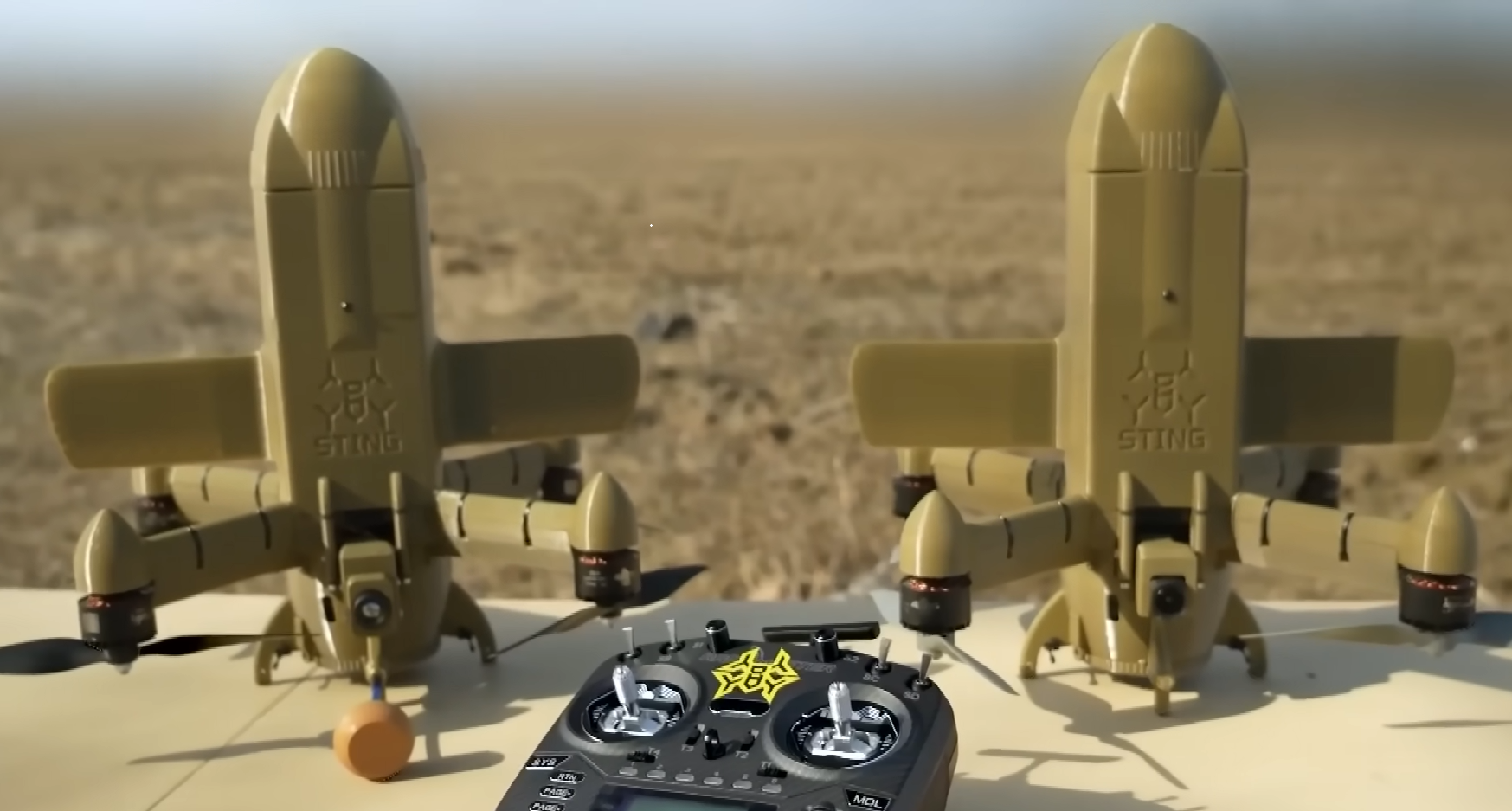
The Easter ceasefire is over, and the fighting has resumed where it left off. It left off at a very interesting point. Something almost impossible to credit is taking shape in Ukraine. Its potential seems wholly at odds with the narrative of Russian inevitability which we have grown used to hearing from Moscow and its allies, including the White House and the State Department. Yet it hasn’t come out of nowhere. By the second-half of last year it was already apparent that Moscow could not bring to bear sufficient military force to realise its maximalist aims. Far from granting an inevitable victory as the adversary with the larger economy and population, the favoured Russian strategy of attrition was not producing the expected results. Then, as winter set in, Russia’s employment of unmanned aerial warfare in the form of terror attacks on Ukrainian civilians and on civilian power generation targets likewise did not yield the expected general demoralisation of the Ukrainian people and the sapping of their war-will. This characteristically crude twin approach was failing because the Ukrainian command (a) avoided the meat-grinder tactic by giving-up territory when necessary to preserve Ukrainian soldiers’ lives, and (b) found ways to nullify the most effective weapon the Russian forces could deploy on the contact line, the glide bomb or KAB. The Ukrainian strategy throughout 2025 was to bleed the enemy while conducting deep strikes against Russian military-industrial and economic targets (the most famous of which was Operation Spiderweb, of course). Though effective enough to slow the Russian advance to a snail’s pace, it was still only a containing measure. But with the turn of the new year that all began to change. There was a step-change in Ukrainian tactical capacity involving more sophisticated, more integrated, and more numerous drones. The term “drone swarm” became a reality. At the same time an extraordinary array of new Ukrainian short-range, surveillance, and cruise weapons began arriving in theatre, much of it enhanced by unjammable AI. Over three hundred AI-related developments are registered with Brave1, Ukraine’s centralized defense-tech platform platform. More than seventy systems based on AI and computer vision are already in active use on the battlefield. The American AI company Shield is working with Ukrainian drone developers to incorporate its HiveMind AI into new Ukrainian drones. On top of all that a ballistic weapon is undergoing live combat trials. A home-grown Patriot missile replacement is now planned. The pace of innovation is staggering. All taken together, the Russian rear, which reaches between fifteen and sixty miles behind the contact line, is now under sustained pressure. Russian forces can’t effectively organise because the logistics can’t be secured, particularly given that four hundred and ninety-two Russian air defense systems were recorded destroyed between June last year and early March this year. Add the loss of Starlink and the Telegram shut-down and those difficulties are greatly compounded. Moreover, new Ukrainian weapons are striking ports, pumping stations, oil storage depots, and pipelines. Some targets are over 1000 kilometres away from the fighting. With or without US sanctions Moscow can’t earn what it needs to pay for its war. The next major Ukrainian development on the battlefield is the most significant of all. It’s ground robotics, first introduced by Ukraine in trial numbers as early as 2023. They were then introduced systematically and on an ever widening scale. The current range of mostly FPV fibre-optic machines are already far in advance of Russia’s efforts, and have been undertaking a variety of support actions - 22,000 in the first quarter of 2026 according to Zelensky. These include autonomous combat missions. Again the pace of development has been frenetic. Subject to the challenges of scaling up manufacture, they have the potential to resolve Ukraine’s structural deficit in manpower. Commercially, the global sales potential of these systems is vast, and are likely to play a significant role in the reconstruction of the Ukrainian economy. Here is the excellent Paul Warburg explaining both the military and economic potential of these systems: The upshot of Ukraine’s drone development has been threefold. First, the Russian Spring offensive has been nullified. It is already a failure. Russian casualties have reached the point where more soldiers are being taken out of the fight than Moscow can recruit. Far from being pushed further back, Ukrainian forces are actually advancing in four areas. A sense of foreboding is setting in among Russian milbloggers. As the Kiev Post reports:
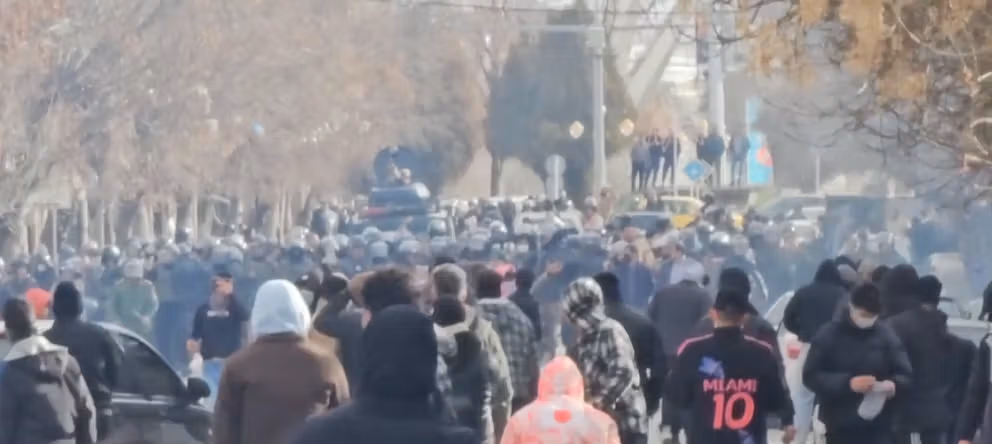
Second, Donald Trump’s precipitate action in Iran has made very public the IRGC’s exact drone and missile capabilities, which are not inconsiderable. The Saudis and the Gulf States along with the Europeans have also now witnessed modern assymetric warfare, which is making redundant the old model of high cost machinery and the doctrine of force concentration. Both the Ukrainian success against Russian armour and their daily experience of drone and missile bombardment offer powerful commercial arguments for the extraordinary innovativeness of the Ukrainians. It has made them the undisputed world-leader in all these technologies; and suddenly everyone wants either to buy from them or manufacture products on a joint-venture basis. Kiev’s desperation for money and weapons, which Trump was able to leverage for Putin’s benefit, can now become a thing of the past. Trump is losing his power to bully and blackmail Kiev. Third, this is a time of growing optimism in Ukraine’s military strategy. There is a sense that Trump’s call for the surrender of all Donetsk was a bluff that has now been trumped. The MAGA hostility has been borne with patience and grace, and seen off. Europe has not caved. Western and Arab governments are coming to Kiev’s door for weapons tech. The prospect, finally, of money flows from commerce and not just from charity and loans has materialised. A peacetime future as the world’s leading manufacturing nation of affordable advanced drones and battlefield robotics is beckoning. Some housewives! Which, of course, begs the question as to what kind of peace that might be. From Kiev’s perspective the only peace Putin will observe is one of abject Russian military defeat. He can be given no opportunity to return in a few years time to his expansionism and to realising his geopolitical ambitions. He must fail. Three versions of that failure, and thus of the Ukrainian’s place in history, suggest themselves: 1. Expulsion of Russian Army from all Ukraine. Putin holds his nerve, gathers his forces, and goes for a strategy of blaming the army and “elements” in Moscow. There are sweeping arrests and the lid is just about kept on the situation. Longer-term, the FSB ratchets up political oppression. Putin’s rivals are scattered and hunted. But the Eurasianist dream is over. All thought of expansionism is sacrificed to the struggle to keep the Federation intact. But after that? 2. Expulsion of Russian Army from all Ukraine. The defeat is too structural for Putin to survive. He is arrested by his own security service. The militarisation of the economy proves disastrous now the war is over. Rapid de-industrialisation is the cost. The release onto the streets of three-quarters of a million embittered and unemployable soldiers creates further instability. A power struggle ensues between the various oligarchic factions picking hungrily over the bones of Putin’s Kremlin until, by some mysterious means, a unifying figure - a strongman, of course - takes up the reins. The tzar-isation of Russia begins anew. Kiev and all Europe wait and watch. 3. Expulsion of Russian Army from all Ukraine. The shock brings not just the end of Putin’s long reign but the collapse of the Russian Federation itself. The eastern republics convulse in nationalism and seize the moment to break away. Some terrible revenge on local FSB personnel is taken by armed groups, many of whom are soldiers returned from Ukraine. Inevitably, strongmen barge to the fore, not a few noisily Islamist. But fifteen or even twenty old nations arise anew from the ashes of the Federation, some of them nuclear-armed. Even west of the Urals there are regional efforts to achieve independence. The ancient colonial drive of Muscovy is dead. In Minsk, Lukashenko boards a flight and flees the country. The miniscule army of Moldova walks into Transnistria unopposed. Warsaw waits to find out with whom it will negotiate its re-absorption of Königsberg. An age of European peace lies in prospect. And Ukraine? At a minimum, the fruits of victory (be it simply military, military and fatal to Putin, or military and fatal to Putin and the Federation too): a secure peace and a prosperous future as the world-leader in the arts of asymmetric warfare and modern arms supply, plus entry to the west as its people so desire and deserve.
Now and again something interesting comes one’s way in the most unexpected of places. The Conservative Woman ran a distinctly uninteresting piece yesterday titled “Conspiracy theorists can’t see that the West is already at war”. It did not add a great deal to the sum of my knowledge. But in the thread to it there was one 700-word comment on the 125,000 strong mafia group which is the Islamic Revolutionary Giuards Corps posted by someone going under the handle of “True Conservative”. This guy (or girl) evidently reads some worthwhile sources, and took the following text wholesale from one of them. I haven’t tried to check who, but the spelling suggests American. Anyway, this is how it goes:
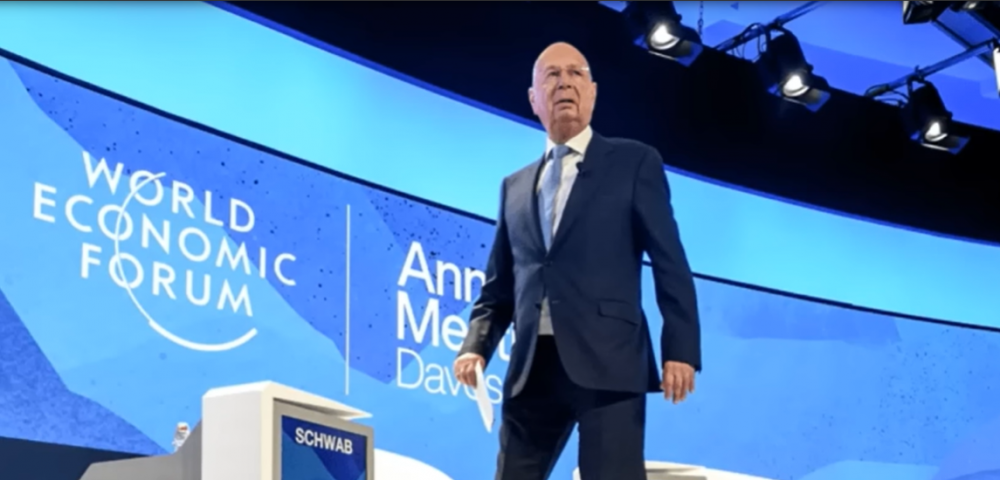
Muscovy in Ukraine. America in Venezuela (seemingly permanently). Next: Beijing in Taiwan. Trump has opened the door. The pieces of the new world order are falling into place. The authoritarian world ... the world of empires foretold by Sergei Glazyev ... is coming into view. There is no one to defend the old order. The dynastics of the Money Power (aka the investor class), the asset managers, the central bankers, the hedge funders beneath them will take note. The initialled institutions of globalism ... the UN, the World Bank, the IMF, the WEF will take note. The dateline banks and corporations will take note. The technocrats and managers and ambitious politicians will take note. Globalism will not be at all inconvenienced. Why should it be? China is the WEF’s preferred model for public-private partnership and social control, and the western corporations are Chinese corporations. The powerful, therefore, have been given a shot in the arm. Force, as the standard for national, political and social organisation, has been advanced, and sovereignty, freedom, and law have been pushed down. Nationalist or liberal, we’re on our own. Looking ahead, it’s probably up to Canada to hold the sovereign line.
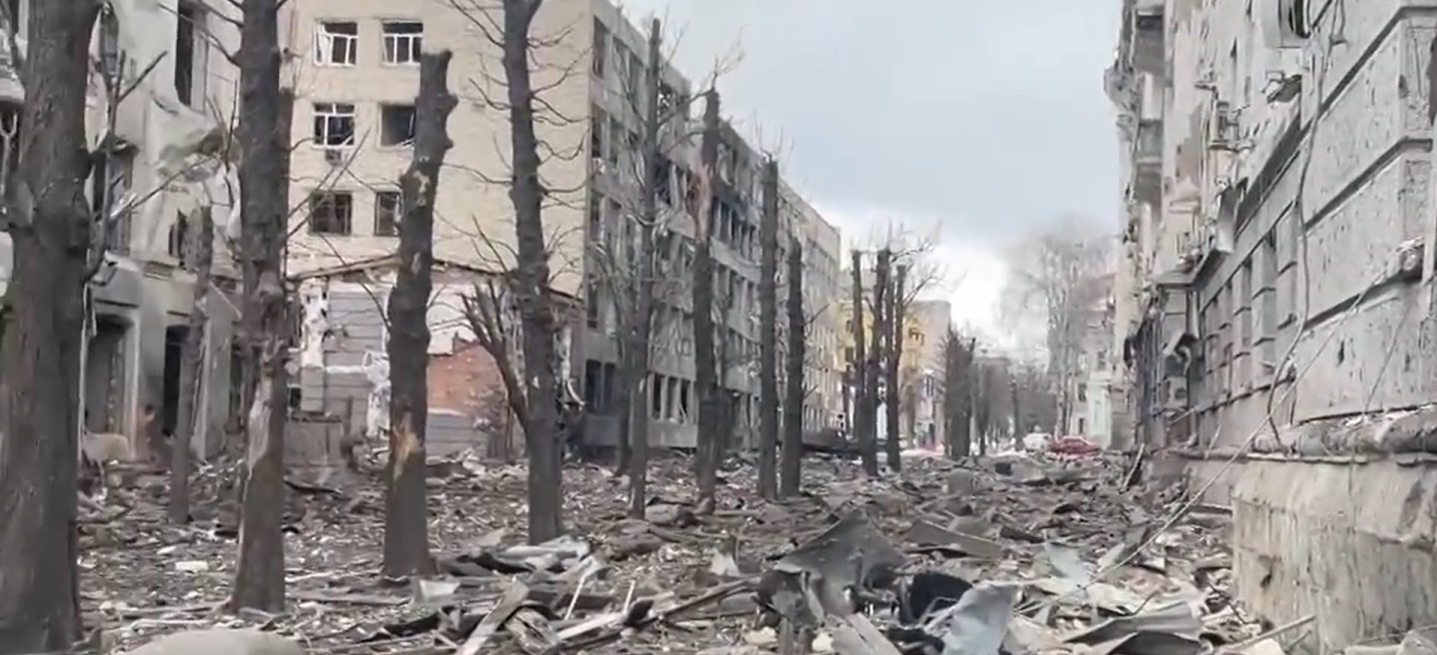
In central Kharkiv, amid the frequent Russian missile attacks, lives a young British woman with a sharp mind and a clear geopolitical understanding. Her name is Jade McGlynn. She has a PhD from Oxford in Russian, and today she is a researcher and lecturer producing academic work, books and journalism on the Russo-Ukrainian war since 2014, particularly through the filters of identity and memory. She has a substack which holds her already copious body of work. At the beginning of April she published there a long and detailed piece titled Blueprints, from which I will quote. It begins:
So this is a writer after my own heart. She knows that not just the western rules-based order but the liberalism which underpins it is falling. This is not something the European political class, or Kiev, have yet grasped. They know that the world is changing in dangerous ways. But Dr Glynn has gone beyond that, and is only too aware that the philosophical ground on which the west stands, and on which America is wholly constructed, has been cut away. Her essay then addresses the delusion much fostered by Vladimir Putin and the Russian intellectual, media, and security cadres – and let it be said, shamefully and uncritically internalised by dissenters in the west. That delusion is that traditional living and the general good is returning in the wake of Russia’s painful advance on the ground in Ukraine:
Thus Dr McGlynn finds for the position I have argued for the last three years, long before we knew that Donald Trump would be re-elected, let alone that he would support Putin so actively. True, there are too many ways in which the post-1945 rules-based order has been manipulated against the interests of Europeans. But that is a separate issue from the order as such, which – as Dr McGlynn makes clear – is the alternative to Great Power predation:
I, too, would rather fight within a system I know, against weak, predictable men bound by its moral and historical conventions … a system, moreover, that cannot for long accommodate within itself the arbitrary power it came into being to banish. For liberalism is the mortal enemy of all entrenched or concentrated power. Obviously, there is the unwelcome complication that as a secularised form of Christianity it stands in the Judaic line. It apprehends the “sovereignty, identity, and survival” of Europe’s peoples as just such a concentration. I would not, of course, expect Dr McGlynn to share that understanding. She abides within the historical and intellectual constraints of the western academy, not in our domain of profound separation, and the freedom of mind which that bestows. She does not think as a nationalist thinks. She very likely subscribes to the view that the dead politics of National Socialism and Italian fascism … forms of expansionist nationalism … speak reliably for nationalists today. She then assumes, or appears to assume, that socialism/communism is separate from liberalism. This is a chiefly American view which I do not accept because, as practised in the 20th century, socialism functioned as an extension of, and massification within, the liberal system. It pursued the same unfettered will and, ultimately, genuflected before the same Judaic G-d. I would very much prefer that decent, thinking people like Dr McGlynn understand how and why we Europeans are still waiting for a nationalism of our life and rights and interests, and that one small part of making the space for it is to order history accordingly.
“Peace” is a versatile concept. It has a spiritual context, of course, and a funereal and memorial one. Then since the sixties it has had a vee-signed, marijuana-driven usage originally followed by the word “man” but these days by “bro”, which more or less sums up the depth of consideration thus far given it by Donald Trump. Not everyone on the international stage is so blasé. The honest ones, of whom there are far too few, employ it in the proper humanistic sense of a just deliverance from conflict into a longed-for and enduring state of safety and such concord as is possible when the guns have fallen silent but there is still a lot of hatred in the air. As the hatred subsides so the meaning of peace matures into the one given generally to civic life in times of ease and gentility, which is only what all peoples expect and deserve from life. But there are individuals in the charmed circles of power … liars and ambitious men, “men of force” ... who hold the expectations of the common man in contempt, and who talk of peace as something quite other than his expectation. Their meanings tend to be party to the same struggle as the wars they also engage in when they can. Thus in the Kremlin’s case peace is as much a weapon as any rocket or gun:
Trump seems to have been blissfully unaware that Putin’s peace is not at all a shallow and instant thing like his. It is ideological, public, formal, structured, and purposive. Its purpose is the expansion of Russia:
This is the “peace” which, within the framework of Russia’s war on the Ukrainian people’s will to independence and autonomy, is Vladimir Putin’s guiding light. Even allowing that the Americans are providing him with a helping hand, nothing Donald Trump can say would steer him away from it. But does Trump want to say anything anyway? What evidence is there that he and his government are moved to defend the all too western moralities of the post-1945 settlement? His denial last week of intelligence and satellite imagery to the Ukrainian military – shocking in its suddenness and effect – was perfectly timed for the Russian and North Korean push in Kursk. It removed Zelensky’s hard-won bargaining chip and cost hundreds of Ukrainian lives. Taken with the shameful staged assault on the Ukrainian president in the Oval Office it speaks of “right-wing” America’s near-total moral collapse. It was on display again in Tuesday’s 90 minute telephone call between Trump and Putin, summarised thus by David Blair in the Telegraph:
If the Americans continue in this vein, disavowing any firm, suppressive action to raise the ante against Russia, one will have to conclude that they, too, mouth words of peace when they really only mean conquest, and do so because they believe that the global contest of power requires such immorality. In that belief Donald Trump’s America will have friends besides Putin: others with visions of a similarly “peaceful” dominion. For example, as a counterpoint to Putin’s Russkiy mir, Recep Tayyip Erdogan and his government are advancing the doctrine of Mavi Vatan. Should Putin achieve his maximalist aims in Ukraine one then waits to see if Viktor Orban can pull together an integralist cohort from among Hungary’s six other neighbours in Middle Europe and the Balkans. I think it quite likely, given the level of pro-Russian sentiment there, as well as the desire to annex parts of Ukraine that Putin may deign to gift them for the purpose of dividing Europe. I think humanity is moving ... being pushed, actually ... ever further from the nationalist desideratum of an age of the people’s will, which is a will to peace, yes, but not at the cost of national dissolution and foreign dominion. It is doing so because it is moving further from democratisation’s fatal, very 20th century transformation of that people into a bloodless demos, a mere electorate governed by a permanent political class. We are moving once again into an age when “greatness” is sought among the nations of men; but it is a greatness expressed in power over other nations when power is the possession of an untouchable and imperial, authoritarian few. If that view of the historical process is wrong then we should now see Donald Trump understand the complete humiliation he has suffered at Putin’s hands. Being useful to Putin only makes him Putin’s idiot - an idiot whom Putin is, of course, pleased to parade before the dictators and big men of the southern hemisphere. The situation has clarified, perhaps even for Trump. The debasement of America is fundamental to Putin and Xi’s global Great Game, and no American president can play it and win. American greatness will not come via American humiliation, but Putin’s and Xi’s greatness will. They know it, and they will not be separated in their pursuit of it. Trump’s vanity alone ought to provoke the necessary reaction. We should then see him double-down on his determination that peace shall prevail, but only if he switches tack to bring Putin to heel before turning to face Xi’s challenge in the Pacific. That means a full-hearted and massive re-arming of the Ukrainians with the best equipment the American arsenal possesses. Then, perhaps, another kind of negotiation will be possible. But, of course, for that to become a reality Trump and his administration must grasp that Ukraine’s strength is America’s strength, and it is first and foremost a moral strength.
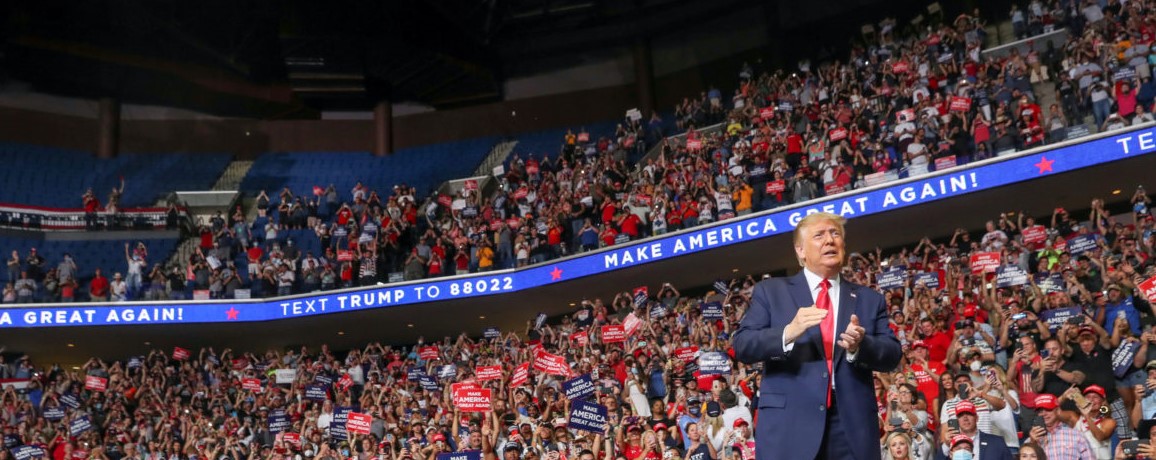
It would be charitable to conclude that the 45th and 47th president of the United States of America is a regular if inordinately successful guy and a great and fearless patriot with an instinct for the wants and interests of the common man. OK, he’s not a very subtle person. He can deliver himself of some quite surprising, not to say shocking, public statements. His dedication to the security of Israel is fawning and slavish if politically necessary, probably. But he’s the first US president in decades to speak the language of ordinary Americans. So in the vernacular, cut the guy some slack while he blows away the whole friggin’ mess that is Dems in federal government, right? But with Trump we are not just talking about pulling down the progressive order in federal government. He is seeking a new order internationally as well as domestically. It turns out that his new international order has nothing to do with “peace”, and is not directly concerned with Ukraine at all. It turns out that his vaunted economic nationalism, always assumed to be just a domestic, blue-collar cause, is also economic imperialism. It is, from a Russian imperialist perspective, also an opportunity to throw Trump a hydro-carbon or two to bind him to his and Xi’s grand strategy, and not the other way round. Which would make this less Nixon and Mao than Molotov and Ribbentrop, with Putin playing the role of Ribbentrop. As of today Beijing is plainly betting on that, because it has given its support to the “peace negotiations”. The big reveal From Day 1 of his second term the reborn Donald Trump has been pursuing a politics for the world which, it seems, none outside his own circle in the Republican Party saw coming, and very few if any have fully grasped even now. This politics has three broad goals: i) To put a stop to the decades of progressive marxisation and malaise in American life, especially economically, and thereby to ring in a new dawn of American power, prestige, and prosperity. ii) To force the European states to address their post-Berlin Wall political, moral, and fiscal decadence and weakness, so that they may shift from that same destructive trajectory of mass immigration and marxisation to one of political self-rediscovery and self-preservation (crucially, the “self” here being the state, not the natives of the state). Thus freeing Washington to pivot towards ... iii) Ending China’s long march towards global military, economic, and political hegemony, principally by confronting it in the Indo-Pacific Ocean. The start-point for the Trump administration is Ukraine. Hence the unwelcome energy with which it has distanced itself from the expectations of the European democracies and NATO, while showering Putin with outrageous largesse under the rubric of peace negotiations. It was the big reveal. The deceit and childishness which has characterised the campaigns of Trump and Musk against the Ukrainians is pure theatre, but in the scheme of things they’re nothing more important than positioning. Ukraine itself is not important except as a bargaining chip, its sacrifice a clear signal to Putin that he could even create his fourth Russian empire in the West if he can defeat the Europeans and keep the American military quiet. BUT ... he can’t have his new world order with himself and Beijing at the apex. America will remain the hegemon in a force-based Glazyevian system of empires. The post-war rules-based order is dead. Starmer’s love object of international law is without a point. Democracy is no longer the international standard for good and just government. A force-based system doesn’t have to care about good or justice. It’s just the wrong metric. NATO, meanwhile, will be left without the American guarantee, which effectively guts it and leaves Europe militarily defenceless. Vance’s speech at the Munich Security Conference now makes perfect sense, warning the European political elites that their three decades of spending the so-called peace dividend on weak and sickly liberal-universalist causes has to change, and change now. Virtue signalling elitism is done for. Universalism has drained European politics of all moral authority. The old values will have to be rediscovered if self-defence is to mean anything or to have any hope of success on a future battlefield. Likewise, Trump’s alarming expansionist talk about annexing Canada and Greenland, and sending the military to take control of the Panama Canal, also now makes sense. The global order of an empire of empires isn’t a fanciful confection of a few Russian dreamers like Glazyev. It is the alternative order to the west’s model, and as the once and future hegemon America, too, must have its empire, albeit principally an empire of corporate expansion. Nixon’s week in China also had a pay-off for corporate America (if at a terrible cost to the American working man). Eventually it led via neoliberalism to the Davosian technocracy we encounter today. The Trump administration, mindful that it is weaker than the people and must maintain the institutions of democracy, will hope that Americans actually benefit this time. But any such good will be incidental. The politics are fatally vested in the maintenance of American corporate and hegemonic power, not in Americans per se. Trump is not a real nationalist. The Republican Party cannot encompass real nationalism because the liberal project which is America is wholly antithetical to it. Further, the eastern imperial model is oligarchic and elitist, intending state dictate and socialism for the masses of the world. It is also worth emphasising that it does not at all preclude the Davos corporate and financial elites from its Great Game. The dissenting right, in its lumpen way, has assumed that Davos is western, and its globalism with it. No, it is only the politicians who are western. The rest is worldwide because the Money Power behind it is worldwide. With the one exception of Israel, it will adapt itself to any polity provided racial universalism obtains or could obtain therein. All that said, there are points of potential push-back against the Trump agenda. Ukrainian fighters for one (the Ukrainian media is already relaying intelligence reports that Putin plans to announce his victory over NATO on the 24th February anniversary of his invasion). American voters for another. Resistance in the established order for another, and from anyone else who does not relish a political betrayal which benefits the murderers of Moscow. Perhaps the Russophile civic nationalists in Germany and elsewhere will not be able to show their faces once Moscow’s gaze falls on Ukraine’s fellow Europeans to the north and west; and we might get some real nationalism in Europe.
There are times when the absence of an ethnic nationalist worldview in those who proclaim themselves nationalist (but not specifically, say, National Socialist, or traditionalist, or fascist) really limits communication. What, after all, is our common frame of reference? David Lane’s minimalist Fourteen Words accurately summarise the existential essence of all nationalism. But the formulation is reductive, and can in no way function as an holistic ideology functions, ie, it cannot situate us in a pre-existing, broad-scale system of life-affirming truth by which a people may orient itself in Time and Space. It is because of the systemic nature of an (actually very rare) epochal philosophy that it can, first, unify a political constituency and, second, energise a mass re-organisation. But we do not possess that philosophy today. We are, in consequence, caught in a pre-revolutionary cycle that cannot complete. We have no unifying ideological standard around which to rally. Along comes a large but perfectly uncomplicated political question, and we lack the framework to determine where justice lies. Today such a question is: Do the people of Ukraine have a right to fight the violent imposition of Russian empire, and to struggle for national autonomy? No ethnic nationalist should have a moment’s difficulty answering that. But, instead, a substantial majority have lost their heads completely in contemplation of a second question: How dare America and the West challenge Russia’s security needs? Of course it is a false question. A need for expansion is not a need for security. The theft of natural resources, farming produce, and even children is not a requirement for the creation of buffer zones. It speaks of ancient tribute. But Muscovy is an empire with an origin in its own payment of tribute to the Asiatic aggressor, and thus even into our time it has remained an empire with an historical culture of entitlement to further empire, and the wealth thereof. That, not security, is the well-spring of Russian foreign policy. Explaining this to the holders of “right-wing opinions” is a challenge. Indeed, it feels like I’ve been challenging the dominant and reactionary pro-Russian sentiment and anti-American prejudice of on-line nationalists and trad-cons since the very first jolt forward of the first T72 in Vladimir Putin’s fateful full-scale invasion of 24th February 2022. They don’t like it. They don’t listen. Their judgement is overwhelmed by anger at the globalist machinations of the Western hierarchy, and they don’t look any further.
There is a tendency for prominent politicians, central bankers, and other panjandrums of Western public life, inevitably men and women of a globalist bent, to refer to their coming global order not only as an historical inevitability ... the product of vast and insuperable forces ... but also as a struggle fraught with the possibility of tragic failure. There is a sizeable “if” about the whole idea. Notwithstanding their measureless power, these people worry that The Globality may, in fact, prove elusive. What can this mean? After all, there is no resistance anywhere in the West to their project. The democratic process is a captive or, if it cannot be captured it is ignored or, if it cannot be ignored, it is repeated until the “right” answer comes back. The main political parties were long since captured, the political class corrupted. All offer the same narrow policy platform. The dateline corporations are on board (despite reservations in some cases). The astonishing technologies which are developing in computer science and the life sciences are being successfully piggybacked. Thus the means to impose control through a digital currency, be it linked to a health passport or not, already exists. The means to permanently surveil the movements, purchases and public statements of the population exists. The utilisation of the dicta of Sustainable Development to cover nitrogen and methane, and so meat production, thereby “requiring” the expropriation of farmland and the forcing on the “useless eaters” of no doubt highly profitable non-meat substitutes, is coming into effect already in certain pilot countries. It is true that the wired trans-human is still more science fiction than reality, as is the end of ageing. But other programmes are more advanced, and not a few fully realised. So with all this rolling along nicely, why do our glorious elites speak with such uncharacteristic diffidence? Our glorious elites speak with such uncharacteristic diffidence because they cannot be certain of the compliance of their non-Western counterparts. Specifically, they fear that: (a) The ambitions of non-Western leaders remain stubbornly within the old limits of personal and national aggrandisement. (b) The Western elites and their technocratic framework are perceived to be foisting yet more arrogant and grasping post-colonial dictate on southern hemisphere nations. “Arrogant” and “grasping” the elites probably don’t mind too much. But “post-colonial” hits a nerve. Theirs is, after all, just another control system originating in the West. It is the first of these fears, however, which is most disruptive, and which has brought the Western elites into open and existential conflict with Vladimir Putin’s Russia.
|
|

Existential IssuesDNA NationsCategoriesContributorsEach author's name links to a list of all articles posted by the writer. LinksEndorsement not implied. Immigration
Islamist Threat
Anti-white Media Networks Audio/Video
Crime
Economics
Education General
Historical Re-Evaluation Controlled Opposition
Nationalist Political Parties
Science Europeans in Africa
Of Note MR Central & NewsCommentsGuessedworker commented in entry '"If America doesn't learn ..."' on Sun, 26 Apr 2026 12:11. (View) Guessedworker commented in entry '"If America doesn't learn ..."' on Sat, 18 Apr 2026 16:23. (View) Thorn commented in entry '"If America doesn't learn ..."' on Sun, 12 Apr 2026 20:35. (View) Thorn commented in entry '"If America doesn't learn ..."' on Sun, 05 Apr 2026 23:35. (View) Thorn commented in entry '"If America doesn't learn ..."' on Mon, 30 Mar 2026 15:40. (View) Thorn commented in entry '"If America doesn't learn ..."' on Mon, 30 Mar 2026 11:43. (View) Guessedworker commented in entry '"If America doesn't learn ..."' on Mon, 30 Mar 2026 07:08. (View) Thorn commented in entry '"If America doesn't learn ..."' on Sun, 29 Mar 2026 11:56. (View)  
|