|
|
|
[Majorityrights Central] Three possible forms of a Ukrainian victory ... and a Russian defeat Posted by Guessedworker on Thursday, 16 April 2026 16:36. [Majorityrights Central] “If America doesn’t learn ...” Posted by Guessedworker on Sunday, 22 March 2026 17:52. [Majorityrights News] Gerdes on the possible sea-change in the Ukraine War? Posted by Guessedworker on Friday, 20 March 2026 21:45. [Majorityrights Central] Some intel on the Islamic Revolutionary Guards Corps Posted by Guessedworker on Thursday, 12 March 2026 23:32. [Majorityrights Central] Defining the borders of the English kin-group Posted by Guessedworker on Wednesday, 11 March 2026 23:51. [Majorityrights News] Jason Jay Smart on the approaching collapse of Putin’s reign Posted by Guessedworker on Wednesday, 11 March 2026 22:42. [Majorityrights Central] Empires, the Chinese Mind, a theoretical nationalism of ethnicity Posted by Guessedworker on Saturday, 14 February 2026 01:54. [Majorityrights Central] Gemini - not an identical twin to ChatGTP Posted by Guessedworker on Friday, 06 February 2026 16:58. [Majorityrights News] Warburg on the impact of Russian forces’ loss of access to Starlink Posted by Guessedworker on Friday, 06 February 2026 10:17. [Majorityrights News] Toast à la Little Saint James Posted by Guessedworker on Wednesday, 04 February 2026 23:48. [Majorityrights News] Southport, migrant hotels, the national flag, and Amelia Posted by Guessedworker on Monday, 02 February 2026 00:14. [Majorityrights Central] Argot Rosetta Stone For GW/Heidegger/Etter Posted by James Bowery on Saturday, 31 January 2026 17:18. [Majorityrights Central] ChatGPT redux Posted by Guessedworker on Thursday, 29 January 2026 01:11. [Majorityrights News] The national revolution in Iran cannot be stopped Posted by Guessedworker on Saturday, 10 January 2026 00:38. [Majorityrights Central] Into the authoritarian world redux Posted by Guessedworker on Saturday, 03 January 2026 17:56. [Majorityrights News] Moscow Times: Valdai residents report no sign of drones attacking Putin residence Posted by Guessedworker on Tuesday, 30 December 2025 11:33. [Majorityrights News] Paul Warburg on America’s self-destructive new strategy Posted by Guessedworker on Tuesday, 16 December 2025 12:32. [Majorityrights Central] Thoughts on Mark Collett’s strategy for nationalism in the British future Posted by Guessedworker on Friday, 24 October 2025 15:01. [Majorityrights Central] Living in the Jewish Mind: Part One Posted by Guessedworker on Monday, 29 September 2025 09:37. [Majorityrights News] Nationalism on the Kramatorsk front. Posted by Guessedworker on Saturday, 20 September 2025 15:55. [Majorityrights Central] And Chat GPT just the same Posted by Guessedworker on Monday, 08 September 2025 15:18. [Majorityrights Central] Grok the modern nationalist Posted by Guessedworker on Sunday, 07 September 2025 19:14. [Majorityrights Central] Principles, parts, processes of ethnic nationalism, Part 1: inflection? Posted by Guessedworker on Thursday, 31 July 2025 12:03. [Majorityrights Central] A window onto a world of Russo-Chinese hegemony Posted by Guessedworker on Tuesday, 08 July 2025 20:47. [Majorityrights Central] The DT takes the first step on the journey Posted by Guessedworker on Thursday, 03 July 2025 05:02. [Majorityrights News] Iranian comment machine switched off by Israeli bombs Posted by Guessedworker on Wednesday, 25 June 2025 09:07. [Majorityrights Central] After Casey and the ensuing child sexual exploitation inquiry Posted by Guessedworker on Tuesday, 17 June 2025 00:21. [Majorityrights News] 4 minutes and 43 seconds of drone warfare history - updated Posted by Guessedworker on Wednesday, 04 June 2025 16:50. [Majorityrights Central] An approaching moment of Russian clarity Posted by Guessedworker on Sunday, 11 May 2025 12:34. [Majorityrights Central] “It’s started. You ignored us. See where it’s going to get you.” Posted by Guessedworker on Sunday, 04 May 2025 00:42. [Majorityrights News] Another dramatic degradation of Russia’s combat capacity Posted by Guessedworker on Wednesday, 23 April 2025 08:49. [Majorityrights Central] A British woman in Ukraine and an observer of Putin’s war Posted by Guessedworker on Monday, 14 April 2025 00:04. [Majorityrights News] France24 puts an end to Moscow’s lie about the attack on Kryvyi Riy Posted by Guessedworker on Monday, 07 April 2025 17:02. [Majorityrights News] If this is an inflection point Posted by Guessedworker on Thursday, 03 April 2025 05:10. Majorityrights Central > Category: The Ontology ProjectIntroduction This is the first of three planned new essays - none of them very lengthy or (I hope) too obscure. This one is the very first I have offered at this site for some time. Together with the Sibelius essay I posted getting on for two years ago now it marks an end point to my work on foundation and the perspectives for ethnic nationalism that it affords. The objective in this essay is to revisit and clarify the earlier work, to philosophise it rather more formally, and fit it to the task of moving forward. The second essay in this trio, which I have not yet written, will likely deal with a foundational epistemology, specifically the dynamic scheme I called the Ontological Transit, which I hold to be the ground of our perception of the essential. After that visit I hope to be able to offer – probably wholly unwisely and almost certainly not originally - a (very) tentative gesture towards a theory for the central problem of all philosophy of Mind, that problem being how our subjective experience arises from the electro-chemical activity of the brain. Thus, for example, for ethnic nationalists that includes how we beings of Nature and of the material universe witness the flood of mind-mediated information (qualia), know and value self and relation, being and the freedom in being, and truth, good and love, and know these to be vivifying and our experience of them as real, in their way, if not as solid as the hardest of reality we can perceive; and, therefore, as necessitous and essential for the political ordering of society. A nationalist, therefore, is seeking not merely a technical (or ontical) description for the mind’s rendering of this thing we call reality. He’s hunting for a basis in human truth, a natural, qualitative order which cleaves the political, as it does all things, and sets down the cause of the people’s life and life-interests in the light, above and beyond the generalities and vicissitudes of the day. And we begin that hunt, naturally enough, in the beginning. The founding vita What does foundation mean? Well, for me it certainly does not mean the mystic’s a priori ground or plane of pure being from which we mere human beings, sunk in our ordinariness, are famously exiled, and to which return is a moment of rapturous union with the All. Minus the manipulation of brain chemistry it is never more than theory, and an anti-evolutionary theory at that; and is too often proposed with a religious certainty inevitably unappealing to a materialist. Also, notwithstanding my materialism (and naturalism) and despite what follows, neither am I interested in the empirical evidence for the parental possibilities of oceanic ribonucleic acid. As everyone knows, how life came about has not yet been explained scientifically, and may never be. But in truth, the ontical sense of it will only ever be an account in quanta anyway; which cannot suffice for us. For it cannot contain or model the human vitality we, as philosophical enquirers, seek to understand, interpret, intellectualise, and re-present in answer to the great question of how to live. For the same reason I am not attracted to the dry philosophical practise of determining over-arching systems of ontological categories or classes into which the knotted skein of being might be teased – even those like quanta and qualia I am inevitably using myself! There are two hundred and seventy of them in Hegel’s categorisation, all of three in various others! It’s work on a cadaver, like rendering down speech into dictionary definitions, or the grand enterprise of a business concern into the annual accounts. No, I am looking for the living ontological history, to be got from the stuff of existence as an artist draws the human truth of his model. Methodologically, perhaps that would be an intellectual art, resistant to formalisation, therefore probably unteachable, therefore, probably not academically respectable. But academia cannot model the politics of the blood any more than science can. It has been missing something. Or if it ever found a trace under its scalpel, it killed it all over again on the mortuary slab. Let us avoid that. So, by “foundation” I mean origin as a creative event which is self-perpetuating and, thus, functions as the universal primal order of life. As befits mere beings of flesh and blood (and modernity, of course), let us address this admittedly large, not to say godlike subject in fleshy microcosm. Accordingly and always mindful of our own extreme transience, we might hunt for the foundational in the occurrence, after perhaps a billion or ten or twenty billion infinitesimally brief cellular sparks in a mechanical universe (governed ceaselessly and absolutely by Time and Entropy but also by Happenstance in the sense of random events, processes, and interruptions) of an anomalous event of integration such that there was, this once, a founding vita, however spare, however primitive. Obviously, we do not speak here of anything recognisably “personal”, or anything at all beyond a bare sequence of information in auto-catalysis. But within that first, faint trace of a separation from the disintegrating lay a trace, fainter still, of the bias for continuity, interposing itself in the universal fabric, elaborating itself in whatever way will secure the light. By elaborating, the whole may change and even divide and by dividing increase; and then, from changing and dividing and increasing, perform the saving trick of giving up phenotype to disintegration, yes, but withholding genotype for continuity. Everything that comes after (so, nervosity, oxygenation, the sensing of heat, light, movement and of quora, the incorporation of energy sources, sensitisation to environmental change, the giving and receiving of chemical signals, the bias towards strong signals, etc … all the way to complex forms of sapience) is elaboration forced by the disintegrating action of the mechanical universe. Stasis is not an existent reality. For one of the sides to this drama … the side of life … there is never a possibility of rest or final victory. Always, Time and Entropy drag this life back towards discontinuity and disintegration, and the cold state of mechanics. Always life’s essential, voracious appetite for continuity, born of that initial happenstance, impels it forward and proves itself, within its own confines and by its perfect integrity, as equal as equal can be to the vast forces without. The profound order By its sheer salience and novelty, all this vitality contests the metaphysician’s standard theory of a recondite and static, continuous plane or ground of existence by which the being of things living and things not living is if not caused certainly situated. In the standard theory existence itself has no nature, indeed is prior to all nature. It is one and its value is 1. The existence of everything that is has the same value of 1, and the being of All has the value of 1. There can only be this austere and unlit, singular, factic thereness of a thing, and of all things under the governments of Time, Entropy and Happenstance. It is existence as absolute homogeny, existence as raw, imperishable precondition. What deities have been imagined to precede and exceed it, equipped with all the magical baggage of design, are themselves only the designs of men who found the prevailing mechanicity an intolerable affront to love, meaning, purpose, and hope of life and hope in the sublime. Their gods, their spirits, their mythos, their very faith need not detain us, for the ontological order we are unearthing is not the object of their discontent, but the fundamentals of their repudiation of it. To be precise, and – again - from the beginning: Integration necessarily has locality and therefore confines, for confinement alone gifts separateness from the prevailing All. In separateness there is necessarily resistance to the claim of that which is separated from, which is a claim to absoluteness. In resistance there is the tendency and leaning towards continuity; and in that leaning already lay the seeds, at least, of a “something” which is essentially different, and which preserves its difference only as long as it engages in a Manichean struggle with the blind and profane, homogenising forces without. But that engagement limits homogeny’s realm and the priorness of existence is universal no more. To reprise the old contest for priorness, for so long as essence differentiates itself existence is made contingent upon and a function of it. Within its own bold confines at least, essence is become prior. So now we have, for the purposes of this investigation, conferred upon the general or ontic existence its sign and character of the “austere and unlit, singular, factic thereness of a thing, and of all things”, and we have defined essence not only as that of a vita differentiated from those existent things, but also as the differentiating constant of that “which preserves its difference only as long as it engages in a Manichean struggle with the blind and profane, homogenising forces without.” Further, we have given the disintegrating and homogenising action of those forces the ontological character of mechanicity. Ineffably un-differentiating in themselves, they become themselves because essence is itself differentiation; for only in their relation of difference is their respective character unconcealed. Because this mutual unconcealing is a gift solely of the continuity of difference, it demonstrates that by that alone light has entered the universe, and a sweet anarchy by which the absolute is made relative and a profound order is established: no longer a singular, unbroken, universal reign of forces broken only by accidental but a landscape of confined multiplicity, of the particular, and of the qualitative; and more than that, of the constantly differentiating and refining into an ever more specific and elaborate multiplicity. In other words, there is a value of 2, and there are values within 2. So we have our foundation in the essential principle and, specifically, its origin and prior relation to existence: a solid, immutable operative order which not only underpins the organic existence but pervades its instincts, ordering, conditioning and permeating their dynamic creativity. Thus is its effect in all living organisms, and in the human organism also, to which everything must belong with nothing added and nothing taken away.
... on a recent thread at Spiked!, contesting with a certain John Piggott. Ted is probably a middling academic at one of the Cal universities. He has a very nasty dose of liberal disease. The discussion began four days ago, following a thread comment by Ted which concluded thus:
Well, writing off nationalism in that blanket way is the proverbial red rag, so:
And the exchange proceeded thus:
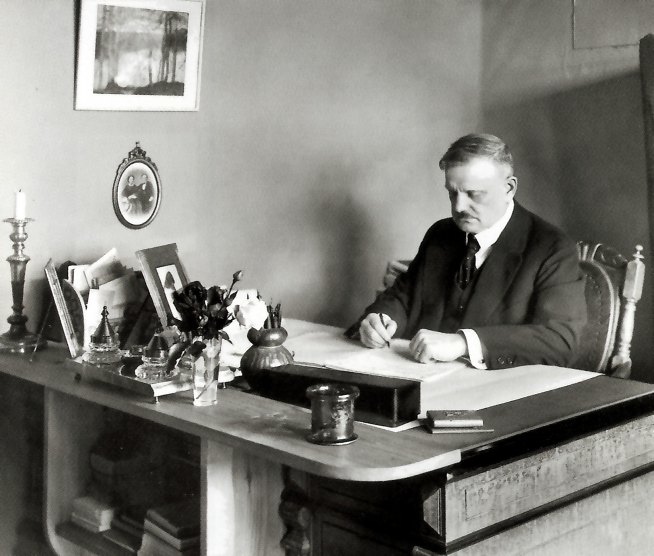
A long time ago, when I was a young man trying then, as now, to figure it all out, I happened to hear a broadcast of a piece of music which changed my musical awareness completely, putting my youthful enthusiasm for prog into context and introducing me to the practise of actually thinking about the sound I was hearing, and the ideas in it, rather than just consuming its vitality whole, like a delicious fruit. That piece of music was the 7th Symphony in C Major by the Finnish composer and nationalist Jean Sibelius: A performance by the Vienna Philharmonic conducted in1966 by Lorin Maazel – one Jewish conductor who continued to perform works by Sibelius despite attacks from the proponents of atonality. I prefer the classicism and close attention to detail of the Colin Davis/Boston Symphony Orchestra recording from 1975, which I owned at the time, and which got everything about right, to my ear. But that’s not on YouTube, I regret to say. The 7th Symphony is a gift to any philosophically-minded person, comprising, as it does, an intimate, poetic journey of a life from birth to death concentrated in a single movement of some 20 to 22 minutes duration. For what was essentially an orchestral shake down of the piece in 1924 Sibelius described it as a symphonic fantasy. But, musically, it was always a life-commentary of unsurpassed seriousness, and no fantasy at all. The motifs of the music are the motifs of your and my life. While there is a nod to a three-movement structure in the build-ups to the thrice-repeated, climactic teloi on the horns, the unbroken singularity of the subject matter required a matching compositional logic. Accordingly, the thematic elements and changing tempi flow uninterrupted and ever onward, truth on truth, to an appointment with the horns of crushing weight and finality, before the strings pick up again for the transition to an insistent, indeed strengthening B major, somehow going on, even now as darkness closes in. That total fidelity to the light is Heidegger’s not-yet, the plea of existence itself, finishing (maybe, or maybe not, as religious hope) in a perfect cadence on C major. And then that, too, at the peak of its agony of knowing, is cut down by the final wave of the baton.
Before returning (in Part 3) to the compound structure of Being on which I concluded Part 1, I am going to introduce the beginnings of the identitarian exegesis to an otherwise ethnic nationalist essay. Broadly, ethnic nationalism belongs to being and, therefore, to an ontological analysis. Its cry of the heart is for “The Being of my people”, and it is therefore a cry for the freedom to subsist. It is already a general organising principle of sorts, a pulse in the background of the life of all peoples. But other than in times of extremis (Heidegger’s “Being towards death”), it is not a straightforward matter to bring it into the foreground as a positive, life-affirming force. That was never more true than in our time, when the material comforts and alienations of our age, together with the gradual, indeed, generational unfolding of extremis, counsel for action another day … always another day … and make ethnic nationalism a less than reliable organising principle. Add to that the ease with which our people’s many enemies, within and without, can de-legitimise any form of engagement with the race issue which is reactive and, therefore, negative, and the limitations of ethnic nationalist discourse become all too apparent. Identitarianism, on the other hand, belongs to consciousness and, therefore, to a psychological analysis. Its cry of the heart is or should be “This people is mine”, and it is a cry of a much more open kind, leading easily to the positive demand that, as “mine”, the people must freely and jointly destine. Identitarianism, as they say, has legs in a way that ethnic nationalism does not. Of course, we need both, to which end we shouldn’t be defeated by the idea that Being and Mind are contrary and exclusive ... or, indeed, that, notwithstanding Heidegger’s rejection of Descartes and Kant, ontology and psychology are such. There is a coherence and compatibility, even if there is no perfect synthesis; and one of my basic aims in all these scribblings is to try to bring this out in a methodical way.
The following is less another of my interminable epigonic offerings for the purpose of advancing the Ontology Project than it is an attempt to resolve the unsatisfactory state of intellectual affairs which exists between myself and Daniel on the relevance and utility of sociology. As such, it proposes a more politically vital form of the promising but, as of now, still new and hardly intellectualised, general concept of “Being of” (which is itself a response to, and development of, Martin Heidegger’s “Being with”). My intention in doing so is to explicate the unique and holistic, radically revolutionary nature of ethnic nationalism, as I apprehend the meaning of that term. The essay is long - for which I apologise here and now – so it will be presented in three parts. Some readers may find it too technical at times or too intellectually unruly, and to both sets of critics I would plead for a visit to my third and final part, when it is posted. So, to begin ...
A few weeks ago I posted a piece here about the limits of incremental change. Its goal was to explore how far political reaction not guided by nationalists … the kind of political reaction which is emerging all across the West … can really go before it encounters the immoveable object of Establishment interests, Money Power interests, Jewish interests; at which point only an authentic nationalism can push on. This article today will also address the problem of limits. But this time those will be the limits in commonplace nationalist advocacy which do not necessarily preference “pushing on”. This short article will also serve as a response to Daniel’s reliance, stated over his most recent posts, on social critique. Readers may be familiar with my criticism of American White Nationalism as a reactionary but non-revolutionary ideology greatly compromised by the unacknowledged, vestigial liberalism of its advocates. I touched upon the radical nature of what it is NOT … systemic nationalism … at the opening of Part 3 of the What it means to be human series:
And so on. The point is that the mass of WNs, along with a probable majority of self-described European nationalists, are not willing to think through the consequences of such radicalism. They may claim to be 100% AltRight or National Socialist or even white left (a contested term, it seems). But as reactionaries they have a conservative civilisational vision. In most cases it has little more ambition than for a return to where we were, ethnically speaking, two or three generations ago. Minus the Jews and blacks, of course, and the bad political choices, the bad life-style choices (especially the “mudsharking”). Bolt on a few useful ancillaries like race-realism, no more brother-wars, and maybe some bits of honour code, and that’s rebirth, right … that’s whites living and working and voting for and by their own collective interests, governed by men and women who understand that and are faithful to it. Isn’t this all that white America really needs? Oh, and the personal liberty, of course. Got a constitutional right to that. What free man wants government pushing him around? Oh, and there’s Christianity. Believers are always gonna believe. Can’t stop that. Shouldn’t even try. And then there’s guns. Didn’t the guy behind the bar just say that a well-armed populace is the best defence against tyranny? Of course, the tyranny has tanks and aircraft. And electronic warfare. And the FEMA camps. And your address. But, hey, if you think your 9mm mail order popgun will help, we’re cool with that. Just kindly point it somewhere else.
The application of what are called human rights by what, these days, is adjudged to be the human rights industry is roundly and rightly deprecated by nationalists. This isn’t news. But it is not only us. It’s fair to say that the white man in the street tends to much the same view. By natural instinct alone he understands that none of the silvered words of the great panjandrums, those politico-corporate whores and criminals who wallow in their own faux-virtue at the UN and all the international conferences, and in the TV studios … none of their gracious, corrupt schtick is meant to benefit him. He is not one of their designated victims. He knows elitism when he sees it, and it isn’t deference he feels toward it. Ask him about the Human Rights Act (or, if you like, dress it up as the European Convention on Human Rights) and he will tell you about some Pakistani hate preacher or African multiple rapist who says and does what he wants but, somehow, never gets deported. Ask him about the human rights lawyers who work the courts and win these verdicts, and he’ll narrow his eyes and tell you he’d like to ship the lot of them off to Somalia for a little life-education. It is the stubborn, abiding dissent of the sturdy yeoman, and it comes straight out of who he is, defiant and unabashed. He’s probably far from alone, too. I imagine that even in these neo-Marxised times there are plenty of perfectly liberal-minded lawyers operating in other, less rarified areas of the legal system who also have some mixed feelings on the subject. They might say of their HR colleagues, “Good luck to them if there’s money in it”. But classically liberal-minded lawyers and judges will care about the integrity and political neutrality of the law. The judiciary, after all, is its custodian and interpreter. Judges, if they have not grown political themselves, should tend to discomfort with any politicisation of the justice system. The overt campaigning fervour for social justice which typifies HR progressives ... indeed, the whole idea of an intrusive hyper-egalitarian, internationalist political bandwagon really ought to offend against their professional principles. That said, this essay is not one about signs of light in the darkness. This essay is about the fundamentals of the life which our history has vouchsafed us, and which has brought us to the pass in which we now labour. It is about a history of serial anti-identitarian developments, of which human rights and the universalism which underpins them are but a sign and a sadness. My apologies for the length. I hope it will prove interesting and informative. Rights, but how human? For our part, we nationalists are bound to ask how, in practise, that seminally Christian ideal of an overriding and overarching love of one’s fellow man, and compassion for his suffering, degenerated into an instrument of global political activism undertaken for the purpose of solidising and advancing a new technocratic elite whose priestly function is to stand over the world and make moral distinctions between “the rich north” and “the poor south”, or “privileged whites” and “oppressed non-whites”, or “narrow-minded, xenophobic racists” and “suffering refugees”, etcetera. The answer, of course, is that love has absolutely nothing to do with it. Indeed, these men and women who affect to love everyone love no one but themselves. Their self-interested political activism is the inevitable precondition for regulating and maintaining a panoply of positive rights which are, without exception, contingent upon other values and sensibilities about what is just and fair. Even the perfectly understandable claim in Article 3 of the 1948 UN Declaration, that “everyone has the right to life”, is not actually natural in kind (something I will come to later). It, like the other twenty-eight articles, is grounded in Western presumptions and preoccupations, and interpretations which are quotidian, fluid and highly susceptible to political fashion. Consider Article 22, which states:
Page 2 of 7 | Previous Page | [ 1 ] [ 2 ] [ 3 ] [ 4 ] | Next Page | Last Page |
|

Existential IssuesDNA NationsCategoriesContributorsEach author's name links to a list of all articles posted by the writer. LinksEndorsement not implied. Immigration
Islamist Threat
Anti-white Media Networks Audio/Video
Crime
Economics
Education General
Historical Re-Evaluation Controlled Opposition
Nationalist Political Parties
Science Europeans in Africa
Of Note MR Central & NewsCommentsThorn commented in entry '"If America doesn't learn ..."' on Sun, 12 Apr 2026 20:35. (View) Thorn commented in entry '"If America doesn't learn ..."' on Sun, 05 Apr 2026 23:35. (View) Thorn commented in entry '"If America doesn't learn ..."' on Mon, 30 Mar 2026 15:40. (View) Thorn commented in entry '"If America doesn't learn ..."' on Mon, 30 Mar 2026 11:43. (View) Guessedworker commented in entry '"If America doesn't learn ..."' on Mon, 30 Mar 2026 07:08. (View) Thorn commented in entry '"If America doesn't learn ..."' on Sun, 29 Mar 2026 11:56. (View) Guessedworker commented in entry '"If America doesn't learn ..."' on Sat, 28 Mar 2026 23:31. (View) Thorn commented in entry '"If America doesn't learn ..."' on Mon, 23 Mar 2026 22:55. (View)  
|