
|
|
|
[Majorityrights News] Congressional Research Service reports on Epic Fury aircraft losses Posted by Guessedworker on Wednesday, 20 May 2026 08:42. [Majorityrights Central] Explaining about life and the Reduction ad Hitlerum at The Restorationist Posted by Guessedworker on Wednesday, 13 May 2026 23:04. [Majorityrights Central] Three possible forms of a Ukrainian victory ... and a Russian defeat Posted by Guessedworker on Thursday, 16 April 2026 16:36. [Majorityrights Central] “If America doesn’t learn ...” Posted by Guessedworker on Sunday, 22 March 2026 17:52. [Majorityrights News] Gerdes on the possible sea-change in the Ukraine War? Posted by Guessedworker on Friday, 20 March 2026 21:45. [Majorityrights Central] Some intel on the Islamic Revolutionary Guards Corps Posted by Guessedworker on Thursday, 12 March 2026 23:32. [Majorityrights Central] Defining the borders of the English kin-group Posted by Guessedworker on Wednesday, 11 March 2026 23:51. [Majorityrights News] Jason Jay Smart on the approaching collapse of Putin’s reign Posted by Guessedworker on Wednesday, 11 March 2026 22:42. [Majorityrights Central] Empires, the Chinese Mind, a theoretical nationalism of ethnicity Posted by Guessedworker on Saturday, 14 February 2026 01:54. [Majorityrights Central] Gemini - not an identical twin to ChatGTP Posted by Guessedworker on Friday, 06 February 2026 16:58. [Majorityrights News] Warburg on the impact of Russian forces’ loss of access to Starlink Posted by Guessedworker on Friday, 06 February 2026 10:17. [Majorityrights News] Toast à la Little Saint James Posted by Guessedworker on Wednesday, 04 February 2026 23:48. [Majorityrights News] Southport, migrant hotels, the national flag, and Amelia Posted by Guessedworker on Monday, 02 February 2026 00:14. [Majorityrights Central] Argot Rosetta Stone For GW/Heidegger/Etter Posted by James Bowery on Saturday, 31 January 2026 17:18. [Majorityrights Central] ChatGPT redux Posted by Guessedworker on Thursday, 29 January 2026 01:11. [Majorityrights News] The national revolution in Iran cannot be stopped Posted by Guessedworker on Saturday, 10 January 2026 00:38. [Majorityrights Central] Into the authoritarian world redux Posted by Guessedworker on Saturday, 03 January 2026 17:56. [Majorityrights News] Moscow Times: Valdai residents report no sign of drones attacking Putin residence Posted by Guessedworker on Tuesday, 30 December 2025 11:33. [Majorityrights News] Paul Warburg on America’s self-destructive new strategy Posted by Guessedworker on Tuesday, 16 December 2025 12:32. [Majorityrights Central] Thoughts on Mark Collett’s strategy for nationalism in the British future Posted by Guessedworker on Friday, 24 October 2025 15:01. [Majorityrights Central] Living in the Jewish Mind: Part One Posted by Guessedworker on Monday, 29 September 2025 09:37. [Majorityrights News] Nationalism on the Kramatorsk front. Posted by Guessedworker on Saturday, 20 September 2025 15:55. [Majorityrights Central] And Chat GPT just the same Posted by Guessedworker on Monday, 08 September 2025 15:18. [Majorityrights Central] Grok the modern nationalist Posted by Guessedworker on Sunday, 07 September 2025 19:14. [Majorityrights Central] Principles, parts, processes of ethnic nationalism, Part 1: inflection? Posted by Guessedworker on Thursday, 31 July 2025 12:03. [Majorityrights Central] A window onto a world of Russo-Chinese hegemony Posted by Guessedworker on Tuesday, 08 July 2025 20:47. [Majorityrights Central] The DT takes the first step on the journey Posted by Guessedworker on Thursday, 03 July 2025 05:02. [Majorityrights News] Iranian comment machine switched off by Israeli bombs Posted by Guessedworker on Wednesday, 25 June 2025 09:07. [Majorityrights Central] After Casey and the ensuing child sexual exploitation inquiry Posted by Guessedworker on Tuesday, 17 June 2025 00:21. [Majorityrights News] 4 minutes and 43 seconds of drone warfare history - updated Posted by Guessedworker on Wednesday, 04 June 2025 16:50. [Majorityrights Central] An approaching moment of Russian clarity Posted by Guessedworker on Sunday, 11 May 2025 12:34. [Majorityrights Central] “It’s started. You ignored us. See where it’s going to get you.” Posted by Guessedworker on Sunday, 04 May 2025 00:42. [Majorityrights News] Another dramatic degradation of Russia’s combat capacity Posted by Guessedworker on Wednesday, 23 April 2025 08:49. [Majorityrights Central] A British woman in Ukraine and an observer of Putin’s war Posted by Guessedworker on Monday, 14 April 2025 00:04. Majorityrights News > Category: Military Matters
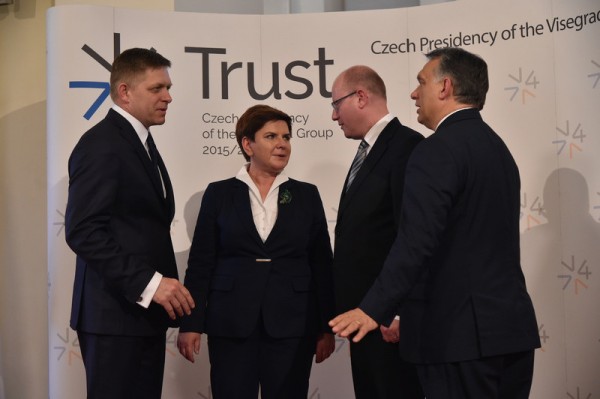
EUObserver, “The rise and shine of Visegrad”, 30 Dec 2016: The Visegrad leaders have made their voices heard on the EU stage. The name of a quiet medieval town in Hungary – Visegrad – has in recent times become synonymous with the word “rebellion” in Brussels. Others, particularly if they are from one of the four countries in the loose association of the Visegrad Group, might argue that it stands for “alternative”. V4 countries are trying to weigh in on the EU’s soul-searching process which was launched at a summit in Bratislava in September. (Photo: Kurt Bauschardt) The group, also known as V4, was formed in Visegrad in 1991 and is comprised of the Czech Republic, Hungary, Poland and Slovakia. It has remained relatively obscure for almost 25 years. Then the migration crisis hit. The EU’s inability to handle the crisis, combined with a tilt in the power structure within the union after the Brexit vote and increasingly bellicose and eurosceptic leaders in Hungary and Poland, has thrust the group to the fore. In 2016, V4 leaders have pushed for a change in the EU’s migration policy and has refused to accept asylum seekers under the EU’s quota system. They also called for reform of the EU after the Brexit vote. “The V4 basically fulfilled the role it was created for in the first place, to be a powerful lobby organisation.” Daniel Bartha, the director of the Budapest-based Centre for Euro-Atlantic Integration and Democracy, told Euobserver. “It now holds on to a significant number of votes in the European Council to offset Germany.” Diplomats refer to a meeting of interior ministers in September 2015, when the four states were out-voted on migrant quotas, as the “original sin” that emboldened the group. The V4 countries disagreed with the mandatory part of the system - even though in the end Poland, under its previous government, did not vote with the rest of the Visegrad nations - and particularly disliked how the European Commission rammed through its German-inspired proposal. A year after the migration quotas were introduced, Slovak prime minister Robert Fico declared the idea politically dead. “Quotas today clearly divide the EU, therefore I think they are politically finished,” he told journalists while his country was holding the rotating EU presidency. Eastern EU states were not the only ones that did not like the quota system, but they were the most vocal about it, with Hungary and Slovakia challenging it in the EU Court of Justice. Strong anti-immigrant rhetoric coming from the Visegrad leaders was initially criticised, but eventually the focus of the EU’s migration policy shifted from taking in asylum seekers and distributing them fairly, to reinforcing border control and shutting down migration routes. The issue has finally forced the realisation in the corridors of the Berlaymont, the EU commission’s headquarters, that V4 countries could not be ignored. But as one EU official observed, commission president Jean-Claude Juncker still surrounds himself with a small circle of close aides and is less open to influence from the V4. The official gave the example of the commission proposal on “posted workers”, which would require companies from the eastern EU to pay as much to their workers sent to Western Europe as their western counterparts. In principle, the proposal makes sense in a single market, and some Western European states have long objected to easterners undercutting local wages. But 11 national parliaments objected to the commission’s proposal, the bulk of them eastern nations. The commission decided in July to move ahead with the proposal anyway. The Brexit vote was a shock to the EU, but it reinforced the V4’s presence. It has been interpreted as a vote against the ruling elite and mainstream politics, a public sentiment that Hungarian and Polish leaders have been successfully exploiting. Those two nations took it as a sign that the EU needs to change, and they were ready with an alternative. “The European Commission hasn’t fully understood what happened in the British referendum,” Polish prime minister Beata Szydlo told reporters in July, when her country took over the V4 rotating presidency. “The EU needs to return to its roots. We need to care more about the concerns of citizens and less about those of the institutions.” Similarly, Hungarian prime minister Viktor Orban said in June that democratic legitimacy for the EU can only come from the member states. “We have to return to the notion that the basis of the EU is not its institutions, but the member states. The democratic feature of the EU can only be reinforced through the member states,” he said after the British referendum. There is yet a concrete proposal, but in the Slovak capital in September, the 27 member states kicked off a soul-searching “Bratislava process” to explore how the EU could be reformed to win back citizens, and the V4’s ideas are bound to be influential. “After Brexit, the EU’s political centre of gravity has shifted towards the east,” said analyst Daniel Bartha. “France has had a declining economy since the early 2010s, so it has been less potent in offsetting Germany’s dominance on the continent. New power centres are destined to emerge in the union.” But the V4’s rise in EU politics might only be temporary, as many issues divide the four nations and would hamper their ability to influence EU politics. “The harmony only exists from the outside. Migration is the key issue where the four agreed. On everything else – for instance energy – there is little agreement,” said Bartha. He cited as an example relations with Russia – a friend to Hungary but still regarded as a threat in Poland. And Slovakia’s government has largely muted its opposition to EU migration policy during its presidency of the EU Council. EU officials have suggested engaging with the “more reasonable” elements within the V4 – Slovakia and the Czech Republic – to separate them from Poland and Hungary whenever possible. “They need our gestures. It is that moment,” argued one EU official.
And Alt-Right hypocrisy as well, since The US was the only nation which supported Israel in the UN with regard to their illegal settlements - their chutzpah to fly in the face of the rest of the world probably rests on anticipation of help from their boy Trump
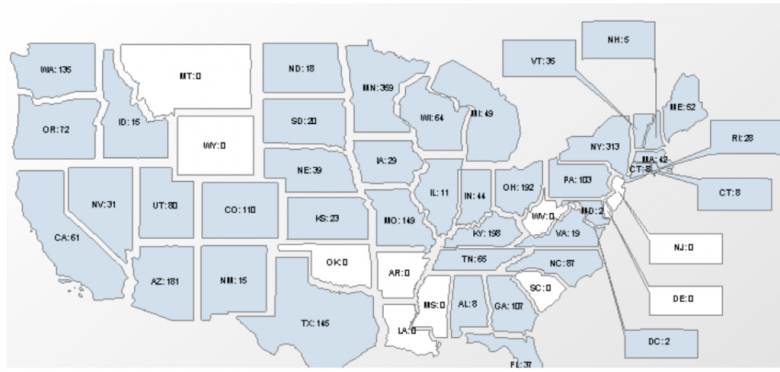
... as Recorded by Refugee Resettlement Watch
West Virginia is one of the Whitest (and poorest) states in The United States. It is also one of the most beautiful, at least where Massey Corporation has not strip-mined its mountain tops (and poisoned drinking water and given cancer to locals with that same operation).
* Yes, that’s (((Klitchko))) in avid attendance, front and center.
[...]
[...]
..........
Page 45 of 60 | First Page | Previous Page | [ 43 ] [ 44 ] [ 45 ] [ 46 ] [ 47 ] | Next Page | Last Page |
|

Existential IssuesDNA NationsCategoriesContributorsEach author's name links to a list of all articles posted by the writer. LinksEndorsement not implied. Immigration
Islamist Threat
Anti-white Media Networks Audio/Video
Crime
Economics
Education General
Historical Re-Evaluation Controlled Opposition
Nationalist Political Parties
Science Europeans in Africa
Of Note MR Central & NewsCommentsManc commented in entry 'An approaching moment of Russian clarity' on Mon, 15 Sep 2025 16:04. (View) Manc commented in entry 'An approaching moment of Russian clarity' on Sun, 14 Sep 2025 11:03. (View) Guessedworker commented in entry 'And Chat GPT just the same' on Tue, 09 Sep 2025 16:00. (View) Thorn commented in entry 'And Chat GPT just the same' on Tue, 09 Sep 2025 13:07. (View) Guessedworker commented in entry 'And Chat GPT just the same' on Tue, 09 Sep 2025 12:56. (View) Manc commented in entry 'And Chat GPT just the same' on Tue, 09 Sep 2025 12:32. (View) Thorn commented in entry 'And Chat GPT just the same' on Tue, 09 Sep 2025 11:21. (View) Manc commented in entry 'And Chat GPT just the same' on Tue, 09 Sep 2025 09:12. (View) Guessedworker commented in entry 'And Chat GPT just the same' on Tue, 09 Sep 2025 07:15. (View) Thorn commented in entry 'And Chat GPT just the same' on Mon, 08 Sep 2025 22:42. (View) Guessedworker commented in entry 'And Chat GPT just the same' on Mon, 08 Sep 2025 18:20. (View) Manc commented in entry 'And Chat GPT just the same' on Mon, 08 Sep 2025 17:38. (View)  
|

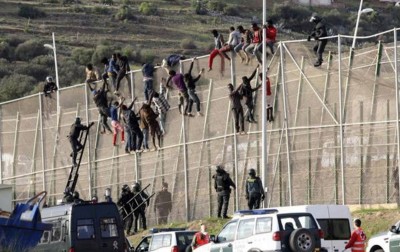
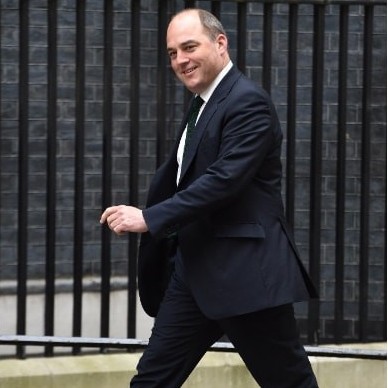 Minster Ben Wallace warns Isil planning chemical attack on Britain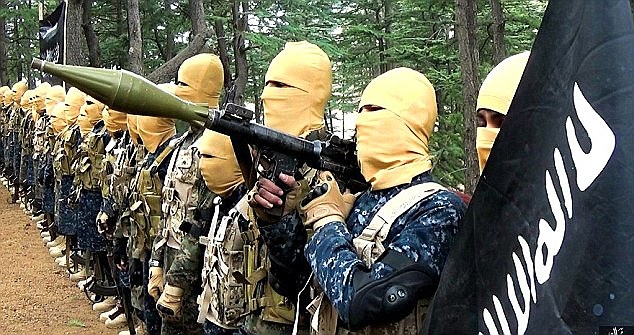



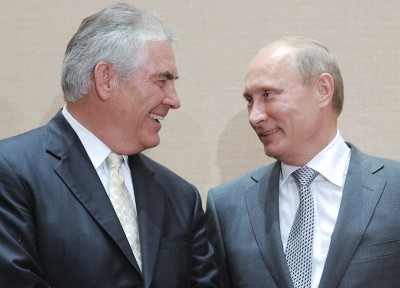 Russia’s Prime Minister Putin speaks with Tillerson in Sochi in 2011



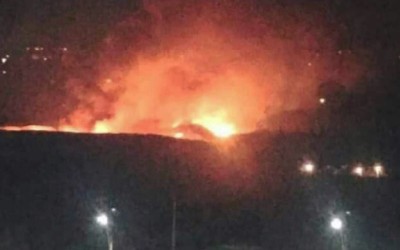 Israeli missile attack on the Al-Mezzeh Airport, west of Damascus.