[Majorityrights Central] Explaining about life and the Reductio ad Hitlerum at The Restorationist Posted by Guessedworker on Wednesday, 13 May 2026 23:04.
[Majorityrights Central] Three possible forms of a Ukrainian victory ... and a Russian defeat Posted by Guessedworker on Thursday, 16 April 2026 16:36.
[Majorityrights Central] Empires, the Chinese Mind, a theoretical nationalism of ethnicity Posted by Guessedworker on Saturday, 14 February 2026 01:54.
[Majorityrights News] Moscow Times: Valdai residents report no sign of drones attacking Putin residence Posted by Guessedworker on Tuesday, 30 December 2025 11:33.
[Majorityrights Central] Thoughts on Mark Collett’s strategy for nationalism in the British future Posted by Guessedworker on Friday, 24 October 2025 15:01.
[Majorityrights Central] Principles, parts, processes of ethnic nationalism, Part 1: inflection? Posted by Guessedworker on Thursday, 31 July 2025 12:03.
Tens of thousands protest against Putin in Russian far east
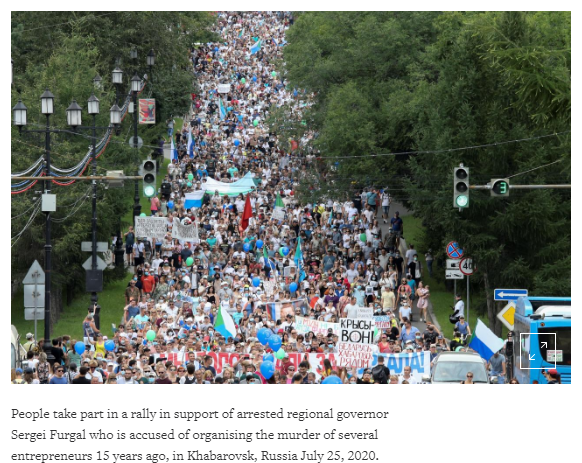
KHABAROVSK/MOSCOW (Reuters) 25 July 2020 - Tens of thousands marched in the Russian far east on Saturday, the third such weekend protest in a row, to express their anger over what they say is President Vladimir Putin’s mishandling of a local political crisis.
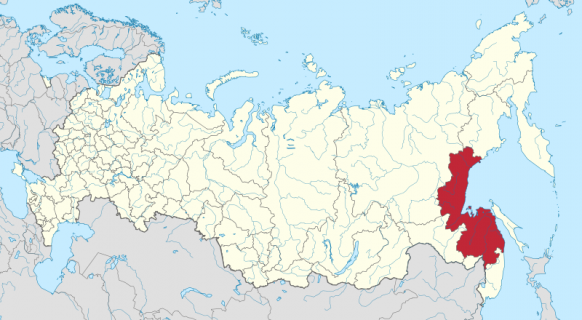
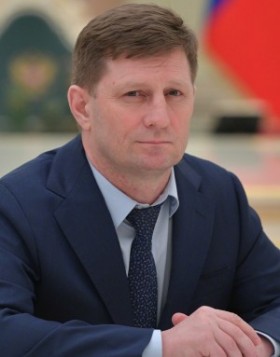
Residents of Khabarovsk, around 3,800 miles (6,110 km) and seven time zones east of Moscow, are unhappy about the detention this month of the wider region’s popular governor, Sergei Furgal, who was arrested on murder charges he denies.
His arrest, which his supporters say was politically motivated, triggered the protests and created a headache for the Kremlin which is trying to troubleshoot a COVID-19-induced drop in real incomes and keep a lid on unrest.
Protesters chanted “Putin resign!” and “Putin is a thief!”. Demonstrators say they want Furgal, who they think has been set up, to be flown back from Moscow and put on trial in Khabarovsk.
City authorities estimated around 6,500 people had taken part. One local media outlet put the number at up to 20,000, while other outlets and opposition activists said upwards of 50,000 had attended and that it was the biggest protest of its kind so far.
“Give us our Furgal back,” said a local businesswoman called Viktoria. “This is our choice.”
The protests have highlighted anger among some over what they see as policies emanating from detached Moscow-based authorities.
Supporters of Furgal, a member of the nationalist LDPR party, feel he is being belatedly punished for defeating a candidate from the ruling pro-Putin United Russia party in 2018. The Kremlin says Furgal has serious charges to answer.
Such sustained demonstrations are unusual for Russia’s regions, as is the fact that the authorities have not yet moved to break them up.
In an apparent move to defuse tensions, Putin on Monday named a new acting governor. But protesters said they felt insulted by the choice of Mikhail Degtyaryov, who has no connection with the region, and have demanded he step down.
Reporting by Yury Zolotarev and Andrew Osborn; Editing by Louise Heavens and Grant McCool
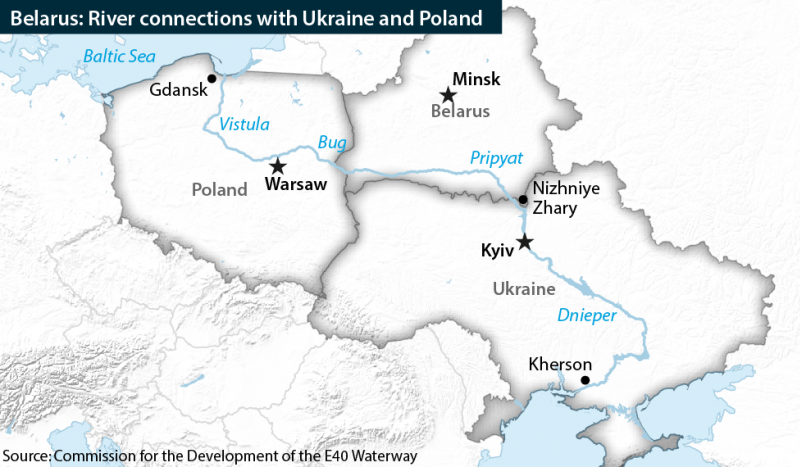
Plans for a new Baltic–Black Sea waterway, passing through Ukraine, Belarus and Poland, have the potential to revolutionize the geopolitics of Europe’s East as well as exacerbate East-West tensions (see EDM, February 18). The European Union has labeled the project “E40,” and the United States has signaled its support. And were the E40 waterway to be incorporated within the broader regional framework of the Three Seas Initiative (3SI), the transit project would not only help the economies of all three participating countries and their neighbors but also promote trilateral cooperation on other issues, including security, and make each one of them more attractive partners for the West. This development would thus transform the frequently dismissed “countries in between” Russia and Western Europe—the geopolitical equivalent of “flyover states”—into a unified, collective player in its own right. Not surprisingly, such prospects are gaining support in the US and part of the EU but generating ever more opposition in Moscow. Russia rightfully views E40 as a threat to its influence in the region and even, according to some analysts, as an existential threat to Russia itself. Nonetheless, Moscow faces increasing difficulty in blocking the project by using the means it has employed in the past (Ura.news, Sept 14, 2019; Deutsche Welle—Russian service, Sept 14, 2019).
For a century, Moscow has been leery of any efforts to promote East European unity, viewing them as an attempt to erect a cordon sanitaire against it and as a Polish plot against Russia. Indeed, Poland took the lead in such projects in the 1920s and 1930s with its Promethean League and regional confederal arrangements (Marek Chodakiewicz, Intermarium: The Land Between the Black and Baltic Seas, 2012). After World War II, however, the idea faded due to Soviet occupation and the division of Europe, which prompted all involved to think only in East-West terms rather than in the potential for North-South cooperation. After the collapse of the Soviet Union, the notion again became realistic but gained relatively little traction at first because Central and Eastern Europeans saw their salvation in joining the West. In addition, many Westerners drew a new line between the former Eastern Bloc countries (including the three Baltic States and the former Yugoslavia) and the new republics that emerged from the disintegration of the Soviet Empire. Few in the West gave much consideration to the notion of there existing a larger region straddling both sides of this new dividing line.
Affidavit quotes Trump confidant Roger Stone being told by a Jerusalem contact: ‘He is going to be defeated unless we intervene. We have critical intell. The key is in your hands!’
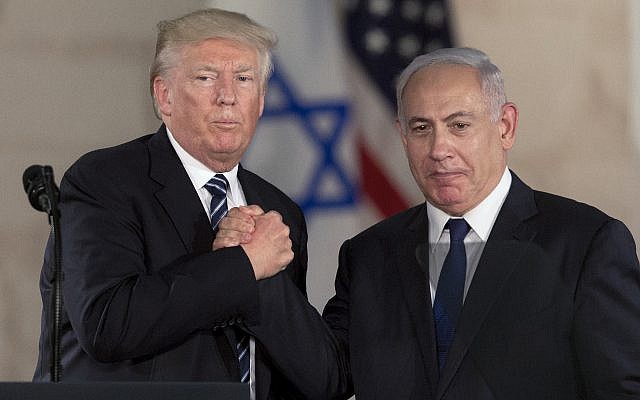
Prime Minister Benjamin Netanyahu, right, and US President Donald Trump shake hands at the Israel Museum in Jerusalem, May 23, 2017. (AP/Sebastian Scheiner)
Roger Stone, a longtime confidant of President Donald Trump who was convicted last year in Robert Mueller’s investigation into ties between Russia and the Trump campaign, was in contact with one or more apparently well-connected Israelis at the height of the 2016 US presidential campaign, one of whom warned Stone that Trump was “going to be defeated unless we intervene” and promised “we have critical intell[sic].”
The exchange between Stone and this Jerusalem-based contact appears in FBI documents made public on Tuesday. The documents — FBI affidavits submitted to obtain search warrants in the criminal investigation into Stone — were released following a court case brought by The Associated Press and other media organizations.
A longtime adviser to Trump, Stone officially worked on the 2016 presidential campaign until August 2015, when he said he left and Trump said he was fired. However he continued to communicate with the campaign, according to Mueller’s investigation.
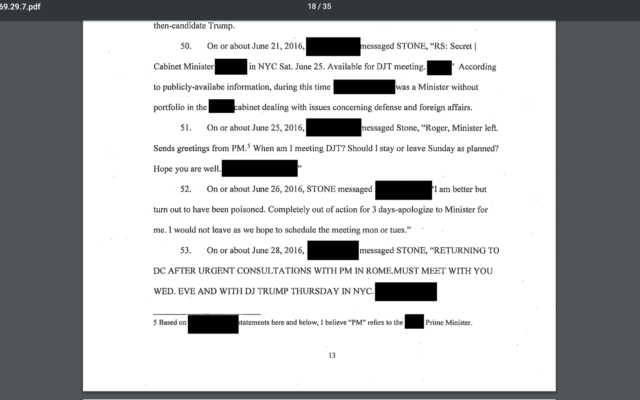
The FBI material, which is heavily redacted, includes one explicit reference to Israel and one to Jerusalem, and a series of references to a minister, a cabinet minister, a “minister without portfolio in the cabinet dealing with issues concerning defense and foreign affairs,” the PM, and the Prime Minister. In all these references the names and countries of the minister and prime minister are redacted.
Section of FBI document with heavily redacted references to a minister, a cabinet minister, a “minister without portfolio in the cabinet dealing with issues concerning defense and foreign affairs,” the PM, and the Prime Minister.
Benjamin Netanyahu was Israel’s prime minister in 2016, and the Israeli government included a minister without portfolio, Tzachi Hanegbi, appointed in May with responsibility for defense and foreign affairs. One reference to the unnamed PM in the material reads as follows: “On or about June 28, 2016, [NAME REDACTED] messaged STONE, “RETURNING TO DC AFTER URGENT CONSULTATIONS WITH PM IN ROME.MUST MEET WITH YOU WED. EVE AND WITH DJ TRUMP THURSDAY IN NYC.” Netanyahu made a state visit to Italy at the end of June 2016.
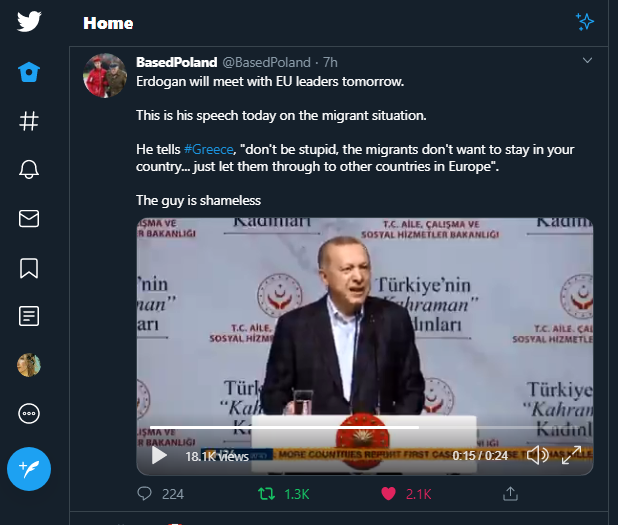
Erdogan to Greece: “Don’t be stupid. The migrants don’t want to stay in your country. Just let them through to other countries in Europe.”
Erdogan: “Greece, these people won’t remain in your country. They will pass through and go to another country in Europe. Why do you feel disturbed? We told you! We said that if it goes on like this, we’ll open the gates, but you didn’t believe us. Oh, Greece, now I’m calling on you to open your gates. Get out from under this burden! Let them go to other countries of Europe. There is no other way. The burden must be shared and we are looking for partners.”
Posted by DanielS on Wednesday, 19 February 2020 07:13.
Prior to his arrest in 2003 Khodorkovsky (in photo with first Russian President Boris Yeltsin) funded several Russian parties, including the Communist Party, most of which were in competition with each other. Voltairenet.org
A Dutch appeals court on Tuesday (18 February) overturned the annulment of a $50 billion award to shareholders in the now defunct Russian oil giant Yukos, a surprise ruling 13 years after the assets came under control of the Kremlin.
Yukos Oil went bankrupt in 2006 after its former chief Mikhail Khodorkovsky fell out with Russian leader Vladimir Putin and the government began demanding billions of dollars in back taxes that ultimately resulted in its being expropriated by the state.
Tuesday’s verdict reinstates a decision by The Hague-based Permanent Court of Arbitration (PCA) ordering the Russian state to compensate shareholders in the company once headed by fallen oligarch Khodorkovsky. That decision had been overturned in April 2016 by The Hague District Court.
Russia’s Justice Ministry has said it will challenge the appeals court ruling at the Dutch Supreme Court.
“The (lower) court ruled in favour of the Russian Federation, but the court of appeal in The Hague today ruled that the court’s verdict is incorrect. This means that the arbitral award is again in force,” the appeals court said in a statement.
Most of Yukos’ assets were absorbed by the Kremlin’s flagship oil producer Rosneft, and its former owners have for years been trying to recover their possessions.
Legal proceedings seeking damages have been brought by GML, formerly known as Group Menatep Ltd., which held around 70% of shares in Yukos.
Rule of law
Tim Osborne, GML’s chief executive, said the latest ruling was “a victory for the rule of law.”
“The independent courts of a democracy have shown their integrity and served justice. A brutal kleptocracy has been held to account,” he said.
The PCA had ruled in July 2014 that four plaintiffs – not including Khodorkovsky – were entitled to compensation for the loss of their holdings, enabling them to go after Russian state assets.
Russian government assets in France and Belgium including bank accounts have been frozen in a row over compensation for shareholders of defunct oil giant Yukos, officials and a claimant representative said yesterday (18 June).

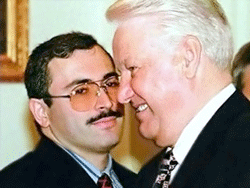 Prior to his arrest in 2003 Khodorkovsky (in photo with first Russian President Boris Yeltsin) funded several Russian parties, including the Communist Party, most of which were in competition with each other. Voltairenet.org