[Majorityrights Central] Explaining about life and the Reduction ad Hitlerum at The Restorationist Posted by Guessedworker on Wednesday, 13 May 2026 23:04.
[Majorityrights Central] Three possible forms of a Ukrainian victory ... and a Russian defeat Posted by Guessedworker on Thursday, 16 April 2026 16:36.
[Majorityrights Central] Empires, the Chinese Mind, a theoretical nationalism of ethnicity Posted by Guessedworker on Saturday, 14 February 2026 01:54.
[Majorityrights News] Moscow Times: Valdai residents report no sign of drones attacking Putin residence Posted by Guessedworker on Tuesday, 30 December 2025 11:33.
[Majorityrights Central] Thoughts on Mark Collett’s strategy for nationalism in the British future Posted by Guessedworker on Friday, 24 October 2025 15:01.
[Majorityrights Central] Principles, parts, processes of ethnic nationalism, Part 1: inflection? Posted by Guessedworker on Thursday, 31 July 2025 12:03.
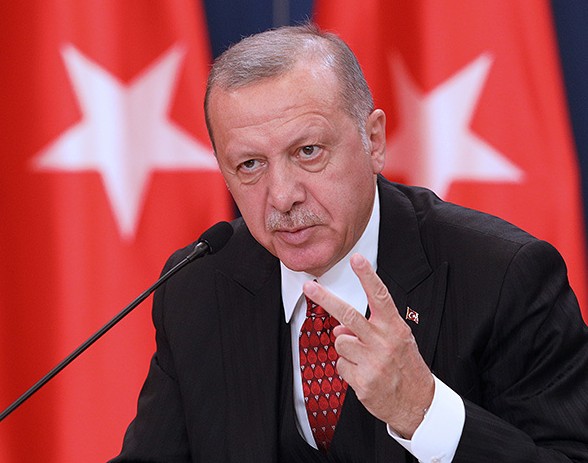
Turkish regime leader Recep Tayyip Erdogan said on Monday that his government had no intention of stopping the relentless westward flow of migrants toward continental Europe, warning that “millions” would soon be headed toward the EU.
“Since we have opened the borders, the number of refugees heading toward Europe has reached hundreds of thousands. This number will soon be in the millions,” Erdogan said today in Ankara during a televised speech, Greek daily newspaper Kathimerini reports.
“After we opened the doors, there were multiple calls saying ‘close the doors.”
“I told them ‘it’s done. It’s finished. The doors are now open. Now, you will have to take your share of the burden’,” he said.
Late Sunday night, Turkish interior minister Süleyman Soylu said that 100,577 migrants had left Turkey through Erdine, at the border with Greece.
Despite the regime leader and his interior minister’s claims that hundreds of thousands of migrants are already amassed at the Greek border, figures from the International Organization for Migration suggest that these figures are vastly inflated.
According to the IOM, more than 13,000 migrants have now arrived at the Turkish-Greek border.
Earlier today, Voice of Europe reported that the Greek government has announced that it is preparing itself for 150,000 migrant invaders to try and reach its various islands in the Eastern Aegean Sea. Over 1000 migrants have already slipped by Greece’s coastguard and have managed to land on Greek islands in the Eastern Aegean.
Arthur Lyons
@ALyonsvi
Individual citizens are going to have to stand up and fight against this invasion. twitter.com/AlexLeroy90/status
Alex
@AlexLeroy90
Des grecs empêchent l’invasion des migrants islamistes envoyés par Erdogan Dégagez ! Nous sommes chrétiens ici !
video
Clashes escalate between Greek army and migrants on Turkish border
Over the weekend, Greece’s Deputy Defense Minister Alkiviadis Stefanis announced over that the migrants who’ve gathered at Greece’s border – most of whom are fighting-age men – made around 9,600 unsuccessful attempts to breach the border illegally.
The migrant invaders set fires and attacked Greek security forces, shouting things like: “The dogs can’t see us anymore. Burn them. Allahu Akbar.”
Imam of Peace
@Imamofpeace
“The dogs can’t see us anymore. Burn them. Allahu Akbar”
Turkey: Migrants cut through barbed wire at Greek border
“It will be difficult to stop the massive flow of people who have set out on their journey. That is why we can expect an increase in pressure in the coming days — even in the event that Turkish authorities act to prevent people from crossing the border,” an internal Frontex report said.
Posted by DanielS on Wednesday, 26 February 2020 12:17.
27:10: It is Poland’s explicit policy after 1935 to rid itself of 90% of its Jewish population. Given that there were more than three million Jews in Poland that’s a very large number. ..but from their point of view, the way to get rid of the Jews was to support right wing Jewish terrorists who are going to make a lot of trouble in Palestine so there could be a Jewish state.
...from the Nazi point of view, anti-Semitism is part of [their concept of] racial anarchy. The Nazi point of view is that Jews are the ones who are in the way of a racial struggle, which is non-political.
The Polish point of view is different. The Polish point of view is attached to the state. They don’t understand that the Nazis are about racial anarchy. ...the[y think rather that the] way to handle whatever problem they’re defining, even what they see as the struggle against Jews, is by way of states. So, you either negotiate with the British or behind their back you find a way to create a state in Palestine and then you can get the Jews sent off there.
...to emphasize the point that there are different kinds of anti-Semitism, it’s not just a matter of turning up the dial or turning down a dial ..or who is more anti-Semitic the Poles or the Germans.. there are issues of quality here which matter, especially when the quality has to do with the state. ..but where we’ve gotten to in history is the moment where Germany starts to destroy states. Where this theory of state destruction actually becomes practice.
30:40: Poland is where Hitler finally gets his war. It’s not the war that he wanted; it’s not a war that he had planned; it’s not a war that he expected. But when he made war against Poland it was the first war that he prosecuted while actively destroying the state.
When he talks to his high officers in July/ August 1939, before the war… early September 1939, what he tells them is that this war is not like other wars. It’s not about territory. It’s not about victory. It’s not about seizing a certain amount of land. It’s about destroying Poland as a state and as a nation.
In other words, it’s not just about destroying the Polish army; but about coming into the country, declaring that the civil code no longer functions; the Polish state does not exist; (this is where it gets interesting) the Polish state has never existed.
So, the claim that they make when they enter Poland is basically the same kind of claim that European imperialists made beyond Europe; that the territory we’re entering is uninhabited, at least in the sense of being uninhabited by political beings.
So, Poland is treated colonially in the sense that the Polish state is not acknowledged as an institution; actively not acknowledged. And the people who are thought to represent it, whether they are military officers, whether they are civilian politicians, whether they are Roman Catholic priests, are physically eliminated - killed: in the tens of thousands. That’s not an accident. That’s part of the idea of destroying the Polish state.
Posted by DanielS on Thursday, 20 February 2020 07:20.
Salvini quotes Ezra Pound, “If a man is not ready to fight for his ideas, either his ideas are worthless, or he is,”
Italian ethnonationalist leader Matteo Salvini is to stand trial on charges of illegally detaining migrants at sea after senators voted Wednesday to strip him of his parliamentary immunity.
A court in Sicily recommended that former interior minister Salvini stand trial for blocking migrants from disembarking from a coast guard boat last July.
But ministers cannot be tried for actions taken while in office unless their parliamentary immunity is revoked.
The Senate’s decision sends the chief of the anti-immigrant League party to trial for abuse of power and illegal detention, charges for which he faces up to 15 years in jail.
“I have defended Italy. I have full and total faith in the justice system,” Salvini told ANSA news agency after the vote.
“I am not worried at all, and I’m proud of what I’ve done,” he said, adding he would “do it again when I get back into power.”
Salvini had refused to allow 116 rescued migrants to leave the Gregoretti coast guard boat – where they had been languishing for about a week in insalubrious conditions – until a deal was reached with other European states to host them.
A Catania court accused him of “abuse of power” in blocking them on board from July 27 to July 31 last year, and of illegally detaining them.
Salvini insists the decision had the backing of the government and Prime Minister Giuseppe Conte.
‘Head Held High’
Before the debate began, Salvini took to Facebook to say he had his “head held high, with the calm conscience of those who have defended their land and people.”
“If a man is not ready to fight for his ideas, either his ideas are worthless, or he is,” Salvini wrote, quoting Ezra Pound, a 20th-century American poet known for his fascist sympathies.
The Gregoretti on July 25 took on board 140 migrants who were trying to make the perilous crossing from war-torn Libya to Europe – the same day 110 migrants drowned off the Libyan coast.
LONDON, ENGLAND: Anti-Brexit campaigner Steve Bray protesting outside of the Houses of Parliament on January 30, 2020 in London, United Kingdom. At 11.00pm on Friday 31st January the UK and Northern Ireland will exit the European Union 188 weeks after the referendum on June 23rd 2016.
In 2016, Britain voted for Brexit. On Friday—four years, three prime ministers and two general elections later—the country will leave the European Union. Officially stepping out into the world is a major moment for a country that has driven itself mad on the tortuous path to the exit door. And yet, even the buildup to this historic event typified the silliest aspects of the years between the “leave” vote and the actual leaving.
Two quarrels about how Britain would mark the occasion broke out in recent weeks, one about a bell, the other about a coin. First came the fuss about whether Big Ben would ring out to mark the moment of independence. This Brexiteer wish was complicated by the fact that the bell, and the tower that houses it, are undergoing renovations, meaning a single bong would come with a $700,000 price tag. After Parliament refused to fund the move, and an online fundraising campaign failed to fill the gap, there will be no Big Ben bongs. “If Big Ben doesn’t bong, the world will see us as a joke,” lamented Brexit campaigner Nigel Farage.
A second brouhaha broke out over a commemorative 50 pence coin issued to mark the occasion. The coins, which read, “Peace, prosperity and friendship with all nations,” soon drew the ire of disbelieving Remainers. Otherwise serious and self-respecting members of the British establishment said they would refuse to use the coins or would deface any that came into their possession. (The novelist Philip Pullman also complained that the coin “is missing an Oxford comma and should be boycotted by all literate people.”)
Britain’s talent for turning these trivial rows into front-page stories illustrates how much the Brexit debate has become a negative-sum culture war, with Leavers and Remainers each compelled to take a side. Yet these dust-ups also obscure some of the more interesting, and important, divides over what Britain does with its newfound freedom. So far, much of the conversation has been backward looking, focused on whether the country would give effect to the 2016 vote with a viable version of Brexit, or whether that vote should be ignored. As Britain leaves the EU, and finally casts an eye forward, there are as many disputes as ever, with global implications, and the fault lines are more complicated than just Leave vs. Remain.
When Prime Minister Boris Johnson triumphed in last month’s election with a promise to “get Brexit done,” his opponents argued that after the sun rises on February 1, Britain’s future relationship with the EU, and a host of related questions, would remain unresolved. In a narrow sense, that claim is irrefutable. But it also misses the bigger picture.
The case for Brexit was built on possibilities. Among other things, exiting the EU allows Britain to decide for itself what trade relationships it should pursue with the rest of the world, the criteria it should set for its immigration system and how to regulate a host of areas that have been the competence of the EU for decades. These are big, difficult decisions in and of themselves. They aren’t part of a Brexit process that will ever be finished. Britain will not one day declare mission accomplished and no longer give any thought to, for example, trade policy—something that, as Americans will know, is an ongoing consideration in the politics of sovereign countries.
Understand that fact, and the divide between Leave and Remain starts to look less significant. On trade, for example, there is a split among Leavers. An image of buccaneering “Global Britain” striking trade deals with fast-growing economies around the world was a big part of the case pro-Brexit politicians made. There is little enthusiasm for this vision among Leave voters. According to one poll, Leave voters were more likely to support protectionist trade policies than Remainers. In fact, whether someone voted Leave was the single best predictor of a person’s support for barriers to trade. Politicians eager to use Brexit as an opportunity for liberalizing UK trade will have to think carefully about which voters they can rely on.

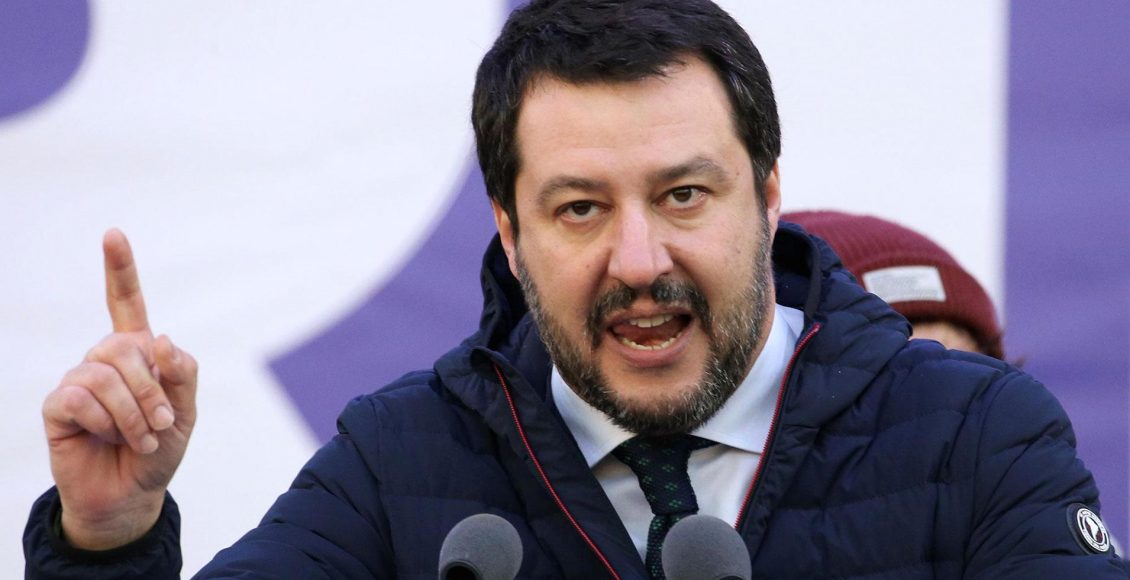 Salvini quotes Ezra Pound, “If a man is not ready to fight for his ideas, either his ideas are worthless, or he is,”
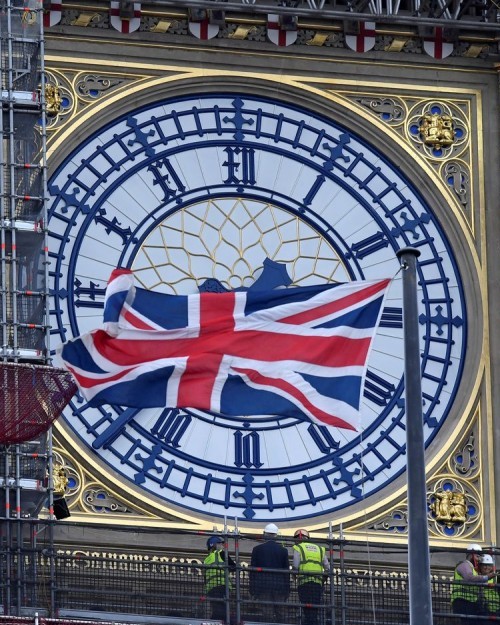 A Union Jack flag flutters in front of Big Ben as workers inspect one of its clocks, in London on Sept 11. (Reuters photo)

 Turkish president Erdogan has previously