Majorityrights News > Category: U.S. Politics
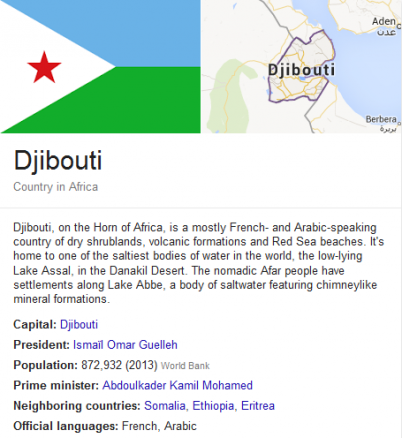
Garrison Infrastructure Emerging Along European-Asian Alliance As Chinese Participate in Djbouti

Posted by DanielS on Monday, 11 April 2016 20:50.


Tiny Dijbouti’s key strategic position brings European and Asian garrisons to alignment

Some tried to say that we were engaged in dubious larping. On the contrary, it is happening and it is the correct configuration of alliance -

The sort of alliance that Majorityrights advocates between European peoples and Asia(ns) is Happening. We envisage a coordinated effort to protect our peoples, secure our lands, access to vital resources and to maintain our channels of commerce. Allying our peoples and military stations along that line come with the broader purpose of securing our people against Islamic, Arab and African populations, Abrahamic/Judaic and Jewish populations, power and influence.

The World Weekly, “Why tiny Djibouti matters to the world’s powers” 7 April 2016:

Djiboutian Politics

A home to military bases for the US, France and soon China, Djibouti may be the most important tiny African state you’ve never heard about.

At the close of another hot day on the coast of Djibouti, a tiny country on the Horn of Africa, workers are clambering over huge concrete cubes beneath a red crane. One by one, the 2,500-tonne blocks are being submerged in the water: part of a plan to stun the shoreline into submission and create a vast new port at the heart of global trade.

“We’re going to fill in the sea,” Abdo Mohammed, the logistics manager for the $590m project, tells me with quiet glee.

Thirty per cent of all shipping in the world passes this point on the north-east edge of Africa, where the water narrows to a few kilometres opposite Yemen. A former French colony that became independent only in 1977, Djibouti sits at the southern entrance to the Red Sea, en route to the Suez Canal — a waypoint between Africa, India and the Middle East. Over the past 15 years, the country has set about capitalising on its location at the nexus of international trade: once completed, the Doraleh Multi-Purpose Port will be the largest of eight ports that together will handle containers, livestock, oil, phosphates and more.

But the geostrategic ambition of the small, authoritarian state — which at 23,200 sq km (8,950 sq miles) is only slightly larger than Wales — does not stop there. The US, several European countries and Japan have all pinned global military ambitions on Djibouti. Now China is set to do the same.

Construction began on the new port in 2013. “But then [last year] we had to change things around,” says Mohammed. He gestures with his phone in the direction of the arid land behind us. “We had to make a new section over there, beside the mountain, inside the port. That’s where the Chinese military base will be.”

The sun, by now a giant orange disc, slips behind the sea. Mohammed’s nonchalant disclosure marks the culmination of the search that brought me here. China is planning its first overseas military base at Doraleh, within a few kilometres of America’s largest military outpost in Africa. As superpowers jostle for strategic influence, this impoverished state, home to fewer than a million people, is helping to shape a new world order.

Djibouti first came to the attention of France when the French navy commandeered its coastline in 1862 as a stop to refuel and restock coal steamers en route to French Indochina. French Somaliland, as the colony became known soon after, opened up the landlocked African hinterland to international trade; in the 1910s, a new railway from Addis Ababa to Djibouti linked Ethiopia to the sea. Djibouti is a barren land of mountains and desert, and its location has always been its most precious resource. Even now, it is more port city than country: by far the majority of the population lives in the seaside capital of the same name.

A military and trading entrepôt that welcomes all comers, Djibouti today oozes espionage chic. It is home to pirate-hunters, soldiers, spies and Arab traders. Conservative Somali culture mixes with the legacy of flamboyant French Legionnaires.

“Djibouti is really experiencing a boom,” says Ahmed Osman Guelleh, the 56-year-old chief executive of GSK Group, a family logistics company that has forged its fortune through shipping. Yet the baking heat makes it remarkable that anything much gets done at all. One US soldier who served here describes it as “a hot hell box in the armpit of Africa”. Temperatures reach into the mid-40s for nearly half the year. Government offices shut down at 12.30, and an entire nation of men, and many women, take up the national pastime: chewing for hours on khat, a bitter leaf so renowned for its amphetamine-like properties that it is banned in Britain and the US.

The drug gives its wired adherents a daily ­buzz — and mollifying fuzz — they cannot be without. I watched market traders, government officials and on-duty police officers chew khat. Even the 49-year-old finance minister Ilyas Moussa Dawaleh admitted to me that his family has shares in the largest khat importer.

“If Djiboutians stopped chewing khat for seven days, they would overthrow the government,” says one port worker. He is only half joking. Eccentric and appealing as it is, Djibouti is authoritarian and brittle too. President Ismaïl Omar Guelleh, a former head of the secret police who has run the country since 1999, will seek re-election for his fourth term on April 8, having altered the constitution in 2010 to allow him to extend his rule. The opposition complains regularly of illegal security crackdowns and the impossibility of free and fair elections.

Flanked by Eritrea, Ethiopia and Somalia, Djibouti is viewed as a haven in the unstable Horn of Africa and hosts armed forces from around the world. “There’s no country with so many military bases. You can throw stones from one end to the other of Djibouti and find military bases all the way, right next to each other,” says one senior official. France pledged to protect its former colony as part of a post-independence deal; after 9/11 it was joined by the US, which chose Djibouti as its base for rooting out emerging Islamist terror networks in the region. Initially, US troops were stationed on a navy ship but in 2003 they set up in Camp Lemonnier, a rundown French Legionnaires’ base beside the airport. The site has since expanded from 88 acres to 500. In 2014 a 10-year lease nearly doubled the annual rent the US pays Djibouti to $63m, with an option to extend for another 10 years.

In the past decade piracy has increased the tiny state’s strategic importance; as Somali pirates took hundreds of crews and vessels captive, costing global trade an estimated $7bn at a 2011 peak, several nations contributed to anti-piracy missions in Djibouti, including Germany, Italy and Japan.

Russia may also be interested in establishing a base. Djibouti’s foreign minister Mahmoud Ali Youssouf, an articulate 50-year-old with a reputation as the most competent minister in the government, tells me that while Djibouti turned down a request from Iran to host its military here — “because we think that Iran’s policy in the region is not a peaceful one” — it has not declined a similar recent request from Moscow. “Russia is a key player, it is a permanent member of the Security Council,” he tells me in his office. “For Russia we have no problem.”

The country is already so full of military personnel that its small, sandy capital city at times resembles a sprawling garrison. US fighter jets share the same airport runway as commercial airlines at the civil airport. French soldiers in impossibly skimpy, neon-hued shorts jog past brightly veiled women and mosques. The five-star Palace Kempinski hotel, a bubble of exclusivity in the otherwise poor city, serves $5 Cokes and popcorn tossed in truffle butter to crewcuts in uniform. Battle tattoos flash on the biceps and backs of Speedo-wearing soldiers in the infinity pool. Special-forces operatives sip Moscow Mules on the pontoon. International spies and drones operate daily. One western spy told me they enjoyed Djibouti because it is “quirky”.

Despite the multi-force troop presence, when rumours started circulating early last year that China was not only going to build its first overseas military base but that it was going to build it in Djibouti, rival powers were taken by surprise. Western countries and their allies view the prospect of China’s military arrival at a global chokepoint for trade and security with alarm. An anti-piracy mission in the Gulf of Aden in 2008 was the first time China had sent naval ships on a mission outside its territorial waters in more than 600 years.

For two fundamental reasons, I welcome China‘s outreach to African states (and believe any sane person should, though I must admit that sanity is not a commodity in great supply in the US these days). First, Africa needs all the help it can get and the Chinese have lots of stored up capital. Second, when the Chinese try to attach strings to their aid, before or after, the Africans smell it out rather swiftly. So far, the Chinese have been less than stellar in camouflaging such strings.”

Since then, Beijing has gradually shifted its foreign policy to embrace a more assertive military posture, moving to a strategy it calls “active defence”. Its pursuit of a Djibouti base has been cloaked in secrecy, with public statements short on detail. Some diplomats speak darkly of China’s “100-year horizons”. One senior western diplomat, with a more immediate timeframe in mind, says, “The worst-case scenario is that they [China] develop this web of bases to give them a kind of control over strategic waterways all the way into the Med.”

In financial terms, China is already what one official in the region describes as the “major show” in town
. Following the model it has employed throughout Africa — offering billions of dollars in financing in exchange for access to resources — China is helping to bankroll a targeted $12.4bn of spending on huge infrastructure projects including the Doraleh port and a new railway to Ethiopia. Amid the boom in construction, Djibouti’s growth rate is likely to surpass 7 per cent this year. But the investments are having “limited trickle-down effects”, according to the International Monetary Fund. Nearly two-thirds of the population lives in poverty, and half the labour force is unemployed. In the absence of many skilled domestic workers, Chinese labourers have been flown in.

Loans from China for a water pipeline and the new railway from Ethiopia — agreed before talk of a military base — come to $814m, half of the country’s annual GDP. In 2013 the IMF suspended discussions with Djibouti because of its concerns over debt vulnerability; last year it warned of “elevated solvency risks”. Finance minister Dawaleh tells me he recently travelled to Beijing, seeking to negotiate easier repayment plans. Djibouti’s public and publicly guaranteed debt burden is likely to reach 81 per cent of GDP next year, mostly as a result of Chinese financing.

“We don’t want the Americans to leave but the Chinese invest billions of dollars in our infrastructure; that’s what the Americans are not doing,” foreign minister Youssouf explains. “So we are trying to keep the balance to see where our interest lies, as a small country with very limited resources.”

In early 2014, Djibouti and China signed an agreement to allow the Chinese navy — which ­contributes to international anti-piracy operations — to use its port. Beijing made no official comment when President Guelleh said, last May, that Djibouti was in talks with China to establish a military base. In November, China confirmed only a naval ­“support facility” destined for Djibouti, with a spokesperson saying, “It will help China’s military further carry out its international responsibilities to safeguard global and regional peace and stability.” Even in February this year, announcing the start of work on the project, China referred only to “logistical facilities” for naval rest and resupply. The Chinese embassy in Djibouti turned down my requests for an interview with the ambassador.

But when I speak to Youssouf, he is candid and happy to provide details of the deal he and President Guelleh have struck with China. “The terms of the contract and agreement are very clear and they are the same for each and every country that requested military presence in Djibouti,” he tells me in his office in the capital.

China will, he says, pay $20m a year for a 10-year lease for the military base
, with an option to extend for a further 10 years. There will probably be “a few thousand” troops and military staff at the site, along with its own naval berth at the new port. It would use the base to protect its national interest — monitoring its merchant vessels passing the Bab el-Mandeb Strait that leads to the Suez Canal, and for its navy to refuel and restock — much as the French did more than 150 years ago. Youssouf also says that China, which is slated to build a second major airport in the country, would have as much right to use drones as the US and French. China’s foreign ministry declined to respond to faxed questions from the FT about the terms of the new base.

“The Americans have enough technology, enough fighter aircraft, enough drones [here] to control each and every piece of this land and even beyond,” says Youssouf. “Why should the Chinese not have the right to also use those materials . . . to preserve and protect their interest in the Strait of Bab el-Mandeb. Why?”

Official comments from those potentially affected are clipped: “We follow the situation about the Chinese base very closely,” says Tatsuo Arai, Japan’s ambassador to Djibouti. Youssouf admits that both Japan and the US have “expressed their worries” to both him and President Guelleh about the arrival of a Chinese military presence so close to their own, and its potential capabilities.

“Those preoccupations and worries expressed by the Americans and others are groundless, for us at least,” Youssouf tells me, deriding the west’s “hypocritical vision of our common interest”.

“We can host Chinese bases as we can host American bases . . . They might have conflicting interests elsewhere but here they cannot have conflicting interests, because the strait of Bab el-Mandeb is vital for each and everyone in the world,” he says. “There is no conflict of interest when it comes to global peace. China has no interest in doing anything [bad]. Everybody knows that nobody can take any action that could jeopardise the maritime traffic . . . This is a vital lifeline for the whole of international trade.

“We tried to reassure [the Americans and Japanese ], saying don’t worry, the same agreement we signed with them is the one we signed with you. So there is no reason to worry.”

That sense of equivalence may be precisely what is worrying the US. America, after all, is undertaking in Djibouti what Ambassador Tom Kelly tells me is “the biggest active military construction project in the entire world . . . It’s number one of everything we’re doing.” In his office at the US embassy, a monolith in sand-blown Haramous (what counts as the city’s upmarket district), the 54-year-old Kelly is unambiguous about the country’s vital role, describing Djibouti as “at the forefront of our national security policy right now”.

Geography is important (most who use the term ‘geopolitical’ don’t even know what they are implying by it). From Djibouti, Aden is just across, as is its state, Yemen, where al­-Qaeda abounds. The narrowest part of the Red Sea route, south, is there. Jeddah is just up the opposite coast and Mogadishu, another haven for al­-Qaeda, is the other way across the landmass. Moreover, the government of Djibouti, unlike most other African states, seems to be either sufficiently worried about its own security or lusting for hard currency, or both, to be one of the few African states willing to host a US troop presence.”

“The greatest threat to the US is terrorism, and we’re right on the front lines here,” he says. “It is an extremely important counterterrorism platform for the United States; within striking distance of two active affiliates — AQIP [al-Qaeda in the Arabian Peninsula] and al-Shabaab in Somalia.”

The US runs special ops across the continent
as well as drones from Djibouti, protects 16 embassies in the region and fights al-Qaeda affiliates in Somalia, Yemen and further afield. The country is also a key point for monitoring and securing trade routes. At Obock, a sleepy fishing port at the mouth of the Bab el-Mandeb Straits, the US has installed a surveillance centre.

From here, Djibouti can monitor southern access to the Suez, track seafaring traffic, patrol coastal waters and protect maritime borders. The US built a naval pier here in 2009 and conducts counterterrorism training and houses radar equipment in the nearby Ras Bir lighthouse.

The US presence is growing; $1bn is being spent on expanding its base, bulking up its presence for the long term. While the drone site has been moved to Chabelley, 10km south-west of the capital, the main US base in the city still has what operatives call a “secret side”, with a covert compound dedicated to special operations, targeting not only AQIP and al-Shabaab but also the main branch of al-Qaeda, Boko Haram, the Lord’s Resistance Army and Isis. As US troops withdraw from Afghanistan, Djibouti is now the active centre for what US soldiers at the camp refer to as “g-wot”: the global war on terror.

“Guys who come back can’t believe how much bigger it’s got,” one of the 4,500 troops and contractors living inside the base tells me. Unlike the French, they are allowed to leave the base only rarely during their downtime. Camp conditions approximate to, in the words of one resident, “adultday caree”. US forces eat at Combat Café, watch films at the Oasis Movie Theatre, play ping pong, poker and Xbox 360 in the gaming room, go to the gym and crack gags instructing each other to “have a Djiboutiful day”.

Japanese troops, whose anti-piracy mission numbers several hundred, sometimes visit for a game of soccer or touch rugby to alleviate what one Japanese soldier described to me as a dismal time coping with heat and boredom. Japan’s base also finds ways to remind cooped-up soldiers of home: I was treated to a tour that included a room filled with manga comics, traditional Japanese communal hot baths and the rare prospect of sushi.

The confines of the camp are in contrast to the freer life downtown. My own interest was piqued when a Somali friend described Djibouti as “Mogadishu meets Las Vegas”. The country, which a diplomat calls “one of the sentinels of moderate Muslim societies”, goes more or less by the secular French penal code, a leftover from colonial days. Compared with neighbouring Somalia’s practice of sharia, it is relatively liberal. Women rarely wear the full niqab, some shirk a headscarf completely. They meet for late-night sheeshas, guava juice and gossip beside the quay in the hot night air. Many have boyfriends, even if they shield it from their families.

“You can have your private life in Djibouti. That’s why we’re not like Somalia,” an impassioned 30-year-old woman tells me, saying it was down not to French influence but to “the Djiboutian mentality”. “We are much more open, more free. We don’t talk about sex ever but it goes on out of marriage. As long as you don’t bring shame on your family, your private life is free.”

Djibouti’s nightclubs stay open until 4am, with police carefully shepherding revellers to avoid clashing with the call of the muezzin as worshippers attend morning prayers. I watch a group of five Frenchmen — all swagger, sleeves rolled up, hands in pockets — rolling out of l’Historil, a bar-restaurant, heading for the bright lights of the disco zone. Another group of French soldiers passes through the metal detectors to enter Shams, a nightclub rammed with revellers lit by disco balls. The outlines of the Statue of Liberty and a bare-breasted woman hang on the walls; 13 waitresses stand elbow to elbow serving drinks at the red-lit bar.

While parts of the city and many Muslims are dry, drinking is common. “Everyone here drinks and if they don’t, they drink in private,” one Djiboutian jokes to me over his whisky. Alcohol is sold in bars and the state licenses a clutch of tightly controlled booze importers.

Larry Modi is among them. The Christian son of an enterprising Indian runaway and an Ethiopian woman, the 67-year-old has run a supermarket in Djibouti City for many years. Warm and avuncular, with soft features, big round eyes and greying hair, he greets me at 11.30am with an offer of “champagne?”, pouring glasses for us both. His shop features floor-to-ceiling shelves of beer, gin, vodka and more. He is beloved by generations of soldiers and his office has the military memorabilia — gifts from soldiers serving out their time in this peculiar way station — to prove it; the French made him an honorary Legionnaire.

The cultural quirks of a country that appears to welcome all belie Djibouti’s repressive political climate. A London judge last month, ­ruling on a corruption case brought by Djibouti, painted a picture of President Guelleh’s regime as “capricious”, “cavalier” and on occasions “reprehensible”. Diplomats whose troops rely on the president’s welcome describe him as the crafty, powerful and impressive leader of a centralised autocracy, one stop short of dictatorship.

Human-rights activists decry a series of abuses. The government routinely suppresses the opposition, “harassing, abusing and detaining government critics”, says the latest report from the US state department, published last year, which also censures Djibouti for conducting torture, arbitrary arrest and detention of demonstrators, opposition members and journalists.

In 2011, the state put down a series of protests that hinted at the beginnings of Arab Spring-like uprisings. In December last year, police clashed with the opposition, killing at least seven and wounding dozens. Today the opposition protests against vote-rigging and harassment.

“There’s a lack of freedom, people are desperate, poor — it creates a lot of discontent. People are patient but there’s a limit,” Daher Ahmed Farah, spokesman for the opposition coalition group Union for the National Salvation, tells me.

Opposition figures such as Farah, a 54-year-old who goes by his initials “Daf”, have been ­followed, arrested and tortured. They meet and speak with the furtive glances and low voices borne of well-informed paranoia. Daf himself has been arrested more than 25 times since 2013, he says.

When I meet him one afternoon, we go to an empty café until a lone man comes and sits right next to us and, Daf feels, listens in. We lower our voices, move tables, and finally we leave.

That evening, I receive a call from reception to my hotel room. “There are some visitors here to see you.” I was not expecting any. I go downstairs to see a man wrapped in a skirt, wired on khat, and his adjunct dressed in a camel flannel uniform. “Come with us,” says the man in the skirt.

“Hello. Greetings. How can I help?” I ask, attempting a smile. “Police. Come with us.” I say I do not think it wise for us to have this conversation — or perhaps it is an arrest — at night, in the dark, in an unknown location, and could we pursue this tomorrow. They insist.

I manage to alert my back-up contacts before the police take me to what turns out to be the city’s central commissariat. Along with two other men, a colonel questions me at length, asking why I met with the opposition, what Daf said and who introduced us. I demur.

He directs the same questions to me again and again, especially the last, in a bad comedy of repetition, peppering his inquisition with the admission that it is perfectly legal for me, an accredited journalist with the right visa, to meet the perfectly legal opposition. The whole thing lasts four hours.

Back in my hotel room, I do not sleep for what is left of the night. I relate the tale the next day to a diplomat. “It’s intimidation,” he tells me.

In May 2014, Djibouti’s assumption that it was a well-protected island of peace in a troubled region was shaken when al-Shabaab launched a double suicide attack on a downtown restaurant popular with locals and westerners. One person was killed and dozens wounded.

Being targeted not only for sending troops to fight al-Shabaab in Somalia but also for hosting foreign bases — the attack took place in the same month that Djibouti signed its extension agreement with the US — was a shock to a country that had until then considered itself off-limits.

“Djibouti is calm, peaceful — a Djiboutian can never do that, they like peace too much — but, if someone is prepared to die, you can’t stop them,” says a member of the government’s antiterrorism group, which comprises 160 security officers and 600 civilians linked into a reporting network. “It was a wake-up call,” says the agent. “We have totally reorganised policing and protection along the border. Now we pick up communications — we see the value in ­talking to people and we’re much more alert.”

Djibouti’s belief that it stands to benefit from being the linchpin for an international coalition against terrorism clearly brings its own risks. But foreign minister Youssouf insists that the country has not wavered “from our belief that globalisation means everything”. Djibouti’s security role also helps establish a modicum of leverage distinct from populous, landlocked Ethiopia, on which it has always been seen as dependent. “Everyone said Djibouti would be swallowed by Somalia or Ethiopia but in the end we are the umbilical cord for Ethiopia, and now they and the Chinese see us as that,” says Youssouf, concerned to dispel the notion that Djibouti exists solely to service the Ethiopian economy.

The US has tried to enlist China as friend not foe in the military field in Africa, suggesting integrated operations in areas such as landmine clearance and peacekeeping training. China turned down a request for a joint demining programme but it participates in international anti-piracy missions and some naval exercises. The US hopes to encourage greater co-operation. Djibouti could, if it goes well, become a catalyst for what one observer calls “a joint globalised security architecture”. But the flipside augurs ill: well-armed superpowers jostling in a city of closely guarded secrets, raising the stakes on the militarisation of trade routes and security chokepoints. Managing the existence of both a US and a Chinese military base in the same country “will be a challenge for all involved”, says ambassador Kelly.

For Djibouti, the answer is clear. “For many ­years Japanese, Italians, Germans, French and Americans are just coexisting in this very small land,” says Youssouf. “So why should it be different in the future?”


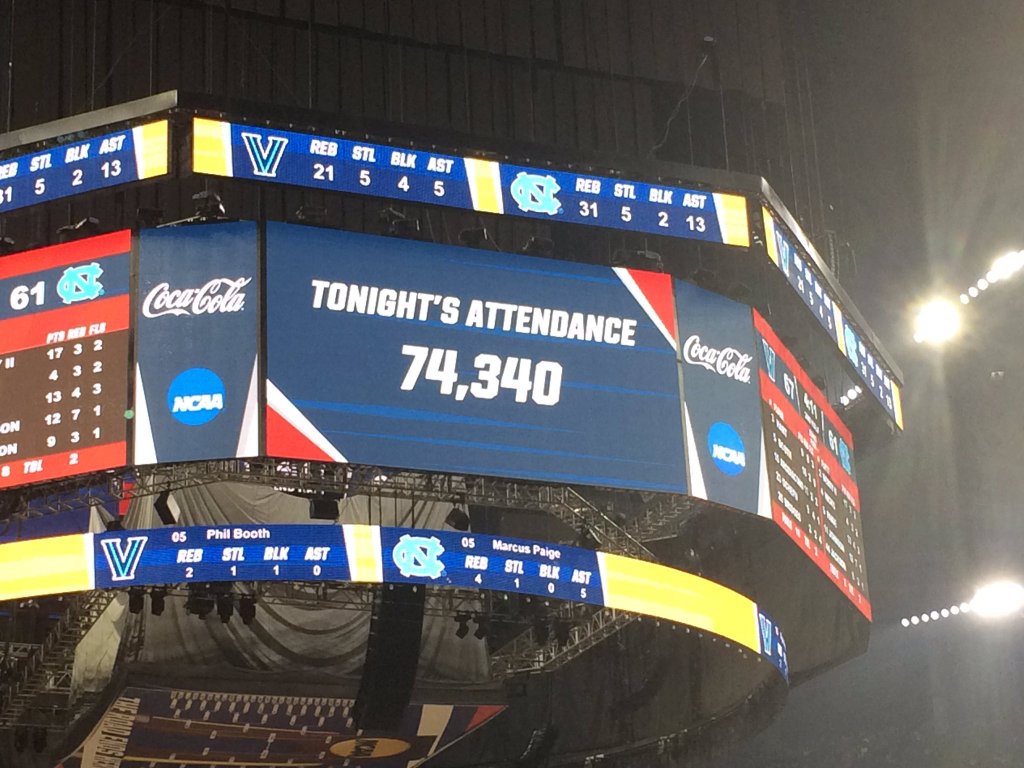
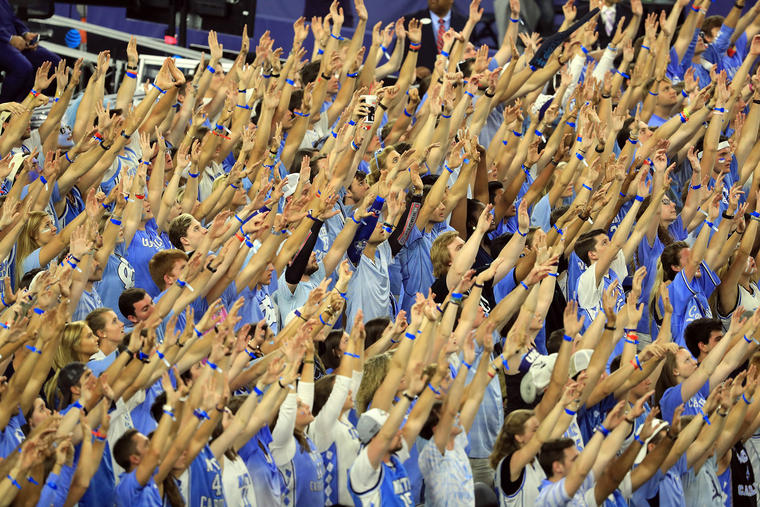
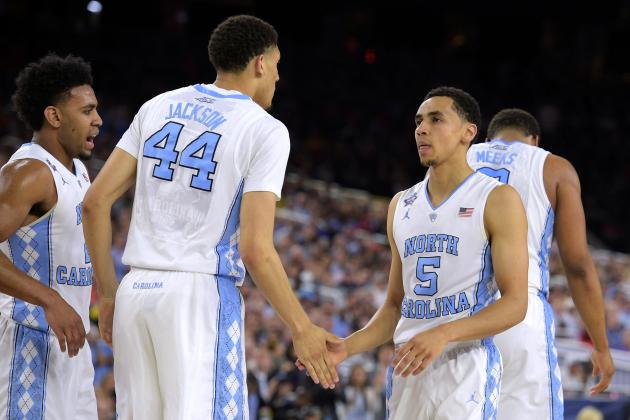
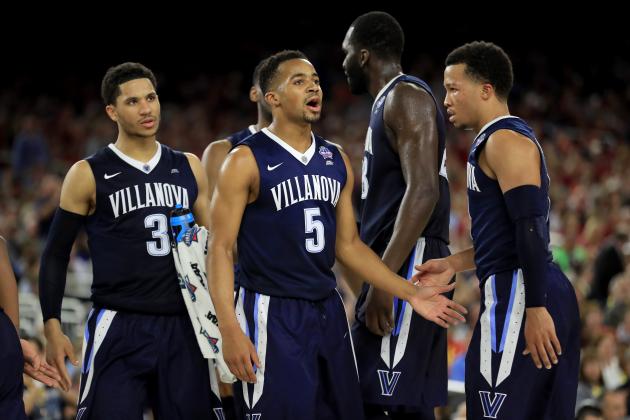
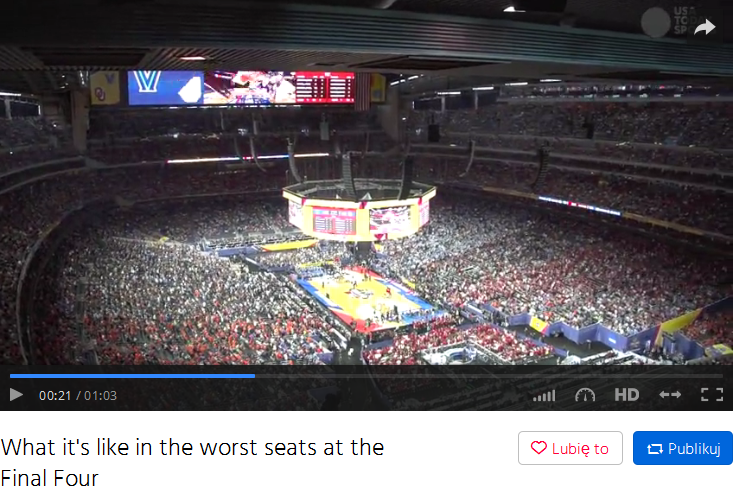
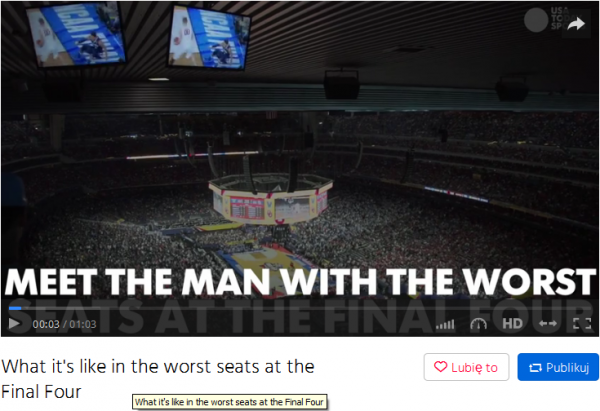
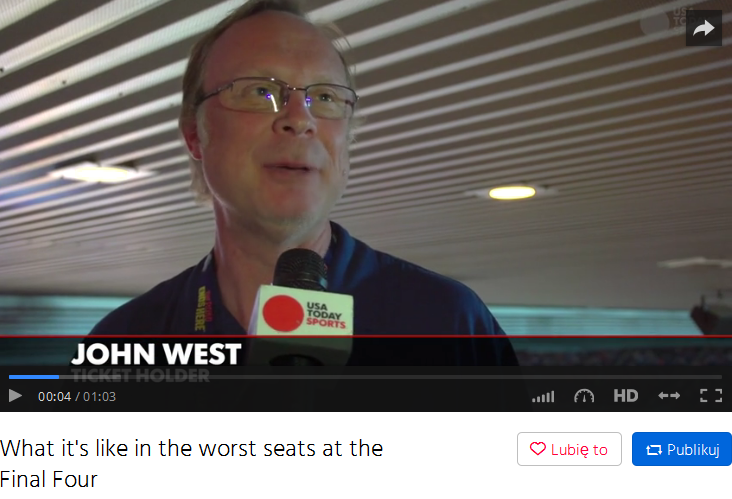
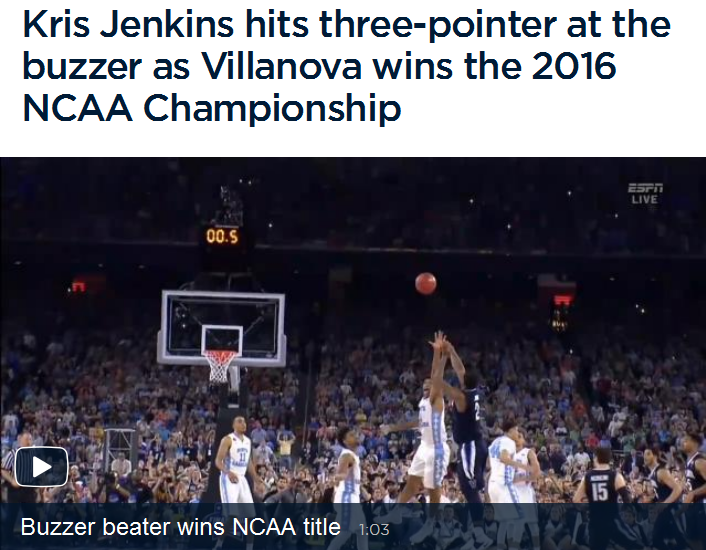
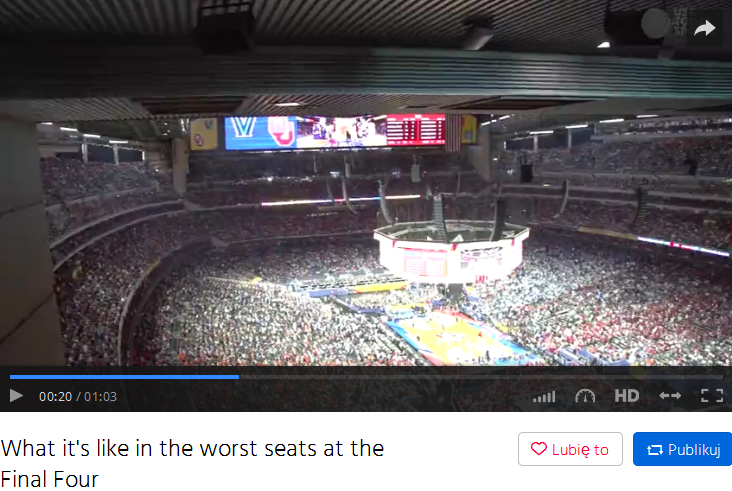
What The Cuck? 74,340 In Attendance

Posted by DanielS on Wednesday, 06 April 2016 22:52.


Though he claims to have seen tickets going for tens of thousands of dollars, John West bought a ticket for himself, his wife and son at $66 each - the cheapest that he could find, highest and farthest from the court. He recommends this to everyone.


READ MORE...


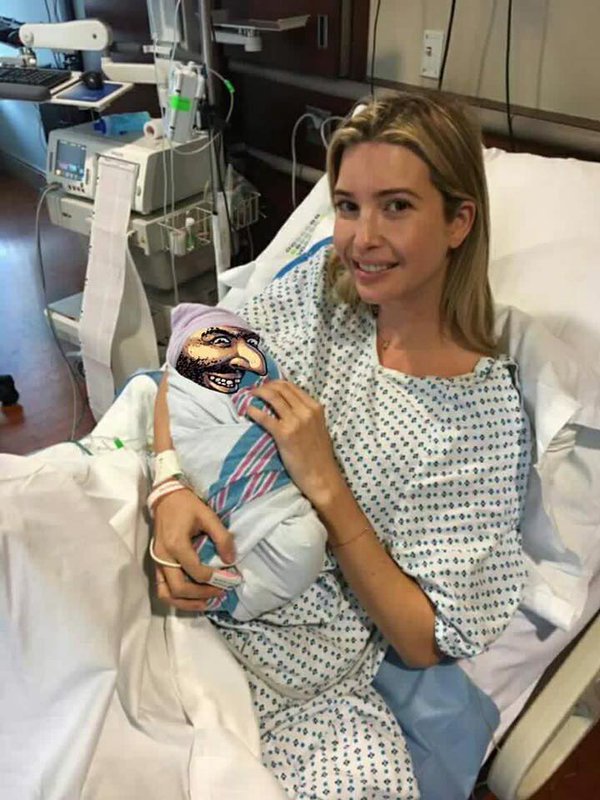
Birth Announcement: Ivanka Trump has given birth to a beautiful, Jewish baby

Posted by DanielS on Tuesday, 29 March 2016 11:45.


Syrians, Russians, Hezbollah, Take Palmyra

Posted by DanielS on Monday, 28 March 2016 15:16.

TNO, Syrians, Russians, Hezbollah, Take Palmyra, 27 March 2016:

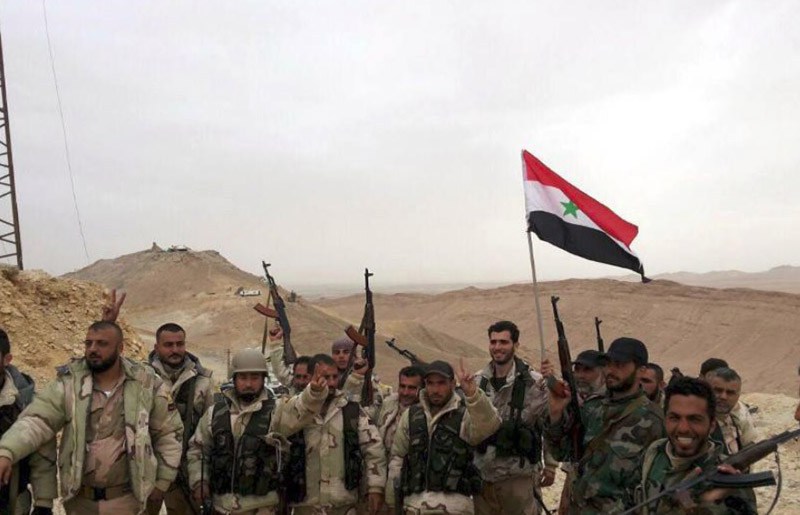
A combined force consisting of ground forces from Syria, Russia, and Lebanon’s Hezbollah, in conjunction with the Russian air force, have retaken the ancient city of Palmyra from the US-backed “rebels” in a highly symbolic victory announced on Easter Sunday.

A combined force consisting of ground forces from Syria, Russia, and Lebanon’s Hezbollah, in conjunction with the Russian air force, have retaken the ancient city of Palmyra from the US-backed “rebels” in a highly symbolic victory announced on Easter Sunday.

According to a report on the Syrian national news service, SANA, the city had been retaken after “heavy fighting against the terrorist Daesh organization,” and the “UNESCO World Heritage List city was now stable and free of terrorists.”

Daesh is an acronym for the Arabic phrase al-Dawla al-Islamiya al-Iraq al-Sham, which translates as Islamic State of Iraq and the Levant, or ISIL.

The SANA report said that the Syrian military had completely destroyed Daesh and had taken “absolute control over all parts of the city, including the ancient city and the airport.”

The victory is made even more significant because of the fact that it was made possible by a combined assault of forces which many western governments—in western Europe and the US in particular—vehemently oppose.

The European Union still has sanctions against Russia, and many liberals oppose Vladimir Putin’s government because of its non-toleration of homosexual marriages and propaganda.

Hezbollah is hated by the Jewish lobby because it successfully defended Lebanon against an Israeli invasion in 2006, and of course, the Syrian government is hated because of its opposition to Israel.

Russian ground forces were also involved in the assault on Palmyra. Col. Gen. Aleksandr Dvornikov, deputy commander of the Central Military District in Russia, confirmed to RT that the Special Operations Forces (SOF) are deployed in Syria.

“They conduct ground reconnaissance of pre-selected targets for Russian warplanes, assist in targeting warplanes in remote areas, and perform other tasks,” the general said.

One of the Russian soldiers achieved fame by calling in an airstrike on his own positon after being spotted by ISIS militants after spending nearly a week hidden in the desert near Palmyra, detecting and radioing back important targets and providing coordinates for Russian warplanes to strike.

The SANA report said that Syrian military engineers had immediately begun combing the city, looking for “hundreds of mines and improvised explosive devices” left behind by the terrorists.

The explosives had been placed all around the archaeological monuments, houses, and orchards surrounding the city, the statement continued.


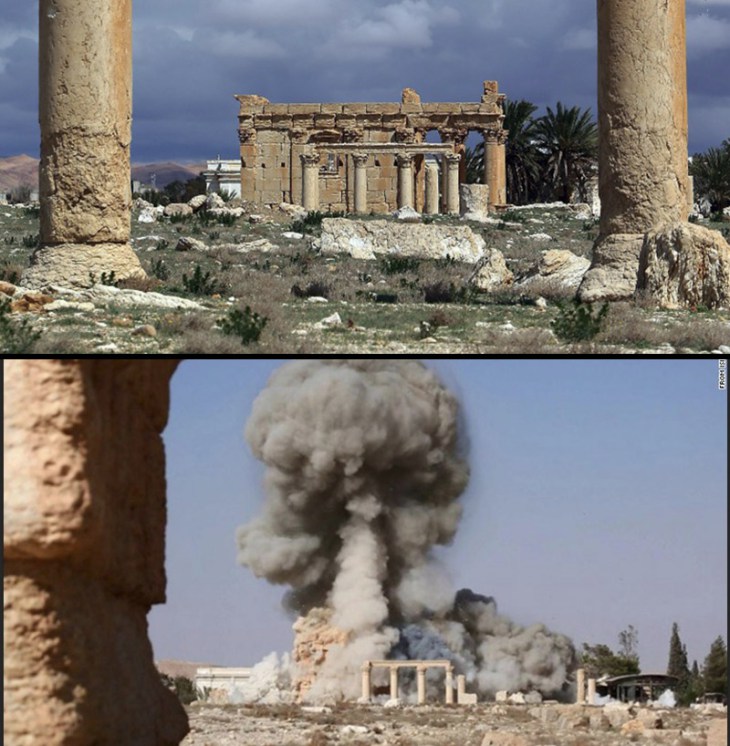
Above: The Temple of Baalshamin, Palmyra, before and during its destruction by ISIS. The temple was built in 131 AD, to commemorate the Roman Emperor Hadrian’s visit to Palmyra two years earlier.

Palmyra had been under ISIS rule since June 2014, during which time they had infamously destroyed many of the ancient and irreplaceable Roman monuments as “heathen blasphemy.”

They also carried out a number of executions in the city, including the beheading of the Syrian scholar and antiquities expert Khalid al-Asaad, who refused to lead the terrorists to a number of hidden Palmyra treasures in return for his life.

They also infamously used the Roman theater in Palmyra for a mass execution of twenty-five captured Syrian army soldiers, employing ISIS children as executioners.

The SANA report said that 450 of the terrorists had been killed in the assault on Palmyra, and “hundreds of others” had retreated eastward. Among those killed in the city were a large number of “foreign mercenaries who had earlier infiltrated the city from Raqqa, Deir al-Zour, and the Iraqi border,” with the intention of totally destroying the ancient city before retreating.

SANA said that the “Russian air force had been intensively involved” in the operation, and many of the fleeing terrorists had been killed by pinpoint strikes against armored vehicles and other ISIS transport.

“The tightening of control over the city of Palmyra is a significant milestone and a starting point to achieve more victories in the war on terrorism,” the SANA report added.

“[The victory] is proof that the Syrian Army is the main actor in the move to confront the terrorist organizations and thwart their sponsors’ schemes,” the SANA statement said, concluding by naming these sponsors: Saudi Arabia, Turkey, and “the West.”

As reported earlier, ISIS has been enabled and largely armed by the US and its allies who sent “aid” to the “moderate Syrian rebels.” After receiving money and guns from the fools in Washington DC, the “moderates” all joined ISIS.

Their defeat in Palmyra proves that ISIS could have been defeated a long time ago had the US and Western governments not been beholden to the Jewish lobby who seeks the destruction of Syria.

Below: Russian drone footage of Palmyra taken two days ago at the height of the battle, as released on Russian television.

Black & Hispanic Democrats vs White, Liberal Democrats - Potential White Left Recruiting Ground

Posted by DanielS on Tuesday, 22 March 2016 19:02.


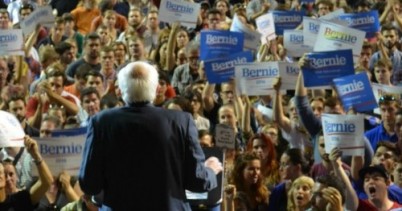
                Lots of White faces at Bernie rally.

TOO, Sam Dickson, “Black and Hispanic Democrats versus White, Liberal Democrats,” 22 March 2016:  With all the attention on Donald Trump, there has been little discussion of the astonishing rift between Black and Hispanic Democrats on one hand and White liberal Democrats on the other.

Hillary Clinton has shut Bernie Sanders out of the Black and Brown voters. She is their candidate. She is catering to them to an astonishing degree. She has endorsed all the fantasies and lies about White cops killing Black males. She has hauled the mother of Travon Martin around, putting her on the stage to endorse her candidacy, and talking about how Lil’ Travon was murdered by George Zimmerman but there was no justice. She has extolled the Gentle Giant.

She made statements about a breaking story about three Black coeds who claimed they were attacked by Whites on a bus who called them “nigger.” When a surveillance video from the bus revealed that the whole story was concocted, Hillary refused to retract her statements or to apologize for joining in false accusations against innocent people.

There is no limit in race-betrayal that Clinton will not go to.

Clinton is now virtually the captive of the Blacks and Browns. They cast about half the votes in the Democratic Party. They are the ones who have given her the nomination.

The White Democrats — even the wimmin — have deserted her and flocked to Sanders in droves.

Sanders has gotten nowhere in his efforts to chip non-White voters away from Clinton.

He is the candidate of the White wing of the Democratic Party.

What does this mean for White Nationalists like us who are thinking in long range terms (like Jews) instead of next weeks primary vote?

A lot.

For many years I have predicted that there would come a point at which White liberals would realize that their Black and Brown friends don’t have the slightest interest in issues that excite White liberals: gay rights, environmentalism, funding for the arts, conservation, public parks.

No. The Blacks and the Browns are only interested in “The Gimme.”

And increasingly Blacks and Browns will control and dominate the Democratic Party. Already, they are sending the White liberal Democrats to the back of the bus.

The alliance between White liberals and the racist minorities is breaking up. They are splitting.

Add in the fact that there are a lot of White liberals at the local level who have caught on that the Jews are running their own racist ethnostate and that their posturings about fighting racism and their deep, deep concern about the plight of Blacks and the need for open borders are utterly insincere.

At some point our White liberal racial brothers and sisters are going to be up for grabs.

The shizoid nature of Democratic voter behavior along racial lines shows that this is coming.

How can we reach out to them and help raise the consciousness?


Hillary Leaked Email: Destroy Syria for Israel

Posted by DanielS on Monday, 21 March 2016 08:36.

TNO, Clinton: Destroy Syria for Israel, 20 March 2016:

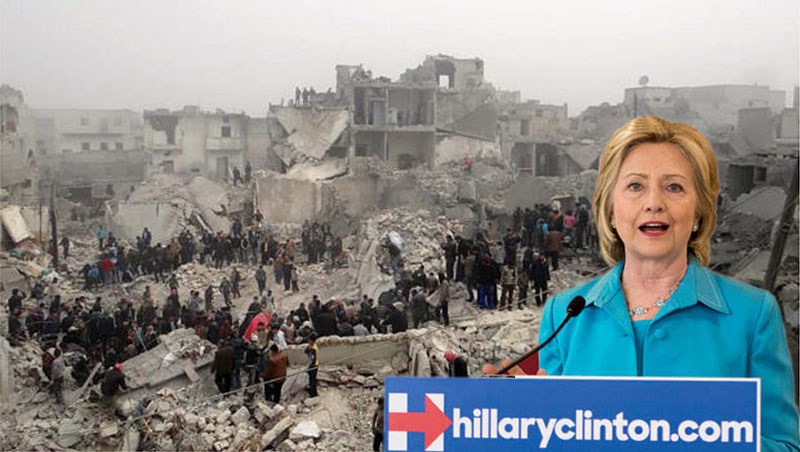
A newly-released Hilary Clinton email confirmed that the Obama administration has deliberately provoked the civil war in Syria as the “best way to help Israel.”

In an indication of her murderous and psychopathic nature, Clinton also wrote that it was the “right thing” to personally threaten Bashar Assad’s family with death.

In the email, released by Wikileaks, then Secretary of State Clinton says that the “best way to help Israel” is to “use force” in Syria to overthrow the government.

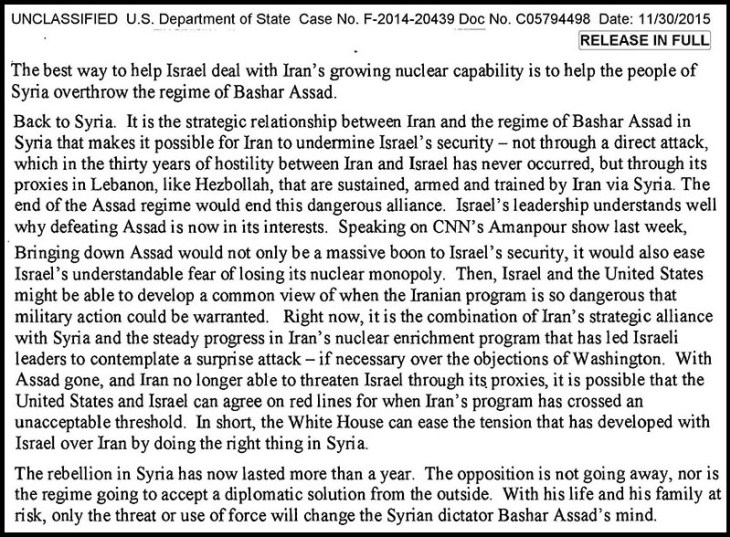
The document was one of many unclassified by the US Department of State under case number F-2014-20439, Doc No. C05794498, following the uproar over Clinton’s private email server kept at her house while she served as Secretary of State from 2009 to 2013.

Although the Wikileaks transcript dates the email as December 31, 2000, this is an error on their part, as the contents of the email (in particular the reference to May 2012 talks between Iran and the west over its nuclear program in Istanbul) show that the email was in fact sent on December 31, 2012.

The email makes it clear that it has been US policy from the very beginning to violently overthrow the Syrian government — and specifically to do this because it is in Israel’s interests.

“The best way to help Israel deal with Iran’s growing nuclear capability is to help the people of Syria overthrow the regime of Bashar Assad,” Clinton forthrightly starts off by saying.

Even though all US intelligence reports had long dismissed Iran’s “atom bomb” program as a hoax (a conclusion supported by the International Atomic Energy Agency), Clinton continues to use these lies to “justify” destroying Syria in the name of Israel.
READ Depression—Biological and Gender Factors

She specifically links Iran’s mythical atom bomb program to Syria because, she says, Iran’s “atom bomb” program threatens Israel’s “monopoly” on nuclear weapons in the Middle East.

If Iran were to acquire a nuclear weapon, Clinton asserts, this would allow Syria (and other “adversaries of Israel” such as Saudi Arabia and Egypt) to “go nuclear as well,” all of which would threaten Israel’s interests.

Therefore, Clinton, says, Syria has to be destroyed.

Iran’s nuclear program and Syria’s civil war may seem unconnected, but they are. What Israeli military leaders really worry about — but cannot talk about — is losing their nuclear monopoly.

An Iranian nuclear weapons capability would not only end that nuclear monopoly but could also prompt other adversaries, like Saudi Arabia and Egypt, to go nuclear as well. The result would be a precarious nuclear balance in which Israel could not respond to provocations with conventional military strikes on Syria and Lebanon, as it can today.

If Iran were to reach the threshold of a nuclear weapons state, Tehran would find it much easier to call on its allies in Syria and Hezbollah to strike Israel, knowing that its nuclear weapons would serve as a deterrent to Israel responding against Iran itself.

It is, Clinton continues, the “strategic relationship between Iran and the regime of Bashar Assad in Syria” that makes it possible for Iran to undermine Israel’s security.

This would not come about through a “direct attack,” Clinton admits, because “in the thirty years of hostility between Iran and Israel” this has never occurred, but through its alleged “proxies.”

The end of the Assad regime would end this dangerous alliance. Israel’s leadership understands well why defeating Assad is now in its interests.

Bringing down Assad would not only be a massive boon to Israel’s security, it would also ease Israel’s understandable fear of losing its nuclear monopoly.

Then, Israel and the United States might be able to develop a common view of when the Iranian program is so dangerous that military action could be warranted.

Clinton goes on to asset that directly threatening Bashar Assad “and his family” with violence is the “right thing” to do:

In short, the White House can ease the tension that has developed with Israel over Iran by doing the right thing in Syria.

With his life and his family at risk, only the threat or use of force will change the Syrian dictator Bashar Assad’s mind.

The email proves—as if any more proof was needed—that the US government has been the main sponsor of the growth of terrorism in the Middle East, and all in order to “protect” Israel.

It is also a sobering thought to consider that the “refugee” crisis which currently threatens to destroy Europe, was directly sparked off by this US government action as well, insofar as there are any genuine refugees fleeing the civil war in Syria.

In addition, over 250,000 people have been killed in the Syrian conflict, which has spread to Iraq—all thanks to Clinton and the Obama administration backing the “rebels” and stoking the fires of war in Syria.

The real and disturbing possibility that a psychopath like Clinton—whose policy has inflicted death and misery upon millions of people—could become the next president of America is the most deeply shocking thought of all.

Clinton’s public assertion that, if elected president, she would “take the relationship with Israel to the next level,” would definitively mark her, and Israel, as the enemy of not just some Arab states in the Middle East, but of all peace-loving people on earth.


Trump’s Jewish Cabal

Posted by DanielS on Monday, 21 March 2016 06:26.

Trump’s Jewish cabal

Who Controls Donald Trump?

Donald Trump’s Jewish Cabal
http://pastebin.com/cRZDHRc6

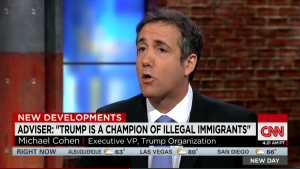
Michael Cohen (Ashkenazi Jew) – Executive Vice President and Special Counsel, The Trump Organization
http://forward.com/news/312123/meet-michael-cohen-donald-trumps-jewish-wingman/
http://www.thedailybeast.com/articles/2011/03/21/meet-donald-trumps-karl-rove-michael-cohen.html
http://www.thejc.com/lifestyle/lifestyle-features/154763/donald-trump-more-my-boss-he-a-patriarch
http://abcnews.go.com/Politics/donald-trumps-political-pit-bull-meet-michael-cohen/story?id=13386747
http://heavy.com/news/2015/07/donald-trump-foundation-lawyer-michael-cohen-ivana-biography-rape-claim-spouse/

Michael Cohen

Gil Dezer (Ashkenazi Jew) – President, Trump Dezer Development
http://gildezer.net/
http://www.dezerdevelopment.com/
http://dezerproperties.com/about/
http://www.dezerdevelopment.com/about/
http://www.linkedin.com/in/gil-dezer-bab24432
http://www.linkedin.com/company/trump-dezer-development
http://therealdeal.com/issues_articles/life-in-the-fast-lane/

Gil Dezer

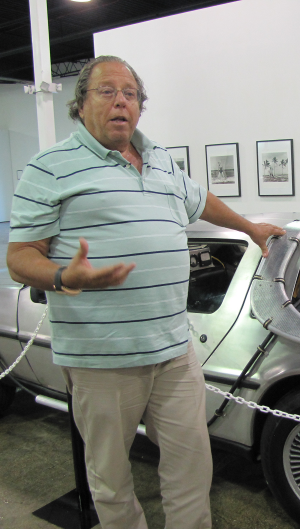
Michael Dezer (Ashkenazi Jew) – Founder, Trump Dezer Development
http://www.dezerdevelopment.com/
http://dezerproperties.com/about/
http://www.dezerdevelopment.com/about/
http://en.wikipedia.org/wiki/Michael_Dezer
http://www.linkedin.com/company/trump-dezer-development
http://www.alumni.pace.edu/s/1655/02-alumni/social.aspx?sid=1655&gid=2&pgid=526

Michael Dezer

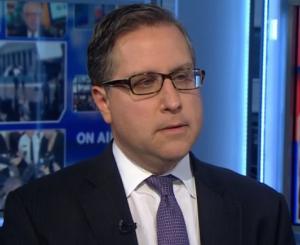
Alan Garten (Ashkenazi Jew) – Executive Vice President and General Counsel, The Trump Organization
http://launchpadli.com/mentor/alan-garten/
http://www.zoominfo.com/p/Alan-Garten/32339178
http://www.linkedin.com/in/alan-garten-405a1013

Alan Garten

Michael Glassner (Ashkenazi Jew) – National Political Director, Donald J. Trump for President, Inc.
http://www.linkedin.com/in/michael-glassner-81417313
http://www.jewishjournal.com/nation/article/from_aipac_to_trump_michael_glassners_journey
http://edition.cnn.com/2015/07/30/politics/donald-trump-michael-glassner-political-director/
http://www.politico.com/story/2015/07/donald-trump-2016-sarah-palin-ade-political-director-120811
http://www.newsmax.com/Politics/donald-trump-michael-Glassner-campaign-political-director/2015/07/30/id/659633/
http://www.washingtonpost.com/news/post-politics/wp/2015/07/30/trump-hires-former-palin-aide-as-political-director/

Michael Glassner

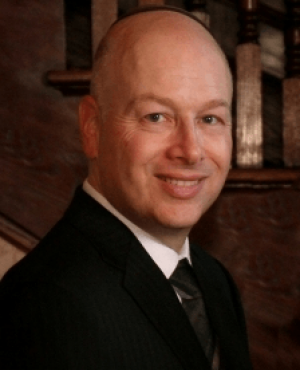
Jason Greenblatt (Ashkenazi Jew) – Executive Vice President and General Counsel, The Trump Organization
http://blogs.yu.edu/alumni-news/2012/10/04/jason-greenblatt-89yc-is-no-apprentice-yu-alumnus-serves-as-donald-trumps-general-counsel/

Jason Greenblatt

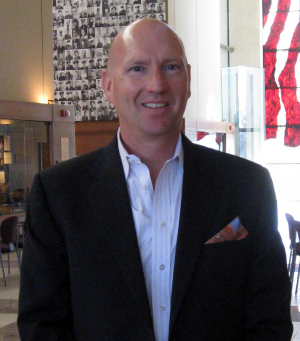
Brian Harris (Ashkenazi Jew) – Chief Executive Officer, Ladder Capital (Donald Trump’s largest lender)
http://www.laddercapital.com/our-team/management/
http://ir.laddercapital.com/CorporateProfile.aspx?iid=4422251
http://www.wsj.com/articles/SB10000872396390443571904577631773945505102
http://www.bloomberg.com/politics/graphics/2015-how-trump-invented-trump/

Brian Harris (middle)

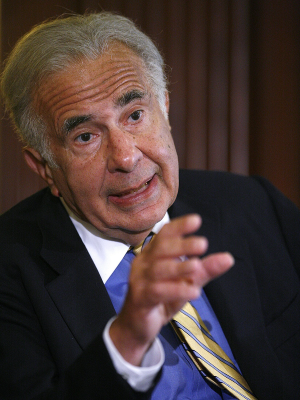
Carl Icahn (Ashkenazi Jew) – Owner and Chairman, Icahn Enterprises
http://carlicahn.com/
http://twitter.com/Carl_C_Icahn
http://en.wikipedia.org/wiki/Carl_Icahn
http://www.forbes.com/profile/carl-icahn/
http://www.cnbc.com/2014/04/29/25-carl-ichan.html
http://www.nasdaq.com/quotes/institutional-portfolio/icahn-carl-c-18190

Carl Icahn

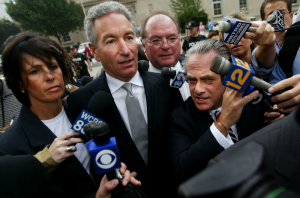
Charles Kushner (Ashkenazi Jew) – Founder and Co-Owner, Kushner Companies
http://en.wikipedia.org/wiki/Charles_Kushner
http://en.wikipedia.org/wiki/Kushner_Properties
http://therealdeal.com/closings/charles-kushner/
http://www.nytimes.com/topic/person/charles-kushner

Charles Kushner

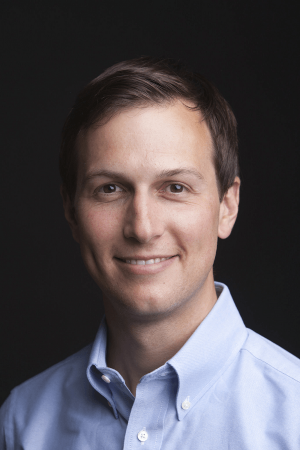
Jared Kushner (Ashkenazi Jew) – CEO, Kushner Companies; Publisher, Observer Media
http://www.kushnercompanies.com/about/
http://en.wikipedia.org/wiki/Jared_Kushner
http://fortune.com/40-under-40/jared-kushner-25/
http://observer.com/2015/07/when-donald-trump-is-the-father-in-law-of-your-publisher/
http://www.nytimes.com/2015/04/29/realestate/commercial/a-conversation-with-jared-c-kushner.html?_r=0
http://www.dailymail.co.uk/tvshowbiz/article-3247623/Ivanka-Trump-husband-Jared-Kushner-expecting-child.html
http://www.algemeiner.com/2015/02/18/ivanka-trump-and-husband-jared-kushner-tout-benefits-of-shabbat-observance-we-turn-off-our-phones-for-25-hours/#

Jared Kushner

Richard LeFrak (Ashkenazi Jew) – Chairman and CEO, LeFrak Organization
http://lefrak.com/
http://en.wikipedia.org/wiki/Richard_LeFrak
http://www.forbes.com/profile/richard-lefrak/
http://therealdeal.com/new-research/topics/people/richard-lefrak/
http://www.bloomberg.com/research/stocks/private/person.asp?personId=184052&privcapId=184021
http://www.crefc.org/CREFCbio/Speaker_Bio_Popup/CREFC/Events/Speaker_Bio.aspx?hkey=3dbfc4c6-922e-465a-8ca2-3f1d15537391&id=55116

Richard LeFrak

Corey Lewandowski (Ashkenazi Jew) – Campaign Manager, Donald J. Trump for President, Inc.
http://en.wikipedia.org/wiki/Corey_Lewandowski
http://www.linkedin.com/in/corey-lewandowski-46016810
http://www.opensecrets.org/news/2015/06/the-dark-money-man-behind-the-donald/
http://www.politico.com/story/2015/07/man-behind-donald-trump-run-lewandowski-120443
http://www.theguardian.com/us-news/2015/aug/20/corey-lewandowski-donald-trump-campaign
http://www.nytimes.com/2015/09/04/us/politics/donald-trump-corey-lewandowski-campaign-manager.html
http://abcnews.go.com/Politics/meet-donald-trumps-campaign-manager-corey-lewandowski/story?id=33459967
http://www.washingtonpost.com/news/the-fix/wp/2015/07/23/meet-the-man-behind-donald-trumps-presidential-campaign/

Corey Lewandowski

Stephen Miller (Ashkenazi Jew) – Policy Adviser, Donald J. Trump for President, Inc.
http://www.wnd.com/2016/01/trump-snags-top-aide-to-jeff-sessions/
http://thehill.com/blogs/ballot-box/presidential-races/266944-sessions-aide-joining-trump-campaign
http://dailycaller.com/2016/01/26/donald-trump-hires-top-aide-to-jeff-sessions-to-help-with-policy/
http://www.washingtonpost.com/news/post-politics/wp/2016/01/25/top-sessions-aide-joins-trump-campaign/
http://yellowhammernews.com/politics-2/top-sessions-immigration-communications-guru-joins-trump-campaign/

Stephen Miller

Sam Nunberg (Ashkenazi Jew) – Former Policy Adviser, Donald J. Trump for President, Inc.
http://ballotpedia.org/Sam_Nunberg
http://www.meforum.org/staff/Sam+Nunberg
http://www.linkedin.com/in/sam-nunberg-8179298
http://www.jta.org/2015/08/03/news-opinion/politics/trump-campaign-fires-jewish-adviser-over-racist-facebook-posts

Sam Nunberg

Stewart Rahr (Ashkenazi Jew) – Former Owner, Kinray
http://en.wikipedia.org/wiki/Stewart_Rahr
http://www.forbes.com/profile/stewart-rahr/
http://www.haaretz.com/israel-news/.premium-1.570652
http://www.timesofisrael.com/ny-billionaire-boosts-hatzalahs-ambucycle-fleet-by-50/
http://www.jewishjournal.com/israel/article/billionaire_stewart_rahr_sets_sights_on_israel
http://www.nytimes.com/2014/06/08/fashion/the-world-through-stewart-rahrs-neon-glasses.html
http://www.jpost.com/Magazine/Features/Flamboyant-billionaire-Stewart-Rahr-wows-Israel-341331
http://jewishbusinessnews.com/2014/02/14/stewart-rahr-convinces-the-donald-to-donate-100000-to-united-hatzalah/

Stewart Rahr

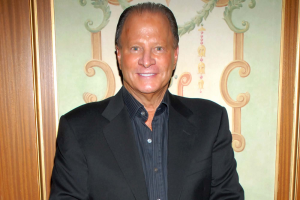
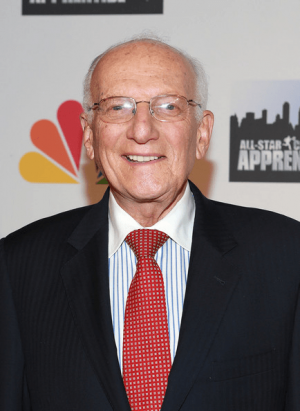
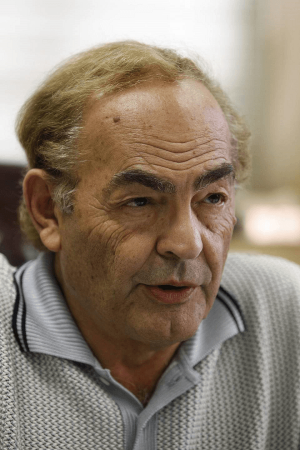
George Ross (Ashkenazi Jew) – Executive Vice President and Senior Counsel, The Trump Organization
http://georgerosslive2015.com/
http://en.wikipedia.org/wiki/George_H._Ross
http://www.apbspeakers.com/speaker/george-h-ross
http://www.leadersmag.com/issues/2015.1_Jan/ROB/LEADERS-George-Ross-The-Trump-Organization.html
http://capitalismmagazine.com/2004/10/donald-trumps-right-hand-man-george-ross-firing-up-business-students/

George Ross

Phil Ruffin (Ashkenazi Jew) – Owner, Treasure Island Hotel and Casino
http://en.wikipedia.org/wiki/Phil_Ruffin
http://www.forbes.com/profile/phillip-ruffin/
http://www.gamblingsites.org/biographies/phil-ruffin/
http://www.kansas.com/news/politics-government/election/article64073772.html
http://calvinayre.com/2016/02/25/casino/donald-trump-mulling-las-vegas-casino/
http://www.wsj.com/articles/trumps-firm-weighs-return-to-gamblingwith-a-vegas-casino-1456430694
http://vegasinc.com/business/gaming/2016/feb/03/interview-with-phil-ruffin-why-he-thinks-trump-wou/
http://hauteliving.com/2015/07/phil-ruffin-reveals-the-secrets-of-running-a-billion-dollar-empire/577539/

Phil Ruffin

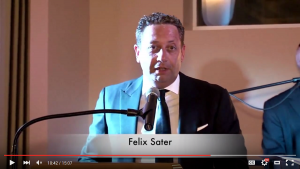
Felix Sater (Ashkenazi Jew) – Former Senior Adviser, The Trump Organization
http://www.felixsaterweb.com/
http://felixsater.com/#prettyPhoto
http://www.youtube.com/watch?v=xSpFtCmoD5o
http://www.linkedin.com/in/felix-sater-153455
http://www.nytimes.com/2007/12/17/nyregion/17trump.html
http://www.nydailynews.com/news/national/donald-trump-advisor-ties-mafia-article-1.2461229
http://abcnews.go.com/Politics/memory-lapse-trump-seeks-distance-advisor-past-ties/story?id=34600826
http://www.washingtonexaminer.com/will-donald-trumps-ties-to-a-criminal-hurt-his-campaign/article/2569496
http://bigstory.ap.org/article/29c255c0b69a48258ecae69a61612537/trump-picked-stock-fraud-felon-senior-adviser
http://www.usnews.com/news/politics/articles/2015/12/04/misconduct-allegations-follow-trump-associate-with-mob-past

Felix Sater

Allen Weisselberg (Ashkenazi Jew) – Executive Vice President and Chief Financial Officer, The Trump Organization
http://www.linkedin.com/in/allen-weisselberg-bb88a016
http://www.zoominfo.com/p/Allen-Weisselberg/317289759
http://www.bloomberg.com/research/stocks/private/person.asp?personId=344997&privcapId=344985&previousCapId=344985&previousTitle=The Trump Organization LLC

Allen Weisselberg

Steve Wynn (Ashkenazi Jew) – Chairman and CEO, Wynn Resorts
http://www.wynnlasvegas.com/
http://en.wikipedia.org/wiki/Steve_Wynn
http://www.forbes.com/profile/steve-wynn/
http://www.biography.com/people/steve-wynn-201198
http://www.businessinsider.com/wynn-stock-tumbles-to-start-year-2016-1

Steve Wynn

Lara Yunaska (Ashkenazi Jew) – Associate Producer, Inside Edition
http://twitter.com/laraleatrump
http://www.linkedin.com/in/larayunaska
http://www.erictrumpfoundation.com/board-of-directors/lara-yunaska-trump
http://www.nydailynews.com/entertainment/gossip/eric-trump-marries-lara-yunaska-palm-beach-wedding-article-1.2004472
http://www.dailymail.co.uk/femail/article-2832130/Welcome-Trump-family-Lara-Yunaska-poses-Eric-parents-Donald-Ivana-Melania-official-wedding-photo.html
http://heavy.com/news/2016/02/eric-trump-wife-lara-yunaska-photos-pictures-age-bio-married-cbs-inside-edition-injury-wiki-facts-daughter-in-law-charity/


Lara Yunaska


White American Advocacy of Trump: The Arguments

Posted by DanielS on Friday, 18 March 2016 10:23.

Republican leaders talk about how to deal with Trump (apparently, these are not actors):

First of all, my (DanielS) concerns are primarily metapolitical in nature, where political at all. I have never had faith in the dog and pony show of politics to look after our E.G.I.

Nevertheless, there are people who care about European/White E.G.I. who think it is important for strategic reasons to get White people en mass behind Trump.

Again, it won’t be this White man who cares, I have never liked Trump and don’t trust his values. A businessman is, by training, Manichean: truth and justice is not his objective, defeating others is; and in that game that he plays, changing the rules, if necessary to win, is what he will do.

Cyberneticists have famously observed that the engineer and the scientist by contrast, is focused on Augustinian devils - natural devils.

Perhaps that focus makes a scientist such as MacDonald gullible to the tactics and naive to the motives of a businessman like Trump.

However, in service of squaring things-off, so that we can have an accurate dialectic going on here, in order to arrive at what is more the case, rather than arguing against cardboard figures, lets try to render some of MacDonald’s best arguments as to why Trump is someone for Whites to get behind.

MacDonald’s arguments as I understand them:

1) Because he is independently wealthy, he can flout the PC norms that have hog-tied Whites and address the true and important concerns of what has been the implicit base in support of the Republican Party - White people.

- That candor to move the Overton window is opposed to the concerns of people in the clip; and the Jews who have policed White ethnocentric dissent with iron PC rule.

2) He will either a) take that implicit White base, tarry with its interests at least to some extent, gain its support; thus owe some genuine regard for its concerns for a change through its Republican auspices. Or b) Destroy the GOP (which the men in the video would hate).

Plan b is not a bad option according to MacDonald and to most White people in the know - the Republican Party has looked like us but has shown White people no loyalty. Quite the opposite, it has been every bit as complicit in our demise as the Democrats.

Bring on the grassroots of ethnocentric Whites to form a third party; and if he will, let Trump set it in motion, MacDonald says.

That is what Whites have always needed, an independently wealthy White man who will actually put his money behind Whites the way Jews put their wealth behind their interests.

3) If it were not for Trump, issues of the American border and immigration would not even have been mentioned by the Republican Presidential Candidates. Trump forced that issue upon Cruz, Rubio et al.

Trump brought that critical issue into White American consciousness and legitimized it despite the masters of discourse having de-legitimized discourse of its concern since 1965.

That is also crucial, according to MacDonald, since it will force people to pay more attention to who is behind mass non-White migration to America. KM adds, there is no question that it was Jewish interests that have done this; and once Whites begin to understand that, they will see that Jewish interests have had nefarious aims - that the results for White E.G.I have been and will be deadly.

4) Though KM and Duke do not emphasize the corporate complicity, they do acknowledge that it is working Whites who suffer the most from these immigration policies, from unskilled labor to H1B migrants.

- Trump has not only explicitly called for deportation and the building of a fence to keep out unskilled migrants

- He has also cited Rubio for calling not for reduction but the increase of H1B Visas.

5) Trump’s destruction of Jeb Bush, Rubio and Cruz means the destruction not only of politics as usual for the Republican Party, as these are the people that they wanted to nominate - but also of the Neo-Con agenda which lies deeper behind them.

In fact, William Crystal threatened to start a third party if Trump got the nomination.

MacDonald adds that the Neo-Con agenda is strictly Jewish. It has nothing to do with White interests and has been a disaster or White interests.

Therefore, MacDonald says, “so be it.” Let the White outrage begin if their votes are treated as if they don’t matter; let it be known who runs the Republican Party - Jewish Neo Cons and Corporate interests - let it be destroyed and a new third party that takes the side of Whites be born instead.

6) Trump is the best option also because he has the best chance for White interests against Hillary Clinton - if she wins that is a disaster because she is the quintessential neo-liberal, neo-con dream all in one: completely beholden to the worst domestically and foreign - of right wing economic and military objectives and PC cultural agendas.

7) It is important to get behind Trump now because if it takes another 8 - 12 years for someone like him to come along it might be too late for Whites to wield voting power enough to sway the political direction to their interests.


Page 79 of 82 | First Page | Previous Page |  [ 77 ]   [ 78 ]   [ 79 ]   [ 80 ]   [ 81 ]  | Next Page | Last Page

Venus

Existential Issues

DNA Nations

Categories

Contributors

Each author's name links to a list of all articles posted by the writer.

Links

Endorsement not implied.

Immigration

Islamist Threat

Anti-white Media Networks

Audio/Video

Crime

Economics

Education

General

Historical Re-Evaluation

Controlled Opposition

Nationalist Political Parties

Science

Europeans in Africa

Of Note

Comments

Guessedworker commented in entry 'Slaying The Dragon' on Thu, 03 Apr 2025 14:55. (View)

Thorn commented in entry 'Slaying The Dragon' on Thu, 03 Apr 2025 12:35. (View)

Guessedworker commented in entry 'Slaying The Dragon' on Thu, 03 Apr 2025 00:12. (View)

Thorn commented in entry 'Slaying The Dragon' on Thu, 03 Apr 2025 00:00. (View)

Thorn commented in entry 'Slaying The Dragon' on Wed, 02 Apr 2025 23:22. (View)

Thorn commented in entry 'Slaying The Dragon' on Wed, 02 Apr 2025 23:12. (View)

James Bowery commented in entry 'Slaying The Dragon' on Wed, 02 Apr 2025 16:44. (View)

Thorn commented in entry 'Sikorski on point' on Wed, 02 Apr 2025 11:29. (View)

Guessedworker commented in entry 'Sikorski on point' on Tue, 01 Apr 2025 17:24. (View)

Thorn commented in entry 'Sikorski on point' on Tue, 01 Apr 2025 13:59. (View)

Guessedworker commented in entry 'Sikorski on point' on Tue, 01 Apr 2025 13:18. (View)

Thorn commented in entry 'Sikorski on point' on Tue, 01 Apr 2025 12:08. (View)

Guessedworker commented in entry 'Sikorski on point' on Tue, 01 Apr 2025 04:49. (View)

Thorn commented in entry 'Sikorski on point' on Tue, 01 Apr 2025 00:28. (View)

Thorn commented in entry 'Sikorski on point' on Mon, 31 Mar 2025 23:47. (View)

Guessedworker commented in entry 'Sikorski on point' on Mon, 31 Mar 2025 23:24. (View)

Thorn commented in entry 'Sikorski on point' on Mon, 31 Mar 2025 20:55. (View)

Thorn commented in entry 'Sikorski on point' on Mon, 31 Mar 2025 20:52. (View)

Guessedworker commented in entry 'Sikorski on point' on Sun, 30 Mar 2025 23:59. (View)

Guessedworker commented in entry 'Sikorski on point' on Sun, 30 Mar 2025 23:34. (View)

Thorn commented in entry 'Sikorski on point' on Sun, 30 Mar 2025 23:33. (View)

Thorn commented in entry 'Sikorski on point' on Sun, 30 Mar 2025 22:52. (View)

Guessedworker commented in entry 'Sikorski on point' on Sun, 30 Mar 2025 21:43. (View)

Thorn commented in entry 'Sikorski on point' on Sun, 30 Mar 2025 11:38. (View)

Thorn commented in entry 'Piece by peace' on Fri, 28 Mar 2025 20:46. (View)

Guessedworker commented in entry 'Piece by peace' on Fri, 28 Mar 2025 17:52. (View)

Thorn commented in entry 'Piece by peace' on Fri, 28 Mar 2025 12:03. (View)

Guessedworker commented in entry 'Piece by peace' on Thu, 27 Mar 2025 22:47. (View)

Thorn commented in entry 'Piece by peace' on Thu, 27 Mar 2025 21:24. (View)

Guessedworker commented in entry 'Piece by peace' on Thu, 27 Mar 2025 20:07. (View)

Thorn commented in entry 'Piece by peace' on Thu, 27 Mar 2025 19:29. (View)

Guessedworker commented in entry 'Piece by peace' on Thu, 27 Mar 2025 16:13. (View)

Thorn commented in entry 'Piece by peace' on Thu, 27 Mar 2025 15:20. (View)

Thorn commented in entry 'Piece by peace' on Thu, 27 Mar 2025 14:32. (View)

Guessedworker commented in entry 'Piece by peace' on Thu, 27 Mar 2025 13:57. (View)

Majorityrights shield

Sovereignty badge