[Majorityrights Central] Three possible forms of a Ukrainian victory ... and a Russian defeat Posted by Guessedworker on Thursday, 16 April 2026 16:36.
[Majorityrights Central] Empires, the Chinese Mind, a theoretical nationalism of ethnicity Posted by Guessedworker on Saturday, 14 February 2026 01:54.
[Majorityrights News] Moscow Times: Valdai residents report no sign of drones attacking Putin residence Posted by Guessedworker on Tuesday, 30 December 2025 11:33.
[Majorityrights Central] Thoughts on Mark Collett’s strategy for nationalism in the British future Posted by Guessedworker on Friday, 24 October 2025 15:01.
[Majorityrights Central] Principles, parts, processes of ethnic nationalism, Part 1: inflection? Posted by Guessedworker on Thursday, 31 July 2025 12:03.
Posted by DanielS on Wednesday, 19 February 2020 07:13.
Prior to his arrest in 2003 Khodorkovsky (in photo with first Russian President Boris Yeltsin) funded several Russian parties, including the Communist Party, most of which were in competition with each other. Voltairenet.org
A Dutch appeals court on Tuesday (18 February) overturned the annulment of a $50 billion award to shareholders in the now defunct Russian oil giant Yukos, a surprise ruling 13 years after the assets came under control of the Kremlin.
Yukos Oil went bankrupt in 2006 after its former chief Mikhail Khodorkovsky fell out with Russian leader Vladimir Putin and the government began demanding billions of dollars in back taxes that ultimately resulted in its being expropriated by the state.
Tuesday’s verdict reinstates a decision by The Hague-based Permanent Court of Arbitration (PCA) ordering the Russian state to compensate shareholders in the company once headed by fallen oligarch Khodorkovsky. That decision had been overturned in April 2016 by The Hague District Court.
Russia’s Justice Ministry has said it will challenge the appeals court ruling at the Dutch Supreme Court.
“The (lower) court ruled in favour of the Russian Federation, but the court of appeal in The Hague today ruled that the court’s verdict is incorrect. This means that the arbitral award is again in force,” the appeals court said in a statement.
Most of Yukos’ assets were absorbed by the Kremlin’s flagship oil producer Rosneft, and its former owners have for years been trying to recover their possessions.
Legal proceedings seeking damages have been brought by GML, formerly known as Group Menatep Ltd., which held around 70% of shares in Yukos.
Rule of law
Tim Osborne, GML’s chief executive, said the latest ruling was “a victory for the rule of law.”
“The independent courts of a democracy have shown their integrity and served justice. A brutal kleptocracy has been held to account,” he said.
The PCA had ruled in July 2014 that four plaintiffs – not including Khodorkovsky – were entitled to compensation for the loss of their holdings, enabling them to go after Russian state assets.
Russian government assets in France and Belgium including bank accounts have been frozen in a row over compensation for shareholders of defunct oil giant Yukos, officials and a claimant representative said yesterday (18 June).
Posted by DanielS on Tuesday, 18 February 2020 07:32.
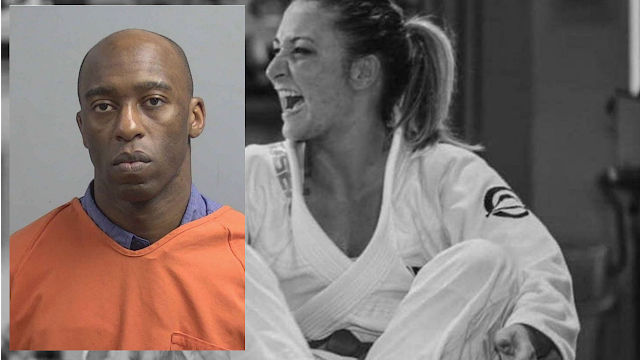
DAILYKENN.com—Had a 29-year-old black woman been shot to death by her white boyfriend, it would likely be national news. Had the victim been white and the suspect black, the story would be limited to local media and race would not be mentioned.
Cassia Renee Duval, 29, was seven months pregnant when she was found shot to death. Her unborn baby was also killed. Arrested is James Isaac Jones Jr. 33. Jones and Duval lived together, reports say.
Why was she killed? We can only speculate. Is it because she mated with an individual with low impulse control, low intelligence, low affective empathy, and psychopathic tendencies? We can’t say for certain.
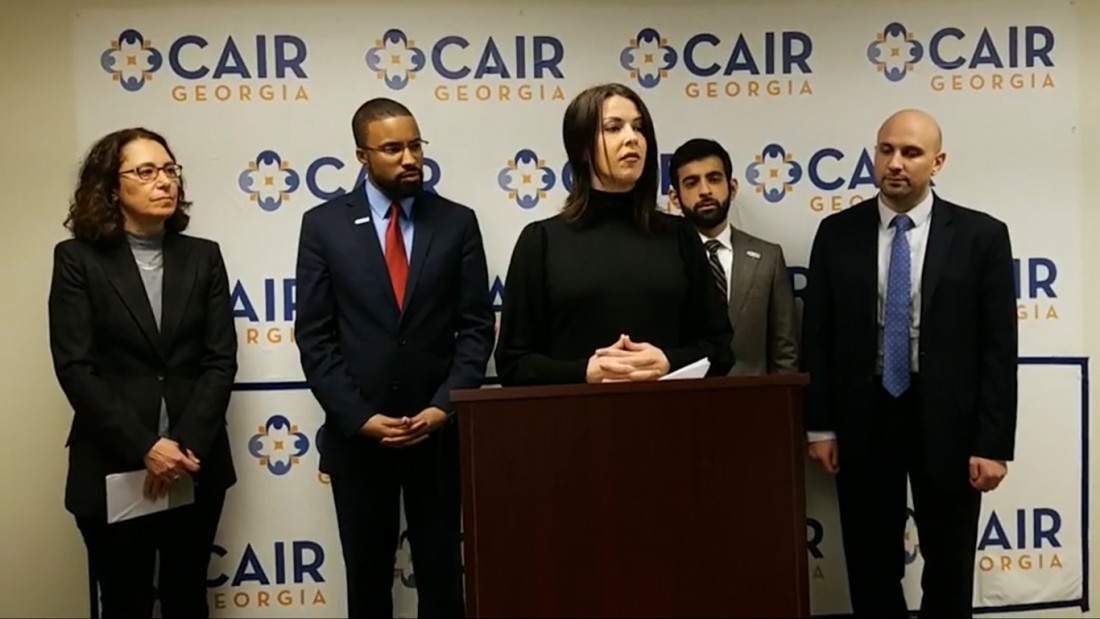
After refusing to sign a pledge of allegiance to the state of Israel, the state of Georgia shut down a media literacy conference featuring journalist and filmmaker Abby Martin at Georgia Southern University. Martin had recently released a documentary critical of the Israeli government called “Gaza Fights for Freedom.” Now she is suing the state, claiming the decision is a violation of the First Amendment. Along with the Council on American-Islamic Relations (CAIR) and the Partnership for Civil Justice Fund (PCJF), today she filed a federal free speech lawsuit against the university system of Georgia.
Martin was dismayed by the university’s decision: “This censorship of my talk based on forced compliance to anti-BDS laws in Georgia is just one level of a nationwide campaign to protect Israel from grassroots pressure. We must stand firmly opposed to these efforts and not cower in fear to these blatant violations of free speech,” she said.
Abby Martin
✔
@AbbyMartin
After I was scheduled to give keynote speech at an upcoming @GeorgiaSouthern conference, organizers said I must comply w/ Georgia’s anti-BDS law & sign a contractual pledge to not boycott Israel. I refused & my talk was canceled. The event fell apart after colleagues supported me
Twenty-eight states have already mandated loyalty pledges to Israel as a means to outlaw dissent. But in December, President Trump passed legislation effectively criminalizing the Boycott Divestments and Sanctions (BDS) movement that aims to put pressure on the Jewish state through economic action, along the lines of the anti-Apartheid struggle in South Africa. The law mandates that any public institution would be subject to losing all funding if the government deems that they are not doing enough to stamp out anti-Semitism, which, it explicitly states, includes any criticism of the Israeli government. In December, MintPress reported that the British government under Boris Johnson is planning to introduce similar legislation.
“The hyperbolic notion that conservatives are the ones being persecuted on college campuses has made blatant censorship campaigns against people for criticism of Israel, or other progressive protests, go completely ignored,” Martin wrote:
CAIR’s Legal Defense Fund Senior Litigation Attorney Gadeir Abbas said,
“There is no place where free speech is more important than on campus. And this attempt to suppress Abby’s views – denying students, academics, and others from hearing her lecture – is as brazen as it is illegal. In adopting this anti-BDS law, Georgia has prioritized the policy preferences of a foreign country over the free speech rights of Americans, like Abby, who speak on this state’s college campuses.”

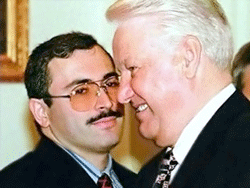 Prior to his arrest in 2003 Khodorkovsky (in photo with first Russian President Boris Yeltsin) funded several Russian parties, including the Communist Party, most of which were in competition with each other. Voltairenet.org